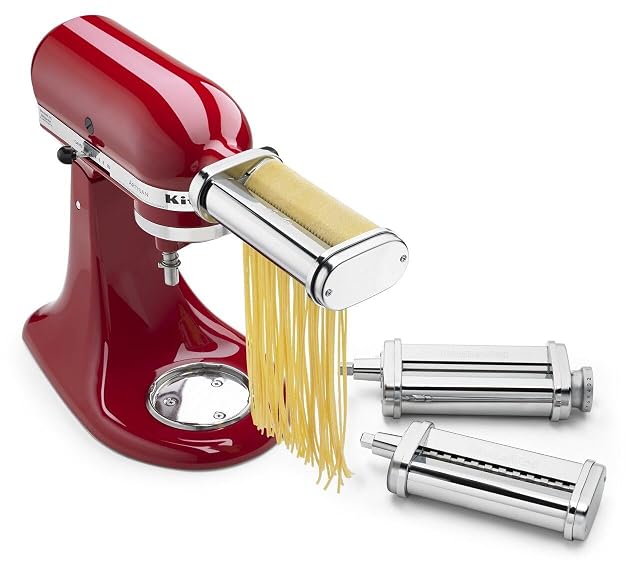
Best for: Fresh pasta in quantity, where eight thicknesses and clean stainless cutting earn the price
≈ $205
Check price on Amazon Eight thickness settings, six-inch sheets, and hand wipe only
A stainless pasta roller with eight thickness settings plus spaghetti and fettuccine cutters, for any KitchenAid mixer.
Best for: Fresh pasta in quantity, where eight thicknesses and clean stainless cutting earn the price
“Stainless steel rollers and cutters… Hand Wipe only - cleaning tool included.”
The most expensive item on this shelf is the one that must never be washed, and the two reasons are both about what is inside the assembly.
Water gets in and does not come out. A roller is a pair of close-fitting cylinders in a housing, with bearings and an adjustment mechanism. Water that runs into those sits there, and even stainless corrodes at a bearing surface given standing water and time. Nothing in the assembly can be dismantled to dry it.
And wet dough is far worse than dry dough. Pasta dough is flour and egg. Wet, it is glue — it works into every gap and then sets hard. Dry, it turns to crumb and falls out.
Which is exactly why a cleaning brush is in the box. The correct method is to let whatever is stuck dry completely, then brush it out.
So the routine is: roll, wipe the outside with a dry cloth, leave the parts out for an hour, brush the dough off, put them away.
And this shelf gives four different cleaning answers, none of them predictable from the product type:
KSMVSA slicer, $69.95 — “All blades are dishwasher safe on the top rack” New Metro chute, $24.94 — “dishwasher safe” KSMICM ice cream maker, $96.56 — warm soapy water, “once the bowl has reached room temperature” this — hand wipe only KSMMGA grinder, $79.88 — nothing at all, on a part that handles raw meat OMOVAN and MEET JUICE — “easy to clean”, no detail
Read the cleaning line before buying any of them.
“Easily roll 6-inch sheets of fresh pasta, with 8 thickness settings.”
The only numbered adjustment anywhere on this shelf.
And rolling is a progression, not a selection. You do not set a number and roll once. You start at the widest setting with a thick piece of dough, fold and pass it several times to laminate it and align the gluten, then step down one setting at a time.
Going straight to a thin setting tears the sheet, because the rollers are asking the dough to stretch further than it can in one pass.
So eight settings is a ladder, and the number of rungs is what makes the descent smooth. A machine with four settings makes you take bigger steps, and bigger steps are where sheets tear and thin patches appear.
And the destination differs by dish:
The thickest settings — a sheet for pappardelle or a robust tagliatelle The middle — lasagne and ravioli, where a sheet must be thin enough to cook through and strong enough to hold a filling The thinnest — angel hair, or a filled pasta where two layers meet and the finished edge must not be double-thick
Six inches is the other figure, and it is a real limit. A lasagne sheet for a standard dish usually needs trimming or overlapping, and ravioli are made in strips down the length rather than across.
What is not published is a single thickness in millimeters — not the widest, not the narrowest. So the eight settings are relative to each other and to nothing else. The KSMVSA slicer on this shelf publishes all three of its cuts — 3 mm, 4 mm, 6 mm — which makes the omission here conspicuous.
“(1) Pasta Roller, (1) Fettuccine Cutter, (1) Spaghetti Cutter, (1) Cleaning Brush.”
The roller makes the sheet; the cutters turn the sheet into noodles. Three separate heads, each fitting the hub in turn — so making spaghetti is two operations, not one.
Spaghetti is the narrow cut, round-ish in section once cooked, for oil- and tomato-based sauces that cling to a thin strand. Fettuccine is the broad flat cut — “hearty”, in the bullet — for cream and butter sauces that need surface area.
That pair is the standard division and it covers most of what a kitchen makes. What it does not cover is anything filled — ravioli, tortellini, agnolotti — which need only the roller and then your hands, and anything extruded, which a roller cannot do at all: no penne, no rigatoni, no macaroni. A roller makes flat pasta.
And the roller alone is the most useful of the three. A sheet can be cut by hand into pappardelle, lasagne, maltagliati or ravioli with nothing but a knife. The cutters save time on the two shapes a knife does worst.
All stainless, and that matters in the dough path. “Stainless steel rollers and cutters” — no plastic anywhere the dough touches, which is the difference between “consistent smooth rolling” and a sheet that picks up and drags.
7.5 pounds (3.4 kg) — the heaviest item on this shelf by a pound and a half:
New Metro chute — 7.5 oz · KSMVSA slicer — 1.3 lb · KSMMGA grinder — 2.5 lb · KSMICM ice cream — 6 lb · this — 7.5 lb
On a roller, mass is function. Pasta dough is stiff — much stiffer than bread dough, because it is made with very little water — and a roller has to hold two cylinders parallel against that resistance across six inches of width.
A light machine flexes. The rollers spread apart under load in the middle and stay closed at the ends, so the sheet comes out thicker in the center than at the edges. That is the failure of a cheap clamp-on hand roller, and it is why seven and a half pounds of stainless is the specification rather than a side effect.
And it is why “powered” is worth paying for. A hand roller needs one hand cranking, which leaves one hand for a sheet that wants two. Driven from the mixer hub, both hands are free: one feeds, one catches.
“Fits all Household KitchenAid Stand Mixers.”
Because it bolts to the power hub — the socket on the front of the mixer head, a standardized drive output unchanged across the range for decades.
The two other hub attachments here say the same: the KSMVSA slicer, “Compatible with any KitchenAid Stand Mixer”, and the KSMMGA grinder, “any household KitchenAid Stand Mixer power hub”.
And the item that does not use the hub is the one with exclusions. The KSMICM ice cream maker at $96.56 replaces the bowl, and bowls are not standardized: seven models excluded by name — Artisan Mini KSM3316 and KSM3317, bowl-lift K5SS, KSM50, KSM500, KSM450, Professional KSM90 and KG25H — with “verify your model number compatibility” said twice.
Likewise the two three-piece bowl-tool sets on this shelf are tilt-head only, and the New Metro pouring chute excludes glass bowls and flared rims.
Hub attachments fit everything. Anything touching the bowl does not.
“Household” is the one limit here, as on the grinder: KitchenAid also makes commercial mixers, and the word excludes them.
The ladder on this shelf spans ten times:
OMOVAN — $19.99 · MEET JUICE — $21.99 · New Metro chute — $24.94 · KSMVSA slicer — $69.95 · KSMMGA grinder — $79.88 · KSMICM ice cream — $96.56 · this — $204.90
But nothing else here does anything like it, so the comparison is elsewhere.
Against a clamp-on hand roller it wins on the three points above: powered rather than cranked, stainless throughout, and heavy enough not to flex.
Against a standalone electric pasta machine it wins on storage and loses nothing, because the motor it borrows is already on the counter.
And it is one of only two attachments on this shelf that does something no other kitchen appliance does. A food processor cannot roll a sheet. The KSMVSA slicer duplicates a processor’s discs; the KSMICM duplicates a standalone ice cream maker. This and the grinder turn the mixer into a machine you would otherwise have to buy whole — and the grinder’s closest comparison, a standalone mincer, is the same argument.
The honest test is frequency. Pasta a few times a year does not justify $205 and a hand wipe routine. Pasta most weeks does, and the eight settings and the stainless cutters are what make it worth repeating.
No thickness in millimeters, as above — the central omission, and conspicuous beside the slicer’s three published cuts on the same shelf.
No length limit. Six inches is the sheet width; nothing says how long a sheet can be handled, which in practice is set by your countertop and your arms rather than the machine.
No speed guidance, on an attachment driven by a variable-speed motor. Rolling wants a low steady speed; too fast and the sheet feeds unevenly and tears at the edges. It is the one setting a reader would want.
No further cutters named. Two are included and no third — no linguine, no lasagnette, no ravioli maker — is mentioned as available, so the two cuts you get are the two you have.
No dough guidance, where the result depends on the hydration of the dough at least as much as on the machine. Too wet and it sticks to stainless; too dry and it cracks at the thin settings.
No country of manufacture and no warranty, neither of which anything on this shelf publishes — and “Genuine KitchenAid… designed and engineered by the manufacturers” is a provenance claim rather than a term.
And the mixer is sold separately, stated twice in two bullets. The $205 buys three stainless heads and borrows a motor already paid for.
Read on the day this page was built: $204.90 at the American Amazon shop.
Read from Keepa on the day this page was last revised; stock and price both move without notice.
Prices quoted in this text were read on 2026-10-17. The live price is at the top of the page.
Because water and pasta dough are the two things that ruin a roller, and this is the only item on the shelf with a prohibition rather than an instruction. Bullet three: "Stainless steel rollers and cutters for consistent smooth rolling and clean cutting of pasta dough. Hand Wipe only - cleaning tool included." Two reasons, and both are about what is inside the assembly. Water gets in and does not come out. A roller is a pair of close-fitting cylinders in a housing with bearings and an adjustment mechanism. Water that runs into those will sit there, and even stainless corrodes at a bearing surface given standing water and time. Nothing in the assembly can be dismantled to dry it. And wet dough is far worse than dry dough. Pasta dough is flour and egg: wet, it is glue, and it works into every gap and then sets. Dry, it turns to crumb and falls out. Which is exactly why a cleaning brush is in the box — the correct method is to let whatever is stuck dry completely, then brush it out. So the routine is: roll, wipe the outside with a dry cloth, leave it out for an hour, brush the dough off, put it away. For comparison, this shelf gives four different cleaning answers: the KSMVSA slicer at $69.95 is "dishwasher safe on the top rack", the New Metro chute at $24.94 "dishwasher safe", the KSMICM ice cream bowl at $96.56 warm soapy water "once the bowl has reached room temperature", and the KSMMGA grinder at $79.88 says nothing at all.
Different pasta, not just thinner pasta — and this is the only numbered adjustment anywhere on this shelf. Bullet four: "Easily roll 6-inch sheets of fresh pasta, with 8 thickness settings, to achieve your desired sheet thickness." Rolling is a progression rather than a choice. You do not set a number and roll once: you start at the widest setting with a thick piece of dough, fold and pass it several times to laminate and align the gluten, then step down one setting at a time. Going straight to a thin setting tears the sheet, because the rollers are asking the dough to stretch further than it can in one pass. So eight settings is really a ladder, and the number of rungs is what makes the descent smooth. And the destination differs by dish. The thickest settings give a sheet for pappardelle or a robust tagliatelle; the middle for lasagne and ravioli, where a sheet must be thin enough to cook through but strong enough to hold a filling; the thinnest for angel hair or a filled pasta where two layers meet. Six inches is the other figure, and it is the limit on what you can make: a lasagne sheet for a standard dish usually needs trimming or overlapping, and ravioli are made in strips down the length rather than across. What is not published is a single thickness in millimeters — not the widest, not the narrowest — so the eight settings are relative to each other and to nothing else.
If you make pasta more than a few times a year, yes — and the comparison that matters is not with the rest of this shelf but with a clamp-on hand roller. What this gives you over a hand machine. It is powered, which frees both hands: one feeds and one catches, where a hand roller needs one hand cranking and leaves you short. It is stainless throughout, "rollers and cutters", with no plastic in the dough path. And at 7.5 pounds — the heaviest item on this shelf by a pound and a half — it has the mass to roll stiff dough without flexing, which is where a light clamp-on machine fails: the rollers spread under load and the sheet comes out thicker in the middle. What it does not give you is a cheaper alternative on this shelf, because nothing else here does anything like it. The ladder runs OMOVAN $19.99 · MEET JUICE $21.99 · New Metro chute $24.94 · KSMVSA slicer $69.95 · KSMMGA grinder $79.88 · KSMICM ice cream $96.56 · this $204.90 — ten times the cheapest. And it is the one attachment here that does something no other kitchen appliance does. A food processor cannot roll a sheet; the KSMVSA slicer cuts vegetables, not dough. The grinder is its closest relative in kind, because both turn the mixer into a machine you would otherwise have to buy whole.
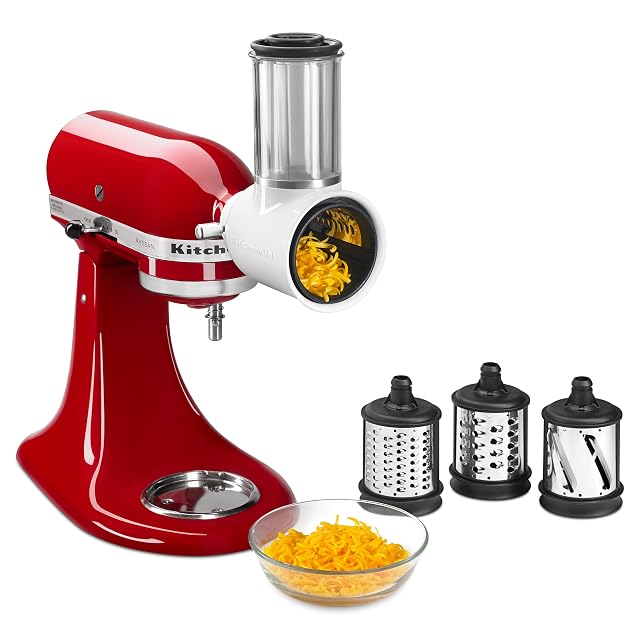
A genuine KitchenAid hub attachment with a 3 mm (0.12 in) slicing blade, 4 mm (0.16 in) and 6 mm (0.24 in) shredding blades, a food pusher and a case.
Best for: Slicing and shredding straight into the bowl, on a mixer you already own
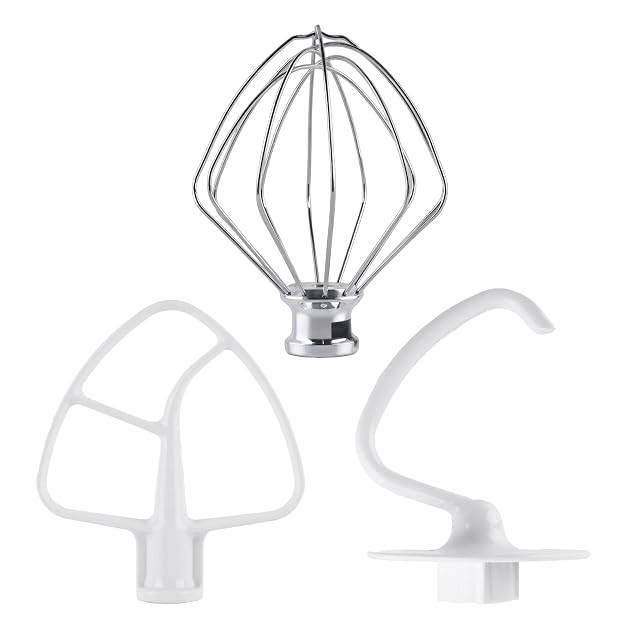
A K45WW wire whip, K45DH dough hook and K45B flat beater with a scraper edge, in stainless, aluminum and nylon.
Best for: A tilt-head KitchenAid where the bowl wall needs wiping as the beater turns
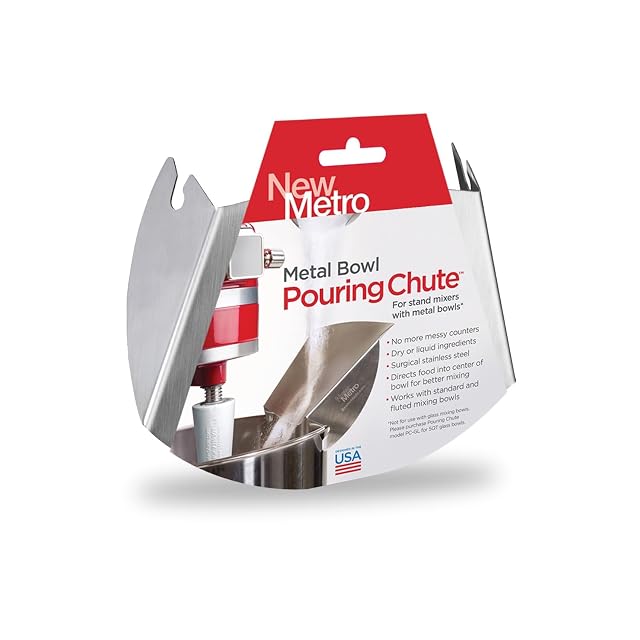
A polished steel pouring chute for metal stand mixer bowls, fitting KitchenAid, Cuisinart, Kenwood and SMEG.
Best for: Loading flour and sugar into a metal bowl without half of it reaching the counter
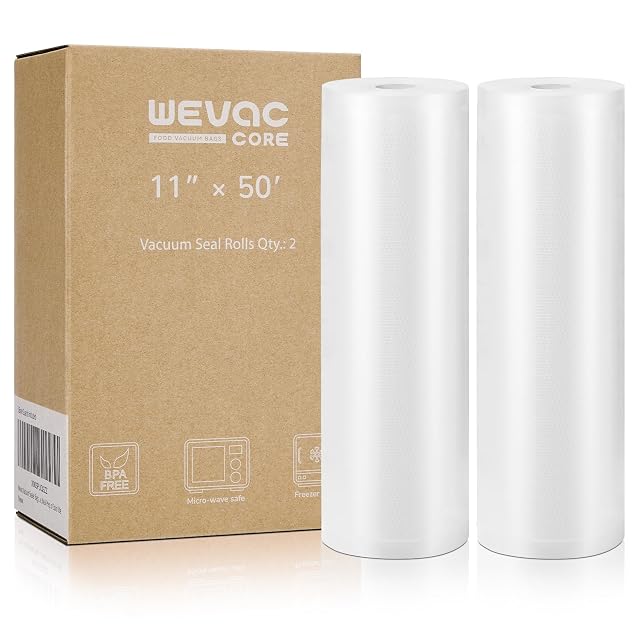
Two 11-inch by 50-foot embossed rolls with a bone guard, named compatible with six machine brands.
Best for: Large or awkward items on any suction machine, where a bone guard earns its place
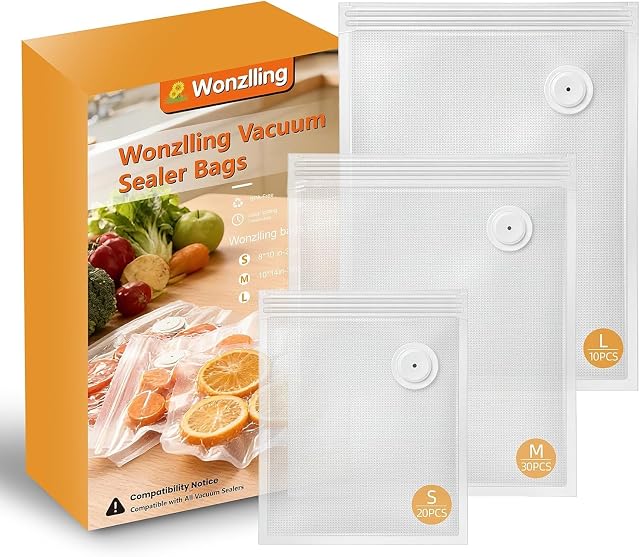
Sixty reusable zipper bags with an air valve in three sizes, for a vacuum pump rather than a heat sealer.
Best for: Meal prep with a handheld pump, where reopening a bag matters more than a permanent seal
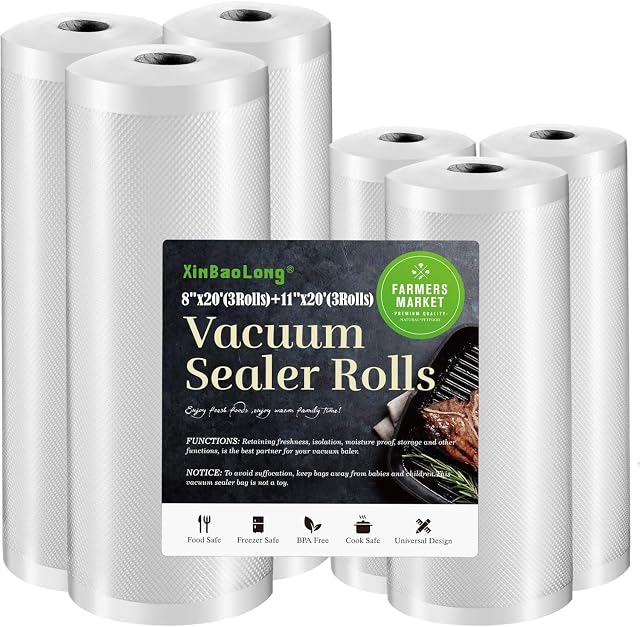
Six heat-seal rolls — three 8 inch and three 11 inch, each 20 feet — cut to length, BPA free, boil and microwave safe.
Best for: Bulk sealing at the lowest cost per bag, on any suction machine