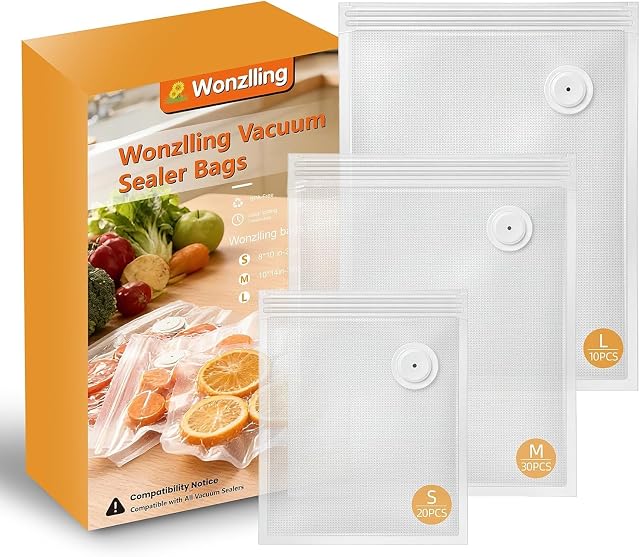
Best for: Meal prep with a handheld pump, where reopening a bag matters more than a permanent seal
≈ $28
Check price on Amazon A valve and a zipper, so it needs a pump and not a sealer
Sixty reusable zipper bags with an air valve in three sizes, for a vacuum pump rather than a heat sealer.
Best for: Meal prep with a handheld pump, where reopening a bag matters more than a permanent seal
“close the double zipper, and use a compatible vacuum pump or vacuum device to remove air through the valve.”
This is the thing to establish before anything else, because the other four products on this shelf are for a different machine.
A desktop sealer clamps the open mouth of the bag, draws air out through it, then melts the film shut with a heated wire. The bag is single use and has no valve, because the seal is the closure. That is what the xinbaolong at $14.52, the Syntus at $22.99, the Wevac at $20.99 and the FoodSaver at $29.99 are all for.
A handheld pump has nothing to melt. It docks onto a one-way valve molded into the bag wall and draws air through it; the zipper does the closing.
The Syntus states the rule from the other side, and it is the only other listing here to address it at all: “These bags do not feature an air valve and are not compatible with handheld vacuum sealers.”
So: a heat sealer means one of the other four. A handheld pump means this one, and only this one.
What the page does not do is name which pumps are compatible, or include one — see the last section.
60 bags: 20 × (8 × 10) + 30 × (10 × 13.8) + 10 × (11.8 × 13.8) = 1,600 + 4,140 + 1,628 = 7,368 square inches for $27.99.
0.380 cents a square inch — the least film for the most money on this shelf:
xinbaolong — 0.106¢/in² · Syntus — 0.139¢ · Wevac — 0.159¢ · FoodSaver — 0.295¢ · this — 0.380¢
But those four are consumed once. Divide this by the number of uses and it crosses the FoodSaver on the second use and the cheapest on the fourth. At ten cycles it is the cheapest thing on the shelf by a wide margin.
The figure the page does not publish is how many cycles. Bullet three says only “Made for repeated use according to proper care instructions” — no number, no thickness, no dishwasher claim.
And a zipper bag that has held raw meat is the hardest thing on this shelf to clean properly: a double zipper has a channel, a valve has a seat, and neither dries easily.
So the honest division. This is cheap for dry goods, vegetables, batch-cooked portions and anything you will open and reclose. Single-use film stays the right answer for raw meat and fish, where the point is that the bag goes in the bin afterwards.
A heat-sealed bag is a one-way package. To take out one chicken thigh you cut it open, and the rest needs a new bag and another seal — which on a roll means two more seals and more film.
A zipper plus a valve means you open it, take what you need, close it, and pump the air out again.
Which is exactly why the named uses are what they are: “meal prep, leftovers, fruits, vegetables, snacks”, “preparing portions in advance”, “storing ingredients for everyday cooking”, “camping, travel”. All of them involve repeated access to the same bag.
And the size mix fits that pattern. 30 medium against 20 small and 10 large — the pack is weighted toward the middle, which is the portion size people actually use. Compare the Syntus, which ships 50 of each of its three sizes, and the roll products, which ship one or two widths and leave the length to you.
What a zipper cannot match is long freezer storage. A welded seam across the full width is a better barrier over months than a mechanical closure, and it is telling that the xinbaolong and Wevac both claim “3-6 times” longer shelf life and the FoodSaver “5x longer”, while this page claims no multiple at all.
The division is clean: a zipper for the fridge and the week, a heat seal for the freezer and the season.
And the clear film is the small good idea here — “The clear design makes it easy to identify the contents without opening each bag.” On a reusable bag that matters more than on a disposable one, because you will be going back into it.
The title names “Sous Vide & Microwave Storage” and no bullet mentions either.
That gap is worth pausing on, because sous vide is the more demanding of the two and this is the product least suited to it.
The sous-vide shelf on this site carries fourteen immersion circulators, from the Anova Nano 2.0 to the Breville Joule Turbo and five KitchenBoss models. A sous-vide bag sits submerged at 131 to 185 °F (55–85 °C) for hours, and two things matter: the seal must be watertight, and the film must not creep.
A zipper is not a watertight seal under pressure, and a one-way valve is a hole in the bag wall with a flap over it. Both are fine for storage and neither is what you want held under water for four hours.
The listings built for that job say so explicitly: the Wevac publishes “watertight seals” and names sous vide; the Syntus names “boiling, sous vide cooking”; the xinbaolong names “boiling” and titles a bullet “SOUS VIDE BAGS ROLLS”.
None of those words appears in this page’s bullets. The title’s claim is not supported by anything below it, and for sous vide the single-use film on this shelf is the right choice.
Microwave is the easier claim and equally unsupported here — where the xinbaolong, Syntus and FoodSaver all state it in a bullet.
No pump named, and none included. “A compatible vacuum pump or vacuum device” is the whole of it — no brand, no fitting, no valve diameter. Which is the one thing a valve bag has to tell you, because the pump nozzle has to seat on the valve. Compare the Wevac, which names six compatible machine brands for its film.
No number of reuses, as above — the figure the entire value argument rests on.
No thickness. Only the Syntus publishes one, at 4 mil.
No weight, the only listing on this shelf without one.
No dishwasher claim, on a reusable product. The FoodSaver is the only listing here to claim dishwasher safety, and it is single-use film.
No puncture claim. Three listings here claim puncture resistance and the Wevac ships a bone guard; the Syntus names “bone punctures” and publishes 4 mil. A zipper bag with a valve is arguably more vulnerable, because a puncture that is merely slow will not be obvious — a heat-sealed bag that has lost its vacuum is visibly loose.
No freezer-burn or shelf-life multiple, as above.
No reference. The catalog field reads Won-bags 60pcs — the product description rather than a part number, as on the xinbaolong. The Syntus carries VSB150, the FoodSaver FSFSBF0746-000, the Wevac White-11.
No country of manufacture, where the FoodSaver says “Made in USA” and the Wevac says “made in China to US quality standards”.
Read on the day this page was built: $27.99 at the American Amazon shop.
Read from Keepa on the day this page was last revised; stock and price both move without notice.
Prices quoted in this text were read on 2026-10-17. The live price is at the top of the page.
Almost certainly not, and this is the most important thing on the page. Bullet two: "The built-in air valve helps remove excess air... Simply fill the bag, close the double zipper, and use a compatible vacuum pump or vacuum device to remove air through the valve." There are two entirely different ways to get air out of a bag, and this shelf contains both. A desktop sealer — the machine the other four products here are for — clamps the open mouth of the bag, draws air out through it, and then melts the film shut with a heated wire. The bag is single use and has no valve, because the seal is the closure. A handheld pump has nothing to melt. It docks onto a one-way valve molded into the bag wall and draws air through it; the zipper does the closing. The Syntus at $22.99 states the rule from the other side, and it is the only listing on this shelf besides this one to address it: "These bags do not feature an air valve and are not compatible with handheld vacuum sealers." So: if you own a heat sealer, buy one of the other four. If you own a handheld pump, this is the only product here that will work at all. And the page does not say which pumps are compatible, nor include one — see the last section.
Eventually, and the arithmetic is worth doing because the first use is the most expensive on the shelf. 60 bags: 20 × (8 × 10) + 30 × (10 × 13.8) + 10 × (11.8 × 13.8) = 1,600 + 4,140 + 1,628 = 7,368 square inches for $27.99 — 0.380 cents a square inch, which is the least film for the most money here. The single-use shelf: xinbaolong 0.106¢ · Syntus 0.139¢ · Wevac 0.159¢ · FoodSaver 0.295¢. But those are consumed once. Divide this by the number of uses and it crosses the cheapest option on the fourth use and the FoodSaver on the second. So if a bag survives ten cycles, this is the cheapest thing on the shelf by a wide margin. The figure the page does not publish is how many cycles. Bullet three says only "Made for repeated use according to proper care instructions", with no number, no thickness and no dishwasher claim — and a zipper bag that has held raw meat is the hardest thing on this shelf to clean properly. So the honest reading: cheap for dry goods, vegetables, batch-cooked portions and anything you will open and reclose; and single-use film remains the right answer for raw meat and fish, where you want the bag gone afterwards.
Open again, and that is a real functional difference rather than a convenience. A heat-sealed bag is a one-way package: to take out one chicken thigh you cut the bag open, and the rest needs a new bag and another seal. A double zipper plus a valve means you open it, take what you need, close it, and pump the air out again. Which is why the uses named here are the ones they are: "meal prep, leftovers, fruits, vegetables, snacks", "preparing portions in advance", "storing ingredients for everyday cooking", and "camping, travel". All of those involve repeated access to the same bag. And the three sizes fit that pattern: 30 medium (10" × 13.8") against 20 small and 10 large, so the pack is weighted toward the portion size people actually use. What a zipper cannot do is match a heat seal for long freezer storage. A welded seam across the full width is a better barrier over months than a mechanical closure, and the xinbaolong and Wevac both claim "3-6 times" longer shelf life on that basis while this page claims no multiple at all. Which is the honest division: a zipper for the fridge and the week, a heat seal for the freezer and the season.
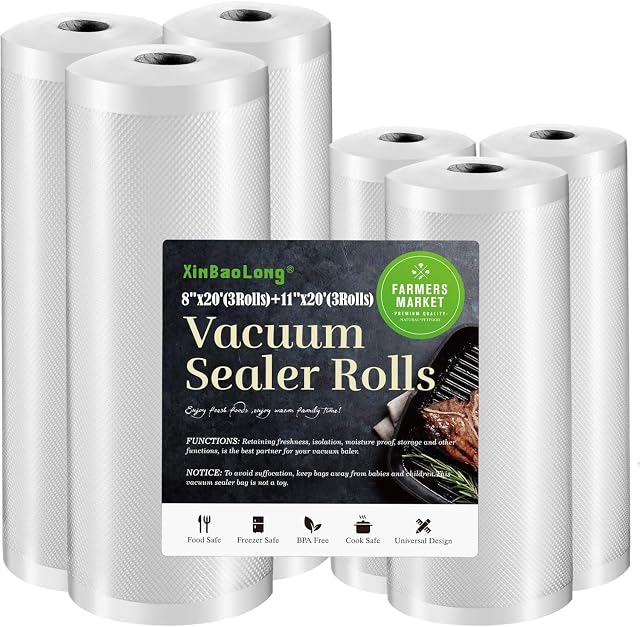
Six heat-seal rolls — three 8 inch and three 11 inch, each 20 feet — cut to length, BPA free, boil and microwave safe.
Best for: Bulk sealing at the lowest cost per bag, on any suction machine
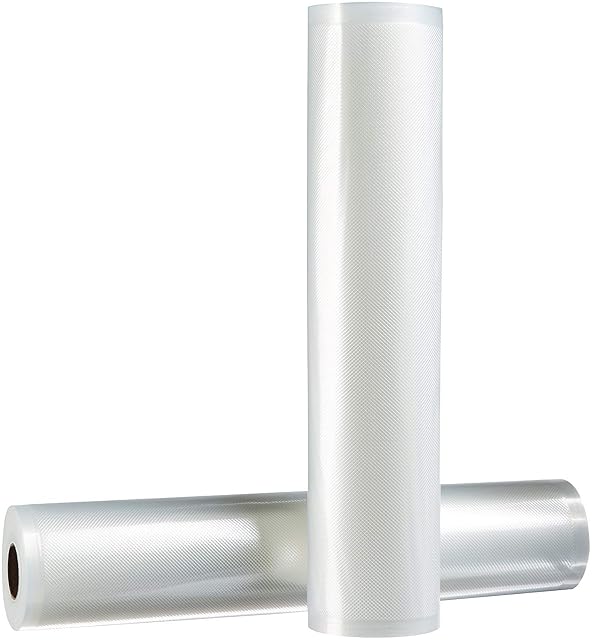
Two rolls of vacuum film, each 11.8 inches wide and 19.7 feet long (30 × 600 cm) — about 39 feet in all. Amazon states BPA-free, tear-resistant material suitable for sous-vide, microwave-safe and boilable, for handheld and common bar sealers. On Amazon.com the reference opens the German listing, currently unavailable.
Best for: A first roll, and anyone who seals odd-shaped things.
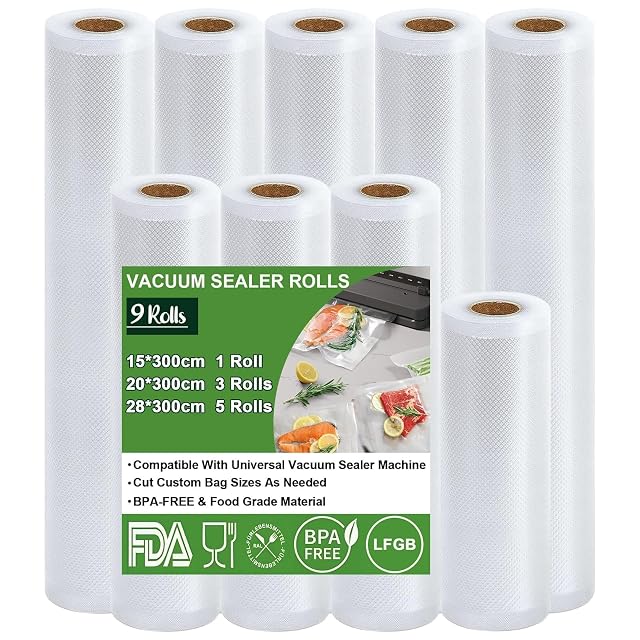
Nine rolls across three widths — 5.9, 7.9 and 11 in (15, 20 and 28 cm), each 9.8 feet — with a published thickness of 190 microns from a seven-layer coextruded film. Omtofo states BPA-free, reusable material suitable for the microwave and for sous-vide.
Best for: A kitchen that seals a lot of small things and hates wasting wide film.
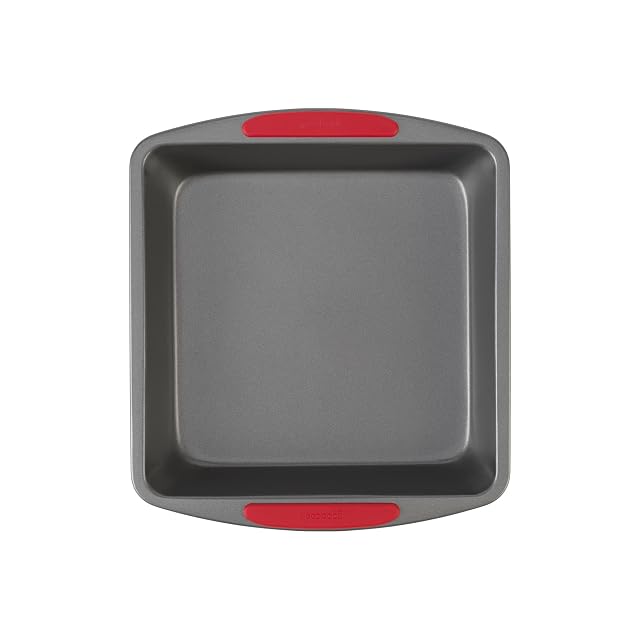
An 8 × 8 inch heavy-gauge steel square pan with ergonomic silicone grips on both handles, a scratch-resistant non-stick coating and a dishwasher-safe finish.
Best for: Brownies and half-batch cakes, lifted out of a hot oven without fumbling
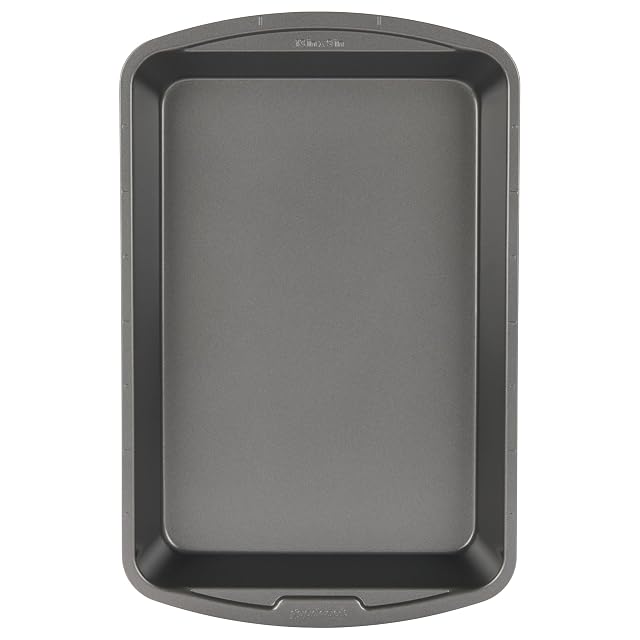
A 13 × 9 × 2 inch heavy-gauge steel bake and roast pan with a scratch-resistant metal-utensil safe non-stick coating and wide rims.
Best for: A box cake, a lasagne or a roast chicken, in one 13 × 9 pan
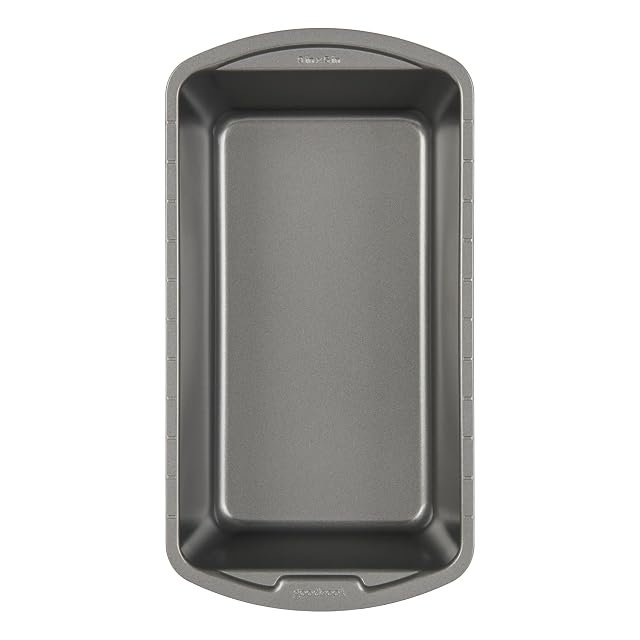
A standard 9 × 5 inch carbon steel loaf pan with a scratch-resistant non-stick coating, metal-spatula safe and dishwasher safe.
Best for: One standard loaf, at the lowest price on the shelf