The headline number is usually the wrong one
Wattage on an air fryer. Quarts on a toaster oven. Program count on a multi-cooker. Each of these is real and none of them decides the purchase.
What decides it is the qualifying figure underneath: the usable flat area, the inside width of the cavity, the pizza size it takes, the working pressure in psi.
Four questions to ask of any listing
- What is the usable figure? Stated capacity is measured to the rim; a pressure cooker fills to two-thirds.
- What will it fit? Inside width, pan diameter, basket floor, clamp opening. A dimension you can hold a ruler against.
- What wears out, and is it stocked? Plates, seals, inner pots, blades.
- What is missing? A maker that publishes eight figures and omits the ninth has usually omitted it for a reason.
When a listing disagrees with itself
It happens, and on this site we have found it on listings sold on Amazon.com:
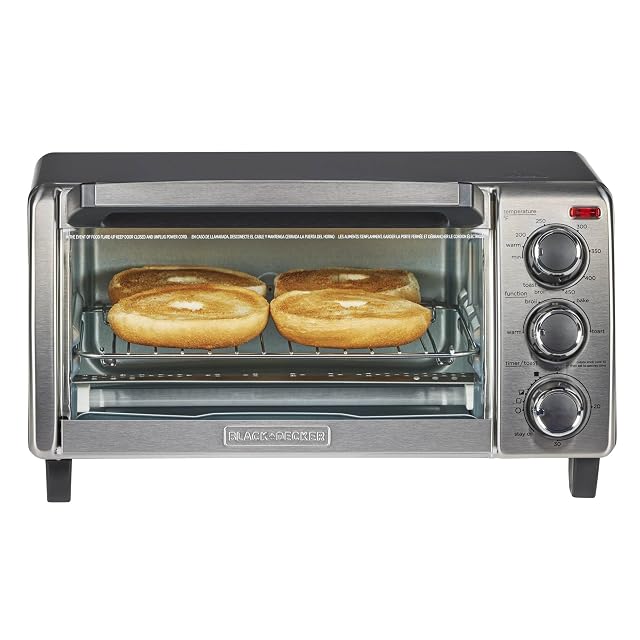
- the BLACK+DECKER toaster oven gives 15.47 inches in the title and 14.5 inches in a bullet;
- the T-fal Clipso gasket names its machine as P45007 in a bullet and P4507 in the description;
- the FoodSaver rolls print their lengths as 20 and 16 inches — where the catalog weight shows they are feet.
All three are the manufacturer’s own text. Where there is no manual to arbitrate, plan on the more conservative number, check a model number against the plate on your own appliance, and treat the discrepancy as what it is — a signal about how carefully the listing was made.
Check the voltage on European brands
A reference listed on Amazon.com is not necessarily sold for 120 V. Several European appliances reach the American store with their original 220–240 V specification — the detail table under “Voltage” says so. A 230-volt appliance on a US outlet runs at a fraction of its power, and a plug adapter does not change that. It is the one figure on a listing that can make every other figure irrelevant.
What an empty specification means
It means you cannot compare, and that is a legitimate reason not to buy. It is not a verdict on the appliance; it is a verdict on what can be known before paying for it. See also how to read a compatibility list for spare parts, and stated against usable capacity.
What readers want to know
What does a missing figure tell me?
Sometimes nothing, sometimes a great deal. A maker that publishes eight figures and omits the ninth has usually omitted it for a reason — the cord length on a table grill, the temperature limit on a pizza stone, the thickness of a vacuum bag. That absence is information, and it is a legitimate reason to choose the listing that does publish it.
What if a listing contradicts itself?
It happens more than you would think, and the contradiction is itself a signal. On this site the BLACK+DECKER toaster oven gives two widths and two model numbers on one page; the T-fal Clipso gasket names its machine as P45007 in a bullet and P4507 in the description. Where there is no manual to arbitrate, plan on the more conservative figure and check the number against the plate on your own appliance.
Should I check the voltage?
On any appliance whose brand is European, yes. The same reference can be listed on Amazon.com while being built for 220–240 V: the detail table on the listing gives the voltage, and a 230-volt appliance on a 120-volt outlet will not reach its power. A plug adapter does not change the voltage.
Last reviewed 17 October 2026