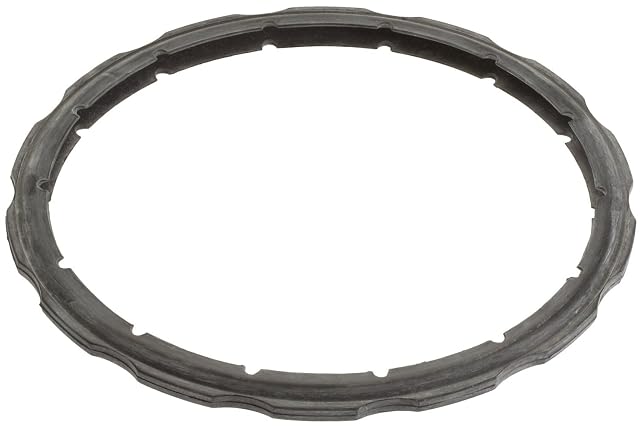
Best for: A T-fal Clipso, once you have read the model number off your own cooker
≈ $24
Check price on Amazon The only silicone here — and two different machine numbers on one page
A silicone replacement gasket for the T-fal Clipso stainless steel pressure cooker, described as easy to install.
Best for: A T-fal Clipso, once you have read the model number off your own cooker
Bullet one: “Replacement parts for P45007 T-fal Clipso Pressure cooker.” The description: “…for T-fal P4507 Clipso stainless steel pressure cooker.”
Five digits against four, and nothing on the page resolves it. The two numbers are not the same product.
On a listing whose entire value is the model number, that is the defect that matters. A gasket is not a product you choose; it is a product you match.
What is consistent is the part number of the gasket itself. X9010501 appears in the title and the description, and the catalog reference is 32406058279. Quote the X9010501, not the cooker number.
And then do the thing that settles every ambiguity on this shelf: read the number off your own cooker — stamped on the body or printed under the base — and measure the groove inside the lid.
Three listings here have model information you cannot fully trust:
this — two different machine numbers Prestige Senior, $16.01 — three different capacity lists across its own title and bullets, with a bullet reading “Suitable for the Following” that names nothing Presto, $19.28 — three model codes (01260, 01340, 01360) and no other identification at all
And two that are safe:
Prestige Junior, $8.94 — says the same thing three times, and adds “Does not work with other brands or models” Hawkins, $7.33 — three named models plus the height class, “2-4 Liter Tall”
The title publishes it: “Silicone Replacement Gasket.”
The shelf, on material:
this — silicone Prestige Junior and Prestige Senior — “the best rubber”, “self compensating” Hawkins, Presto, T-fal Secure 5 — nothing stated
What silicone does better. It keeps its elasticity through far more heat cycles before it hardens — and hardening is the real end of a gasket’s life, because a ring that no longer deforms cannot fill the uneven gap between a lid and a body. The symptom is gradual: the cooker takes longer and longer to come up to pressure.
It also absorbs less, which matters for the thing the Prestige pages name and this one does not: “It does not impart any color, taste or odor to the food.” A rubber ring that has cooked spiced food for a year smells of it permanently. Silicone is better on that count by nature.
What rubber does better. It is more compliant cold, so it seals at the start of a cook with less pressure behind it; and it is cheaper. The Prestige Junior is the cheapest per gram on this shelf at about 20 cents, against 34 cents here.
And one argument comes from the cooker rather than the ring. This is the only listing on the shelf to name a stainless steel body. Stainless expands less than aluminum when heated, so the gap the gasket has to bridge changes less between cold and hot — which suits a slightly firmer material. The two Prestige rings and the Hawkins are all for aluminum cookers.
70 g, which ties with the Prestige Senior for the heaviest published weight here.
The shelf: Hawkins 10 g (0.4 oz) (2–4 L) · Prestige Junior 44 g (1.6 oz) (4–6 L) · Presto 45 g (1.6 oz) (6 qt) · this 70 g (2.5 oz) · Prestige Senior 70 g (2.5 oz) (7.5–13 L) · T-fal Secure 5 not published.
Weight scales with cooker size across this shelf, so 70 grams puts this among the larger cookers — which is consistent with a Clipso, and is the only size clue the page offers, because no capacity is published anywhere. Every other listing here gives one: 2–4 liters, 4–6 liters, 6 quarts, 7.5–13 liters, 6.3 and 8.5 quarts.
And no diameter, which is the figure that would resolve everything.
The catalog footprint is 13.3 × 9.4 inches — rectangular, so it is the box rather than the ring laid flat. That reading can be checked against the one listing that publishes a diameter: the Prestige Senior states “10.5-Inch” and records a square 267 × 267 mm, which is 10.5 inches exactly. So square footprints on this shelf are flat rings and rectangular ones are boxes.
Which leaves the measurement to you. Lay a tape across the groove inside your lid, outer edge to outer edge. For reference, the Prestige rings work out at 9.0 and 10.5 inches.
“T-fal replacement gaskets.” “Gasket - pressure cookers.” “T-fal pressure cooker parts.”
Three bullets out of five carry no information that the title does not already give. The fourth, “Strong Durability”, is a claim with no figure — and durability is the one property on a gasket that could be quantified and never is on this shelf.
Which leaves bullet one doing all the work, and bullet one is the one with the wrong number in it.
Compare how the Prestige Junior spends its five bullets: three on fitment (including the exclusion), one on being genuine, one on country of manufacture. Or the Hawkins: one on fitment, one on being genuine, one on origin and life, one on the three named models — plus a description that explains what the part does.
This page’s useful content is the title, the material, and the part number. Which, to be fair, is most of what you need — once the cooker number is settled.
“Easy to install” in the description is worth one note, because it is the only mention of fitting on this shelf. A gasket must go in round. It is deliberately slightly too large in section for its groove — that is how it seals — so fitting means working it round the groove in stages rather than pulling one side home and stretching the rest. A ring fitted stretched sits out of round and leaks at the thin point.
No capacity, as above — the only listing on this shelf without one.
No diameter, as above.
No country of manufacture, where the two Prestige rings and the Hawkins all say “Made in India”. The Prestige Junior’s reference field is worth a glance for the same reason: it reads 8.90E+12, a thirteen-digit EAN read as a number, and the three surviving digits — 890 — are India’s GS1 prefix.
No replacement interval. Not at least one of the eight listings here publishes one, which on a wear part in a pressure vessel is the most consequential omission. The failure is gradual: a cooker that takes noticeably longer to come up to pressure than it did when new has a gasket that is finished. Cracks, flat spots and a glazed surface are the visual signs.
No dishwasher guidance. The Presto at $19.28 is the only listing on this shelf to address it, and its answer is “Is Dishwasher Safe No” — so hand-washing is the safe assumption on silicone too.
No storage advice, which follows from the second failure mode: a ring left compressed in a closed lid for months takes a permanent flat and then leaks there. Storing the lid inverted on the body costs nothing.
No genuine-part statement, where the Prestige Junior says “Genuine Prestige Gasket” and the Hawkins “Genuine Hawkins” — though a T-fal part number in the title carries much of the same weight.
No quantity, and a wear part is the obvious thing to buy two of.
No temperature or pressure rating, which nothing on this shelf publishes.
Read on the day this page was built: $24.01 at the American — the most expensive ring on this shelf, ahead of the T-fal Secure 5 at $23.15 Amazon shop.
Read from Keepa on the day this page was last revised; stock and price both move without notice.
Prices quoted in this text were read on 2026-10-17. The live price is at the top of the page.
The page says both, and on a listing whose entire value is the model number that is the defect that matters. Bullet one: "Replacement parts for P45007 T-fal Clipso Pressure cooker." The description: "T-fal X9010501 Clipso Replacement Gasket for T-fal P4507 Clipso stainless steel pressure cooker." Five digits against four. Nothing else on the page resolves it, and the two numbers are not the same product. What you can rely on is the part number of the gasket itself, which is consistent: X9010501 appears in the title and the description, and the catalog reference is 32406058279. Quote the X9010501, not the cooker number. And then do the thing that settles every ambiguity on this shelf: read the number off your own cooker, which is stamped on the body or printed on a label under the base, and measure the groove inside the lid. The shelf has three listings whose model lists are unsafe in this way — this one with two numbers, the Prestige Senior at $16.01 with three different capacity lists across its own title and bullets, and nothing at all to go on from the Presto at $19.28 beyond three codes. The listings that are safe: the Prestige Junior at $8.94 says the same thing three times and adds "does not work with other brands or models", and the Hawkins at $7.33 names three models and a height class.
For heat cycles, yes; for cost and cold sealing, no — and this is the only silicone ring on the shelf. The title publishes it: "Silicone Replacement Gasket". The two Prestige rings publish "the best rubber"; the Hawkins, the Presto and the T-fal Secure 5 publish nothing at all. What silicone does better. It keeps its elasticity through far more heat cycles before it hardens — and hardening is the real end of a gasket’s life, because a ring that no longer deforms cannot fill the uneven gap between a lid and a body. It also absorbs less, which matters for the thing the Prestige pages name and this one does not: a rubber ring that has cooked spiced food for a year smells of it permanently and passes that on. What rubber does better. It is more compliant cold, so it seals at the start of a cook with less pressure behind it; and it is cheaper, which is why the Prestige Junior is the cheapest per gram here at about 20 cents against this ring’s 24. And one thing follows from the cooker rather than the ring: this is the only listing on the shelf to name a stainless steel body. Stainless expands less than aluminum when heated, so the gap the gasket has to bridge changes less — which suits a slightly firmer material.
Seating the ring in the lid groove without stretching it, and this is the only listing on the shelf to mention fitting at all. The description: "Durable and easy to install." What that means in practice, and what no page here says: a gasket must go in round. It is deliberately slightly too large in section for its groove — that is how it seals, by being squeezed — so getting it in means working it round the groove in stages rather than pulling one side home and stretching the rest. A ring fitted stretched sits out of round and leaks at the thin point. Two further points follow from the other listings. The Hawkins explains where the ring sits — "fits around the inside rim of the cover" — which on a Clipso is the same arrangement: the lid goes inside the body and the ring seals between them. And the Prestige pair explain why the fit is forgiving: the rubber is "self compensating", meaning its section fills the worst gap while still sealing at the tightest point. The storage habit that protects a new ring: do not leave the lid closed on the body for months. A ring held compressed takes a permanent flat on one side, and then it leaks there whatever you do.
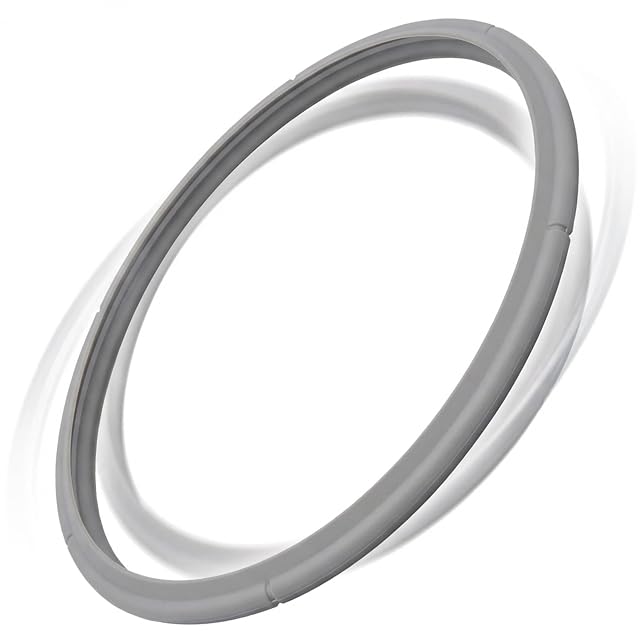
A generic silicone replacement sealing ring for Fissler stovetop pressure cookers of the Blue Point, Magic, Vitavit Royal and Vitaquick ranges up to 2009 — not for electric multi-cookers. The maker publishes a replacement interval of every two to three years and warns that the size given is not the rubber ring’s own diameter — but its title and its specification give two different pot sizes.
Best for: A Fissler from before 2010, once you have measured the pot yourself.
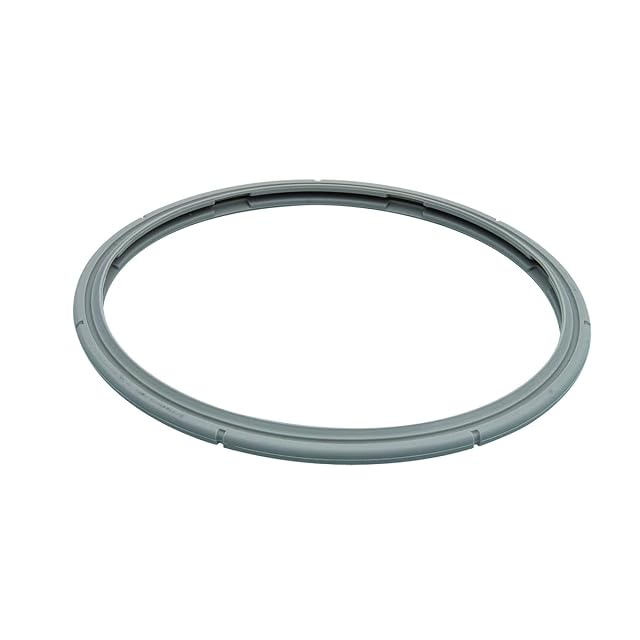
Fissler’s own replacement sealing ring, 8.7 in (22 cm), for the vitaquick, vitavit comfort, vitavit premium and vitavit edition ranges. Fissler states the article number is also printed inside the fitted ring, publishes a two-to-three-year replacement interval, and states this ring is not suitable for all cookers made before 2010.
Best for: A Fissler owner who would rather read a number than measure a pot.
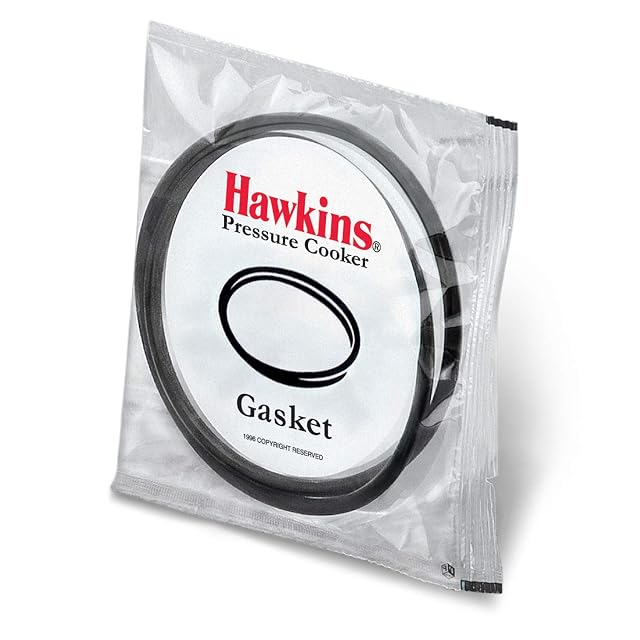
A genuine Hawkins gasket for Classic Aluminum 2, 3 and 4 liter tall cookers, made in India, ten grams.
Best for: A Hawkins Classic Aluminum of 2, 3 or 4 liters, and nothing else
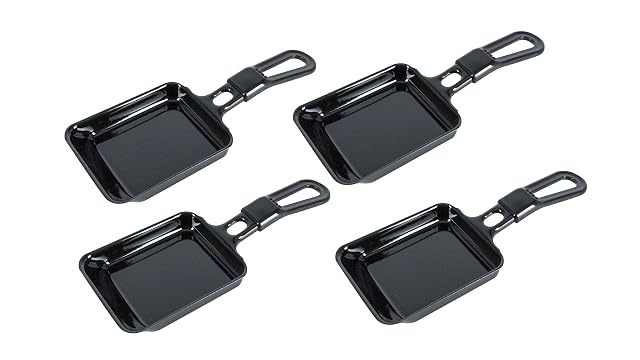
A set of four universal raclette pans in enamelled black steel with heat-resistant PPE handles. Steba publishes both the overall size — 8.1 by 3.1 by 1.1 inches — and the pan itself at 3.9 by 3.1 by 0.7 inches, which is what lets the fit be checked against any grill.
Best for: Any raclette grill, once you have measured the slot with a ruler.
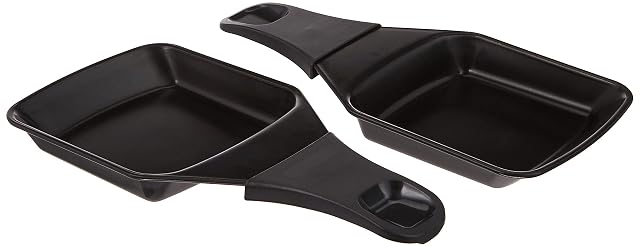
Two square non-stick raclette pans for Tefal's Ovation and Ambiance raclette grills. Tefal names the compatible machines one by one — nine references from 7814012 to RE600012 — rather than a range alone. Sold on the European Amazon stores, not on Amazon.com.
Best for: A Tefal Ovation or Ambiance raclette that came back from the cellar two pans short.
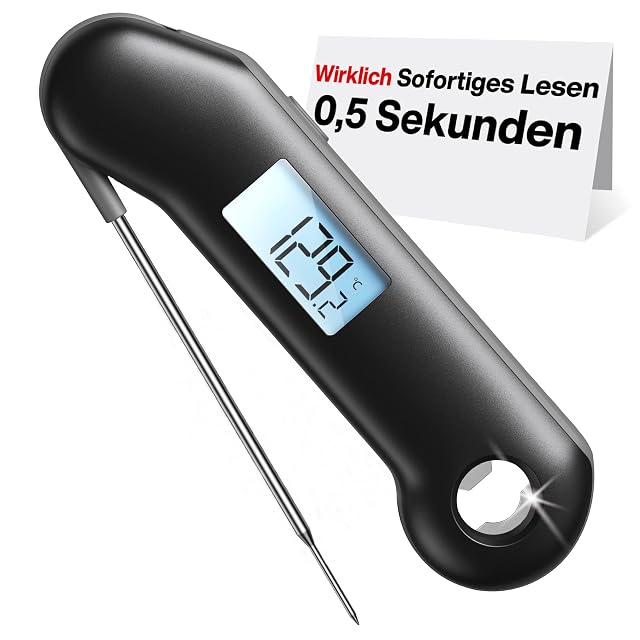
A thermocouple instant-read thermometer stated at 0.5 seconds and ±0.5 °F, NIST certified with a calibration certificate in the box, NSF listed, IP67 waterproof, with an auto-rotating backlit display, lift-to-wake, a magnet and a hanging hook.
Best for: Anyone cooking to a temperature rather than to a time.