Skip to content

The best sous-vide cooker

A circulator is a heater, a pump and a thermostat. Only one maker here publishes the pump figure and only one publishes the adjustment step — and none of them publishes the one specification the category should live on.

The one that publishes its pump

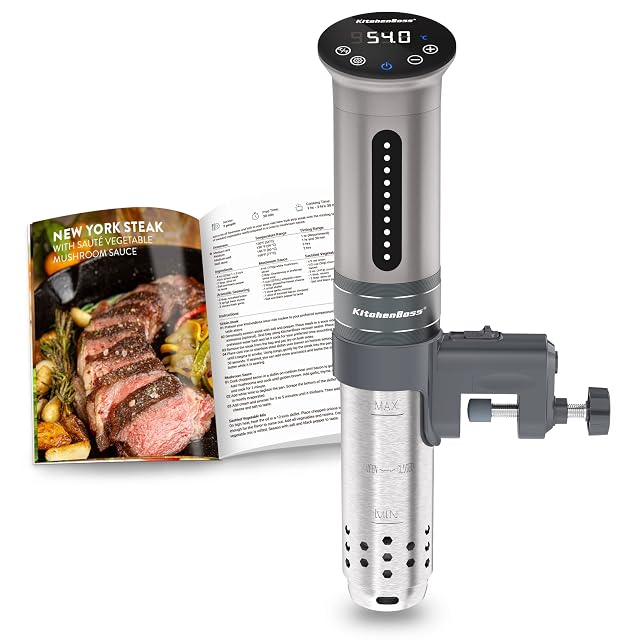
The KitchenBoss G310S publishes 16 L/min — the only flow figure from any sous-vide appliance on this site. Circulation is half of what a circulator does: an unstirred bath is warm at the top and cool at the bottom, with the bag in neither.

It adds SUS304 stainless throughout the immersed section, IPX7, and a clamp that stays on the pot rim while the stick is lifted out. Its 40 °C floor is the weakest part.

The finest adjustment

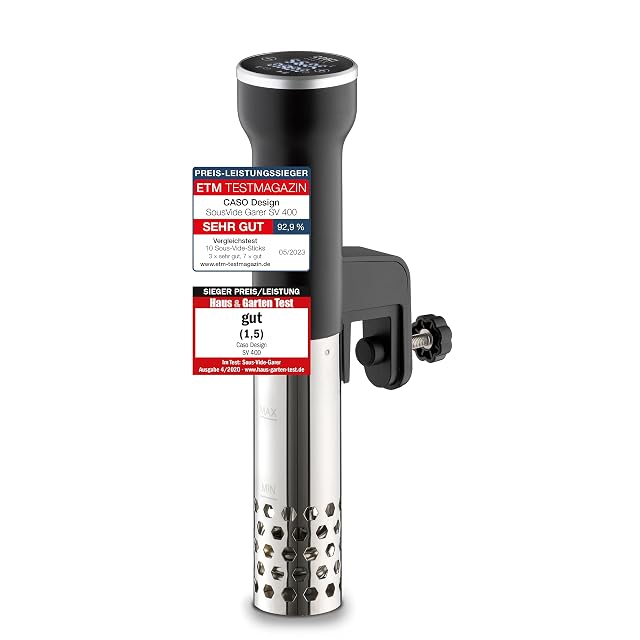
The Caso SV 400 publishes 25 to 90 °C (77 to 194 °F) in 0.5-degree steps — the finest increment here — plus IPX7 and a rating for containers up to 20 liters.

Worth understanding: an increment is not an accuracy. Being able to ask for 61.5 °C (143 °F) is not the same as holding it, and nobody in this family publishes the second figure.

When a stick is the wrong shape

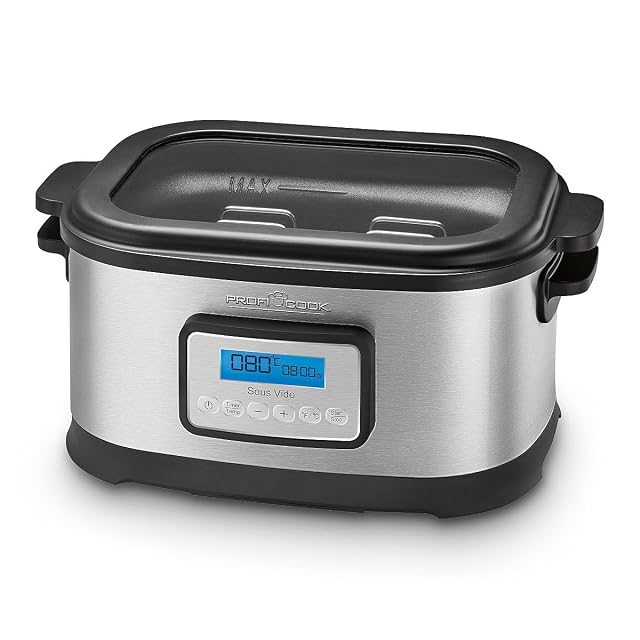
The ProfiCook PC-SV 1112 is a tank, not a stick: 8.5 liters with its own lid, a 72-hour timer four times longer than anything else here, and slow-cook, yoghurt and keep-warm functions. No clamp fit, no minimum depth, no stockpot tied up for a day.

On temperatures

Every figure above describes an instrument. Times and temperatures for particular foods, and any question of what is safe to eat, belong to the manufacturer’s material and to your national food safety authority — never to this page.

Which appliance earns its place?

You want precise, repeatable cooking
That is the whole point: temperature stability, not power.
You cook large pieces or several portions
Look at the volume the circulator is rated for, and the container more than the machine.
You do not want a vacuum sealer
Displacement in a zip bag works for many dishes, and it is how most people start.
You want a searing crust
Sous-vide does not brown. A pan or a torch afterwards is part of the method, not an extra.

Picking by what you make

Meat cooked exactly to temperature

The use that sells the method: the result depends on a number, not on judgment.

Eggs and delicate items

Where stability matters most, because a degree changes the texture visibly.

Cooking ahead

Holding at temperature for a long period without overcooking is what makes the method practical for entertaining.

Large batches

Here the container and the circulator's rated volume decide everything, not the appliance's looks.

The handful of figures that count

Temperature stability, not maximum power
The whole method rests on holding a set point for hours. Stability is the specification that matters; wattage only says how fast it gets there.
The volume it can circulate
A circulator rated for a small volume will not hold temperature in a large pot. Match the machine to the container you actually intend to use.
The clamp and what it fits
Mundane and decisive: a clamp that will not grip your pot rim makes the appliance unusable with what you own.
Minimum water level and dry-run protection
Long cooks evaporate. A machine that cuts out safely when the level drops is what prevents the overnight accident.
Noise over long periods
The pump runs for hours, sometimes overnight. A quiet circulator changes whether the method is used at all.

Which figure for which kitchen

What you cookWhat decides itWhat it does not do
Steak to temperatureStabilityBrown it
EggsPrecision to the degreeSpeed
Large batchesContainer and rated volumeFit a small pot
Overnight cooksEvaporation and cut-outRun unattended without a lid

The common slips

Expecting a crust
Sous-vide cooks, it does not brown. Without a sear afterwards the result looks and tastes unfinished, and the method gets blamed.
Using an uncovered pot for long cooks
Water evaporates over hours, the level drops and the machine cuts out mid-cook. A lid or a covering of balls solves it entirely.
Undersizing the circulator
A machine rated for a modest volume cannot hold a large container at temperature. The specification exists and it is worth reading.
Sealing bags with air left in
Air floats the bag and insulates the food, so part of it never reaches temperature. Displacement or a sealer both fix it; ignoring it does not.

By the household you cook for

The precise cook
A stable circulator, a lidded container, and a pan for finishing. That is the whole kit.
The entertainer
The ability to hold at temperature for hours is the real advantage: the food waits, not the guests.
The curious beginner
Zip bags and a stock pot are enough to find out whether the method suits you before buying anything else.

Cleaning, parts and working life

A circulator is maintained by descaling and by keeping its impeller clear. Scale builds on the heating element in hard water and quietly reduces the machine's ability to hold a set point, which is the one thing it exists to do.

  • Descale as instructed, more often with hard water.
  • Remove and clean the skirt and impeller: food debris stalls circulation.
  • Dry the unit fully before storing, especially around the pump.
  • Never immerse the machine beyond its stated maximum line.

Safety

Water, electricity and long unattended cooking in one method.

  • Respect the minimum and maximum immersion lines exactly.
  • Cover long cooks and check the water level before leaving them.
  • Use a stable container that cannot be knocked from the countertop.
  • Follow recognized time-and-temperature guidance: low-temperature cooking has food safety rules of its own.

Our choices, and what justifies them

  1. KitchenBoss KG310SDE

    1,100 W · 40–90 °C (104 to 194 °F) · 16 L/min · IPX7

    The only sous-vide appliance here that publishes a pump flow rate: 16 liters a minute, through a metal propeller on a 45-degree double-inclined spiral wheel KitchenBoss states is unusually quiet. 1,100 W, 40 to 90 °C (104 to 194 °F), IPX7, an LED touch display, SUS304 stainless on everything immersed, and a clamp that stays on the rim when the stick is lifted out.

    Best for: A bath that needs stirring properly, and a clamp that does not have to be re-fitted every time.
    8.4/10

  2. Caso 1310

    25–90 °C (77 to 194 °F) in 0.5 °C steps · IPX7 · to 20 L

    The finest published adjustment in this family: 25 to 90 °C (77 to 194 °F) in 0.5-degree steps, on a stick rated IPX7 and stated for containers up to 20 liters. A touch display with an LED readout, a timer, and a compact body Caso designs for storage. Named uses include warming yoghurt and baby food in the jar, and tempering couverture.

    Best for: Anyone who wants to set a temperature precisely and knows the difference between steps and stability.

    7.8/10

  3. ProfiCook PC-SV 1112

    8.5 L tank · 45–90 °C (113 to 194 °F) · 72-hour timer

    Not a stick but a tank: an 8.5-liter sous-vide cooker in a stainless housing with a non-stick cooking container, adjustable from 45 to 90 °C (113 to 194 °F) on a 72-hour timer. Slow-cook, yoghurt and keep-warm functions are included, along with tongs and a stainless rack.

    Best for: Long cooks, and a kitchen that would rather not tie up a stockpot for eighteen hours.

    7.8/10

What readers want to know

What figure should I actually compare?

Temperature stability — how tightly the machine holds its target. It is the specification this family is judged on and not one appliance on this site publishes it. What you can compare instead is pump flow, adjustment step and range.

Stick or tank?

A stick clamps to a pot you already own and stores in a drawer, but needs a clamp that fits and a minimum water depth. A tank has neither problem, occupies permanent cupboard space, and is fixed at its own capacity. The cooking is identical.

Do I need a vacuum sealer?

No. Displacement in a zip bag removes enough air for most dishes. A sealer helps for long cooks and freezing, and that is where it earns its place.

Does sous-vide brown meat?

No, and it cannot: browning needs a temperature far above what the method uses. Searing afterwards is part of the recipe.

Can I leave it running overnight?

Many people do, with a covered container and a machine that cuts out when the level drops. Check the level before leaving it, and follow the maker's guidance.

What container should I use?

Anything stable that the clamp fits and the circulator can hold at temperature. A stock pot works; a lidded box works better for long cooks.

Is it safe at low temperatures?

It is, when recognized time-and-temperature combinations are followed: safety comes from the pair, not from temperature alone. Improvising on that point is the one thing to avoid.

Why is one part of my food undercooked?

Almost always air trapped in the bag, which floats it and insulates. Removing the air, and weighting the bag down, solves it.

Each appliance, and the kitchen it earns its space in

KitchenBoss KG310SDE

Fits: A bath that needs stirring properly, and a clamp that does not have to be re-fitted every time.

Main asset: Publishes pump flow — 16 L/min — which nothing else in this family does

Main drawback: 40 °C (104 °F) floor, against 25 °C (77 °F) on the Caso and the Vpcok

Read the full review →

Caso 1310

Fits: Anyone who wants to set a temperature precisely and knows the difference between steps and stability.

Main asset: Adjustable in 0.5 °C steps — the finest published increment here

Main drawback: No wattage published

Read the full review →

ProfiCook PC-SV 1112

Fits: Long cooks, and a kitchen that would rather not tie up a stockpot for eighteen hours.

Main asset: A sealed 8.5 L tank rather than a stick and a pot — no clamp fit to worry about

Main drawback: 8.5 liters is a fixed ceiling — a stick works in whatever pot you own

Read the full review →

What each slice of budget covers

What goes with one of these

Baskets, liners and spares from the same aisle, at the price we recorded. Check they fit the appliance you pick before ordering: it depends on the capacity and the part number, which the product page states.

If you only read one line

Pairings worth reading

Two appliances compared directly, where that page already exists in this guide or this aisle.

How this order was decided

The appliances here are from the catalog of this site. Specifications are what the maker publishes and what the Amazon listing shows; prices are the Keepa figure on the date below, and both change. Ranking uses declared specifications, the balance of stated strengths and stated limits, and price. Nothing on this site has been cooked with, and no page here says otherwise.

Last checked on

Prices quoted in these summaries are dated readings. The live price is shown next to each product.

The tool we use ourselves

Chosen your tool? Now buy it at the right price.

Stand mixers and air fryers swing by fifty dollars or more across the year, and the biggest "discounts" often land at prices the same model sold for six weeks earlier. UniverTrack tracks the real price history across retailers, spots fake reductions, and alerts you when it is genuinely the moment to buy.

Real price historyBuy-now alertsAI buying assistant
Try free for 14 days →
No commitment · Cancel in one click · 5 languages