Skip to content

Caso 1310 vs KitchenBoss KG310SDE

Set it finely, or stir it properly?

Two immersion circulators that each publish one half of what a circulator is. Caso publishes the thermostat’s resolution; KitchenBoss publishes the pump. Neither publishes stability. A note for American readers: both are European models with no Amazon.com offer — for circulators sold in the US, from Anova, Breville, Inkbird, Greater Goods, Monoprice and KitchenBoss's US range, see the sous vide page.

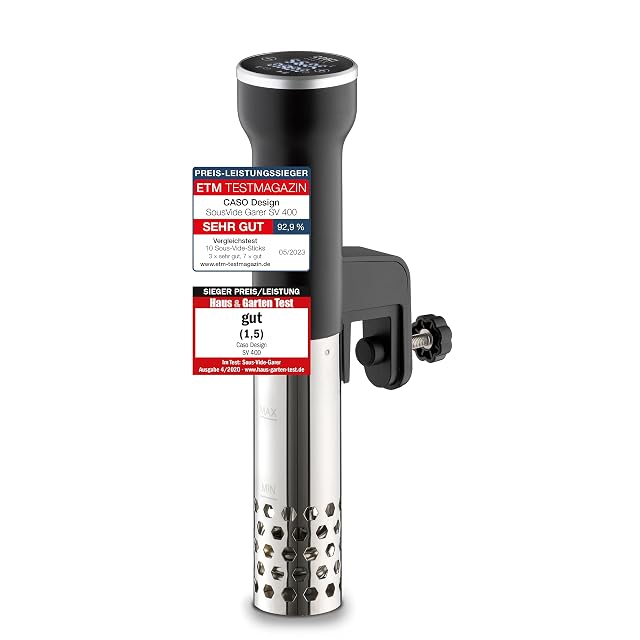
Caso SV 400 sous-vide stick in stainless steel and black

Caso 1310

7.8/10

Wins 3 of 8

Search Amazon

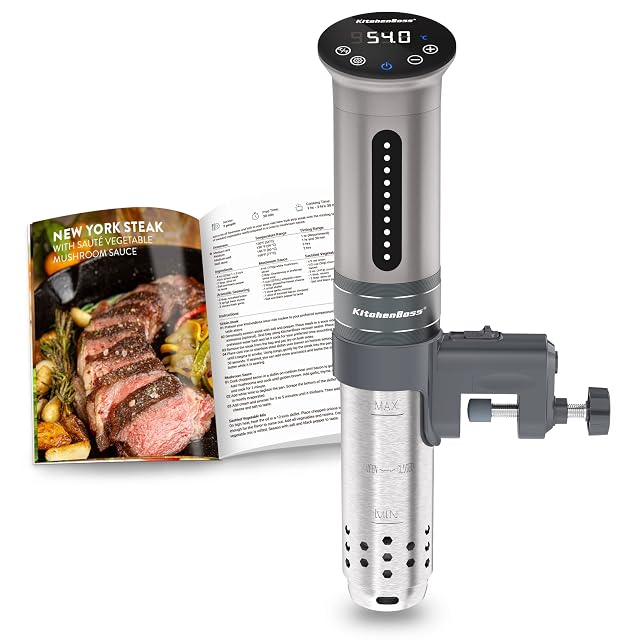
KitchenBoss G310S sous-vide stick in stainless steel with LED touch display

KitchenBoss KG310SDE

8.4/10

Wins 3 of 8

Search Amazon

Item by item

Compared on 1310 KG310SDE
Temperature range 77–194 °F (25–90 °C) 104–194 °F (40–90 °C)
Adjustment step 0.9 °F (0.5 °C) Not published
Pump flow Not published 16 L/min (about 4.2 gal/min)
Power Not published 1,100 W
Water rating IPX7 IPX7
Rated container Up to 20 L (about 5.3 gal) Not published
Clamp Not published Stays on the rim while the stick is removed
Temperature stability Not published Not published
Listed on amazon.com No No

A tick marks the better answer on that line only. Counting ticks does not decide the page — the two verdicts below do, because these products answer different questions.

Which of the two belongs in your kitchen

1310

No amazon.com listing was found for this one. We hold references for other markets but none for the United States, so it may not be buyable here — which is the first thing to weigh against anything below.

Take the Caso for the finer setting and the lower floor. 77 °F is 27 °F below the KitchenBoss, half-degree steps are the finest published adjustment on this site, and a rating for containers up to 20 liters tells you what bath it was designed for.

KG310SDE

No amazon.com listing was found for this one. We hold references for other markets but none for the United States, so it may not be buyable here — which is the first thing to weigh against anything below.

Take the KitchenBoss for circulation. 16 L/min is the only published flow figure from any sous-vide appliance here, and an unstirred bath is warm at the top and cool at the bottom with the bag in neither. The clamp that stays on the rim is the other real idea.

What readers want to know

Is half-degree adjustment the same as half-degree accuracy?

No, and the distinction matters. Steps are how finely you can ask; stability is how tightly the machine holds. Neither of these — nor any sous-vide appliance on this site — publishes the second.

Where do cooking temperatures come from?

From the recipe, the manufacturer's guide and the USDA's safe minimum internal temperatures — 165 °F for poultry, 145 °F for whole cuts of pork and beef, held long enough to pasteurize at lower settings. Both figures above describe the instrument, not what is safe to eat.

Each one in detail

  • Caso 1310

    25–90 °C (77 to 194 °F) in 0.5 °C steps · IPX7 · to 20 L

    The finest published adjustment in this family: 25 to 90 °C (77 to 194 °F) in 0.5-degree steps, on a stick rated IPX7 and stated for containers up to 20 liters. A touch display with an LED readout, a timer, and a compact body Caso designs for storage. Named uses include warming yoghurt and baby food in the jar, and tempering couverture.

    Best for: Anyone who wants to set a temperature precisely and knows the difference between steps and stability.

    7.8/10

  • KitchenBoss KG310SDE

    1,100 W · 40–90 °C (104 to 194 °F) · 16 L/min · IPX7

    The only sous-vide appliance here that publishes a pump flow rate: 16 liters a minute, through a metal propeller on a 45-degree double-inclined spiral wheel KitchenBoss states is unusually quiet. 1,100 W, 40 to 90 °C (104 to 194 °F), IPX7, an LED touch display, SUS304 stainless on everything immersed, and a clamp that stays on the rim when the stick is lifted out.

    Best for: A bath that needs stirring properly, and a clamp that does not have to be re-fitted every time.

    8.4/10