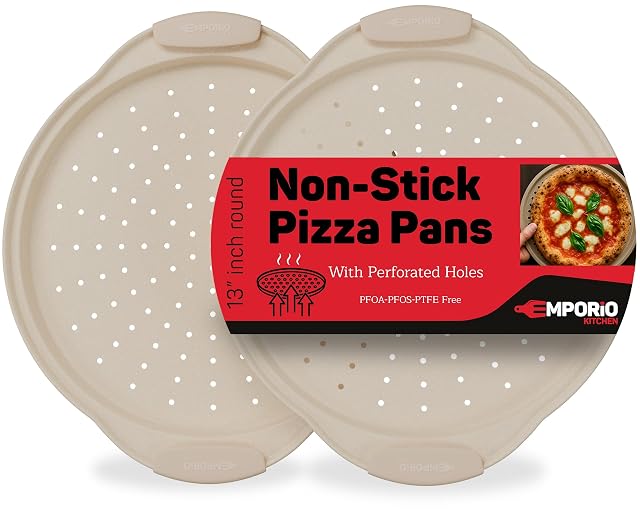
Best for: Thirteen-inch pizzas at 425 to 450 °F, lifted out by the handle
≈ $15
Check price on Amazon The only steel thickness on this shelf
Two 13-inch round perforated carbon steel pizza pans in 0.02 in (0.5 mm) steel with silicone handles, non-stick inside and out, dishwasher safe and rated to 450 °F.
Best for: Thirteen-inch pizzas at 425 to 450 °F, lifted out by the handle
“Built with 0.5mm thick carbon steel, this round pizza pan delivers even heating and serious strength that resists warping over time.”
For scale: heavy-gauge bakeware runs 0.03 to 0.04 inch (0.8 to 1.0 mm).
So the one published thickness on this shelf is a modest one, being used as a durability claim.
And nobody else gives a figure at all:
BAKKENMASTER pizza pan, $15.99 — “sturdy construction guarantees even heat distribution… Say goodbye to warping” GoodCook, $18.99 and $25.19 — “premium-grade construction that resists warping” BAKKENMASTER 18-piece set, $57.99 — “commercial-grade carbon steel” Bakken-Swiss, $12.59 — “high-quality carbon steel… long-lasting performance”
Five pages promising against warping, and one thickness between them.
What warping actually is. A thin sheet heats unevenly, the hot part expands against the cool part, and past the yield point the metal takes a permanent set. Once a pizza pan rocks, the dough sits unevenly and one side browns before the other.
The two causes are thinness and thermal shock. At 0.02 inch thinness is a real factor — and the shock is in your hands: let the pan cool before it meets water.
What is in the pan’s favor. A thin pan heats fast and weighs little. 2.4 pounds for two is 1.2 lb (543 g) each, against 1.5 lb (680 g) for the single GoodCook 16-inch pan at $18.99 and 1.4 lb (624 g) each for the GoodCook set at $25.19.
And a pizza pan does not need mass the way a stone does, because it is not storing heat for the dough — it is conducting it.
The three stones on this shelf do the opposite. Unicook 6.5 lb · Emile Henry 7.3 lb · Ritual Life 7.5 lb — cordierite and ceramic whose whole function is thermal ballast. The heaviest item here is 8.3 times the lightest, which is the Breville at 14.4 oz (408 g).
“Designed to handle oven temperatures up to 450°F (230°C)… bakes everything from thin crusts to deep-dish delights”
The published limits on this shelf:
450 °F (230 °C) — this, the BAKKENMASTER pizza pan at $15.99, the Moss & Stone set at $23.99, the NutriChef set at $36.99 Nothing — the Bakken-Swiss at $12.59, both GoodCook pans, the Breville at $19.95, the BAKKENMASTER 18-piece set at $57.99
Four items, one number.
Why 450 °F matters on a pizza pan in particular. A commercial pizza oven runs 700 to 900 °F. Most home pizza recipes call for 475 to 550 °F — the top of a domestic oven — because a crust needs enough bottom heat to set the base before the top overcooks.
At 450 °F a thin crust will cook, and it will take longer — which gives the topping more time to dry.
The rating is protecting the coating, not the steel. A non-stick film degrades above its rated range; carbon steel does not care at these temperatures.
Which is where the three stones on this shelf live in another world.
Unicook, $33.99 — cordierite, “heat-resistant up to 1,450°F (787°C)” Ritual Life, $36.95 — cordierite, “up to 1500°F (815°C)” Emile Henry, $109.95 — “up to 900 degrees F” on gas, charcoal and wood grills, and “Can be used in all types of ovens and under the broiler”
A thousand degrees of difference, because a stone has no coating to lose.
So: if you bake pizza at 500 °F, this is not the pan for it. At 425 to 450 °F with a perforated base it will give a crisp bottom, which is what the holes are for.
And “deep-dish delights” is the one claim in that bullet to read twice. The catalog depth is about three quarters of an inch (20 mm) — which is a tray rather than a deep-dish tin. A Chicago deep dish is baked in a two-inch pan.
“The perforated base design promotes even airflow, helping heat circulate under your pizza… Say goodbye to soggy bottoms”
What is happening. A pizza base releases water as steam while it bakes. On a solid tray that steam has nowhere to go: it sits between the dough and the metal and the base steams rather than browns.
Holes let it out, and they let oven air touch the underside directly.
The trade is contact. Metal conducts heat into dough far better than air does, so a hole is a place where the base gets less heat. Too much hole area browns in a pattern; too little steams.
Which is why the hole size matters, and one page on this shelf publishes it. The Breville at $19.95: “features 1/3 inch crisper holes for supreme, golden-brown results.”
Six items on this shelf are perforated: this, the BAKKENMASTER pizza pan at $15.99, both GoodCook pans at $18.99 and $25.19, the Breville, and the perforated sheet in the NutriChef set at $36.99.
One takes a different approach entirely. The Bakken-Swiss at $12.59 is a removable basket above a tray, so air circulates all round the food rather than through holes beneath it — right for chips and bacon, and wrong for a pizza base, which wants contact.
And the three stones solve the same problem a third way: by absorbing the water rather than venting it. The Unicook at $33.99: “The porous surface of the pizza cooking stone effectively absorbs excess moisture from pizza dough, creating a crispy, golden pizza crust.”
Three answers to one problem: vent it, suspend it, or soak it up.
On the dimensions: the product name says 13 inch, and the catalog gives 380 × 330 × 20 mm. 330 mm is 13.0 inches — the pan — and 380 mm is 15 inches, which is the pan plus the handle. Which is the one piece of arithmetic this page lets you do, and it tells you the pan needs fifteen inches of oven shelf, not thirteen.
“Equipped with a wide, oversized handle wrapped in silicone, this 13 inch pizza pan makes transferring hot pizza in and out of the oven safer and more comfortable—no mitt fumbles here.”
The other is the BAKKENMASTER 18-piece set at $57.99: “gray silicone handles… offer a comfortable grip and stay cool to the touch.”
Why it matters on a round pizza pan more than on a rectangular tray. A rectangular tray has two short ends you can grip. A round pan has a rim all the way round and nothing to hold — so in oven mitts you pinch the edge, and a mitt grips by friction and pressure, which a thin rolled rim gives you neither of.
A pizza with a loose topping is also the worst thing to tilt.
Two stones on this shelf have handles for the same reason, and a stone needs them more. The Ritual Life at $36.95 publishes handles plus a “detachable carrying tray” — on a 7.5-pound stone. The Emile Henry at $109.95: “Handles make it easy to use and carry” — on 7.3 pounds.
And five items on this shelf publish no handle of any kind: the Bakken-Swiss at $12.59, the BAKKENMASTER pizza pan at $15.99, both GoodCook pans, the Breville at $19.95, the Moss & Stone set at $23.99, the NutriChef set at $36.99 and the Unicook stone at $33.99.
The Unicook is the one where it bites hardest: a 2950 gram stone at 1450 °F with no handles.
What this page does not publish is a silicone temperature rating. Food-grade silicone is generally serviceable to around 430 °F (220 °C) — which is in the same region as the pan’s own 450 °F limit, and worth knowing on the part you will be holding.
“Both inside and out, these pizza pans is coated with a durable non-stick layer… It’s PFOA, PFOS, and PTFE-free”
“Inside and out” is the stronger version of the coating claim, and two items on this shelf make it: this, and the BAKKENMASTER 18-piece set at $57.99 (“the deluxe nonstick gray marble coating, both inside and outside”).
Which matters because the outside of a pan is what the oven bakes onto — and an uncoated exterior collects a brown film that never comes off.
The three substances named.
PTFE — sold as Teflon — is the standard non-stick film on bakeware, and the one that matters: a coating free of PTFE is a ceramic or sol-gel film instead, which is what “White Marble Coating” in the product name describes. PFOA is a per- and polyfluoroalkyl substance historically used as a processing aid in making PTFE, phased out of that use years ago. PFOS is another member of the same family.
The shelf, on chemistry:
PFOA, PFOS and PTFE free — this, the Bakken-Swiss at $12.59, the BAKKENMASTER pizza pan at $15.99 PFOA, PFOS, PTFE and BPA free — the NutriChef set at $36.99, the only one to add BPA “PFOA-Free” alone, in the title — the BAKKENMASTER 18-piece set at $57.99 “Nonstick coating”, no chemistry — both GoodCook pans and the Breville at $19.95 And one that states its coating is PTFE — the Moss & Stone 5-piece set at $23.99: “Carbon Steel Non-Stick PTFE Coating” in its title, with “BPA-free metal” in its bullets
So one item on this shelf declares a fluoropolymer coating and four declare the absence of one.
What a ceramic coating buys and gives up. No fluoropolymer, and better scratch resistance than a sprayed non-stick. What it gives up is longevity: a ceramic film loses slipperiness with use, where PTFE stays slippery until it is damaged.
And the dishwasher claim in the product name deserves the caveat the stones supply. A dishwasher cycle is hot, alkaline and abrasive, and a coating is what it wears over hundreds of cycles. Hand washing lasts longer — and at least two of the fourteen stones on this shelf forbid soap entirely: the Unicook at $33.99 says “Do not use detergent” and the Ritual Life at $36.95 says “no soap needed”, because a porous stone absorbs it.
No hole size, as above — only the Breville at $19.95 publishes one, at 1/3 inch.
No hole count or pattern, which together with the size is what decides the balance between venting and contact.
No feet. Both GoodCook pans publish them: “the bottom of the round oven pan also has feet to keep the hot pan elevated and off the countertop, preventing heat damage.” On a perforated pan the feet also keep the holes clear of the countertop, which is where the steam you have just vented would otherwise condense.
No cutting guides, which only the two GoodCook pans have: “convenient cutting guides that make it easy to serve perfect, even slices.”
No silicone temperature rating, as above.
No preheating instruction, which is right for a steel pan and worth contrasting with the stones. Both cordierite stones instruct you to preheat: the Unicook at $33.99 (“Please preheat the stone to ensure even cooking and crispy crust”) and the Ritual Life at $36.95 (“Simply preheat the stone in your oven or on the grill”). A stone works by storing heat; a thin pan has none to store, so it goes in cold with the pizza on it.
No warranty. Two items on this shelf publish one: the Emile Henry at $109.95 — a 10 year Guarantee, with its terms stated — and the Moss & Stone set at $23.99 (“1-year warranty”). The Ritual Life at $36.95 offers support rather than a term: “respond within 24 hours”. Nine publish nothing.
No country of manufacture, which no item on this shelf publishes.
Read on the day this page was built: $15.43 at the American Amazon shop.
Read from Keepa on the day this page was last revised; stock and price both move without notice.
Prices quoted in this text were read on 2026-10-17. The live price is at the top of the page.
Thin — and this is the only page on this shelf that gives you the figure to judge. Bullet three: "Built with 0.5mm (0.02 in) thick carbon steel, this round pizza pan delivers even heating and serious strength that resists warping over time." For scale: heavy-gauge bakeware runs 0.03 to 0.04 inch (0.8 to 1.0 mm). So the one published thickness on this shelf is a modest one, used as a durability claim. Nobody else gives a number at all. The BAKKENMASTER pizza pan at $15.99: "sturdy construction guarantees even heat distribution... Say goodbye to warping." Both GoodCook pans at $18.99 and $25.19: "premium-grade construction that resists warping." The BAKKENMASTER 18-piece set at $57.99: "commercial-grade carbon steel... even heat distribution." The Bakken-Swiss at $12.59: "high-quality carbon steel... long-lasting performance." Five pages promising against warping, and one thickness between them. What warping actually is. A thin sheet heats unevenly, the hot part expands against the cool part, and past the yield point the metal takes a permanent set. Once a pizza pan rocks, the dough sits unevenly and one side browns before the other. The two causes are thinness and thermal shock. At 0.02 inch (0.5 mm), thinness is a real factor — and the shock is in your hands: let the pan cool before it meets water. What is in the pan’s favor. A thin pan heats fast and is light — 2.4 pounds for two, which is 1.2 lb (543 g) each against 1.5 lb (680 g) for the single GoodCook 16-inch pan at $18.99 and 1.4 lb (624 g) each for the GoodCook set at $25.19. And a pizza pan does not need mass the way a stone does, because it is not storing heat for the dough — it is conducting it. The three stones on this shelf do the opposite: 6.5 to 7.5 pounds of cordierite whose whole function is thermal ballast.
It is below what most pizza recipes ask for, and four items on this shelf publish the same figure. Bullet four: "Designed to handle oven temperatures up to 450°F (230°C), this pizza pan for oven bakes everything from thin crusts to deep-dish delights with pro-level confidence." The published limits here: 450 °F (230 °C) — this, the BAKKENMASTER pizza pan at $15.99, the Moss & Stone set at $23.99, the NutriChef set at $36.99. Four items, one number. And five coated steel items publish nothing: the Bakken-Swiss at $12.59, both GoodCook pans, the Breville at $19.95, the BAKKENMASTER 18-piece set at $57.99. Why 450 °F is the figure to notice on a pizza pan in particular. A commercial pizza oven runs 700 to 900 °F. Most home pizza recipes call for 475 to 550 °F — the top of a domestic oven — because a crust needs enough bottom heat to set the base before the top overcooks. At 450 °F a thin crust will cook and it will take longer, which gives the topping more time to dry out. The rating is protecting the coating, not the steel. A non-stick film degrades above its rated range; carbon steel does not care at these temperatures. Which is where the three stones on this shelf live in another world. Unicook at $33.99: cordierite, "heat-resistant up to 1,450°F (787°C)". Ritual Life at $36.95: "up to 1500°F (815°C)". Emile Henry at $109.95: "up to 900 degrees F" on a grill, and "Can be used in all types of ovens and under the broiler". A thousand degrees of difference, because a stone has no coating to lose. The practical consequence: if you bake pizza at 500 °F, this is not the pan for it. At 425 to 450 °F with a perforated base it will give you a crisp bottom, which is what the holes are for.
They vent the steam that comes out of the dough — and the size is not published here, or anywhere on this shelf except one page. Bullet one: "The perforated base design promotes even airflow, helping heat circulate under your pizza for golden-brown, delightfully crisp crusts. Say goodbye to soggy bottoms." What is actually happening. A pizza base releases water as steam while it bakes. On a solid tray that steam has nowhere to go: it sits between the dough and the metal and the base steams rather than browns — which is the "soggy bottom" the bullet names. Holes let it out, and they let oven air touch the underside directly. The trade is contact. Metal conducts heat into dough far better than air does, so a hole is a place where the base gets less heat. A pan with too much hole area browns in a pattern; a pan with too little steams. Which is why the hole size matters, and only one page on this shelf publishes it. The Breville at $19.95: "features 1/3 inch crisper holes for supreme, golden-brown results." Six items on this shelf are perforated: this, the BAKKENMASTER pizza pan at $15.99, both GoodCook pans at $18.99 and $25.19, the Breville, and the perforated sheet in the NutriChef set at $36.99. One takes a different approach entirely: the Bakken-Swiss at $12.59, a removable basket sitting above a tray, so air circulates all round the food rather than through holes beneath it — which is right for chips and bacon and wrong for a pizza base. And the three stones solve the same problem by absorbing the water rather than venting it. The Unicook at $33.99: "The porous surface of the pizza cooking stone effectively absorbs excess moisture from pizza dough." Three answers to one problem: vent it, suspend it, or soak it up.
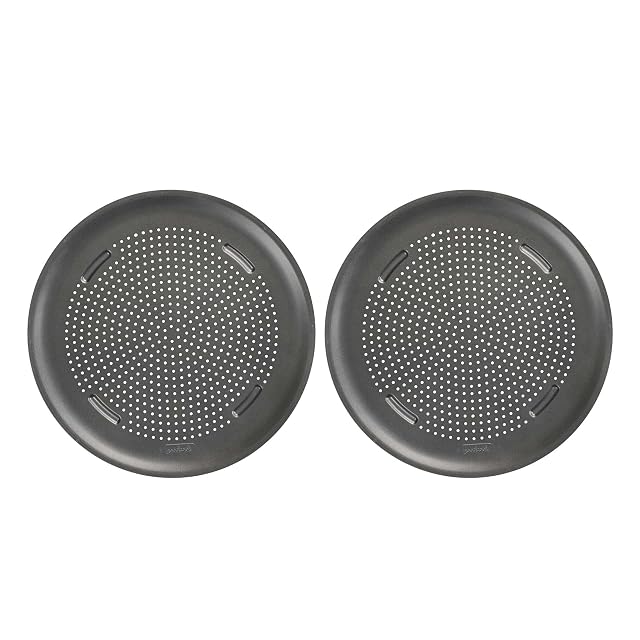
Two 15.75-inch air-insulated perforated carbon steel pizza pans with cutting guides and molded feet, in a non-stick finish.
Best for: Two large frozen or homemade pizzas at a time, cut on the pan
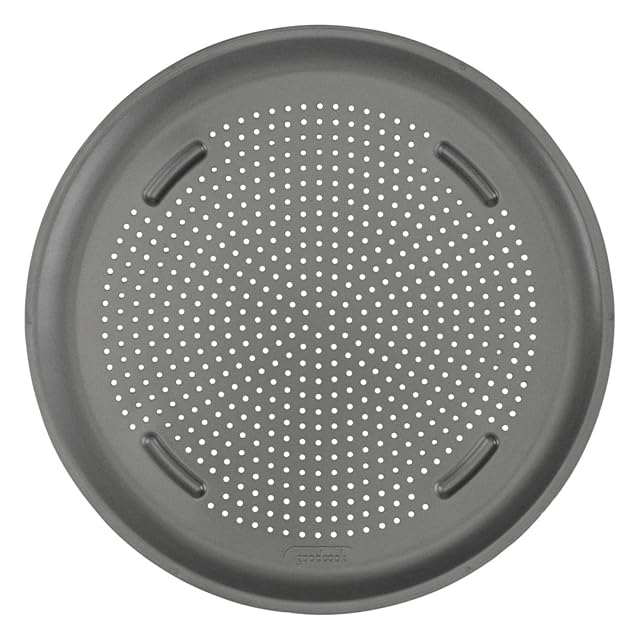
A 16-inch perforated carbon steel pizza pan with cutting guides, molded feet to keep it off the countertop and a non-stick coating.
Best for: A large pizza served in even slices without scorching the countertop
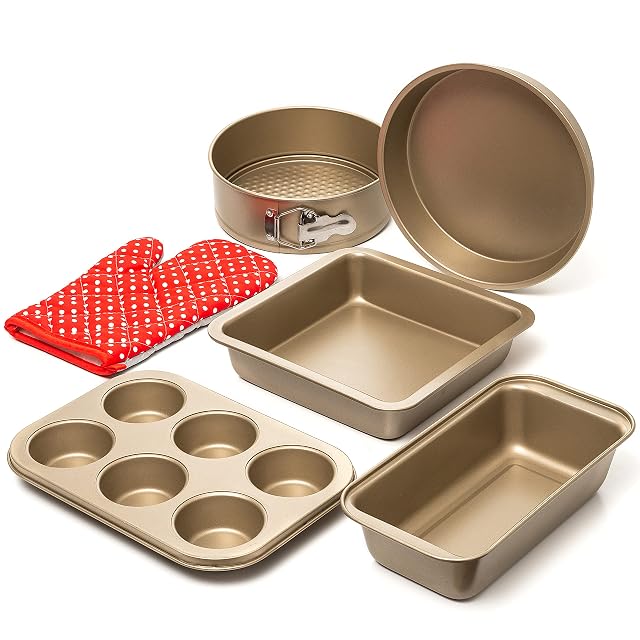
A five-piece carbon steel baking set with a PTFE non-stick coating, stackable for storage, oven safe to 450 °F, supplied with a red oven glove and a one-year warranty.
Best for: A first baking set, where the piece count matters more than the figures
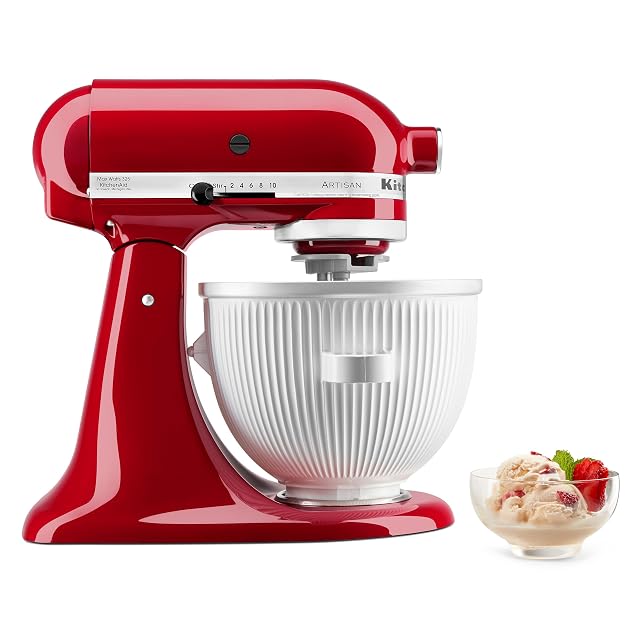
A two-quart freezer bowl, dasher and hub assembly that churns ice cream, gelato or sorbet in under thirty minutes.
Best for: A compatible KitchenAid and a freezer with room for the bowl to live in
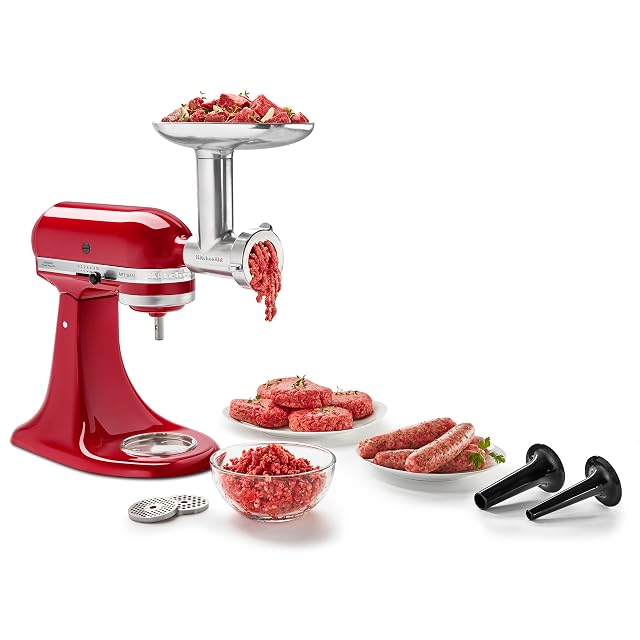
A metal food grinder for any KitchenAid mixer hub, with fine, medium and coarse plates and two sausage stuffer tubes.
Best for: Mincing your own meat for burgers and sausage, on a mixer you already own
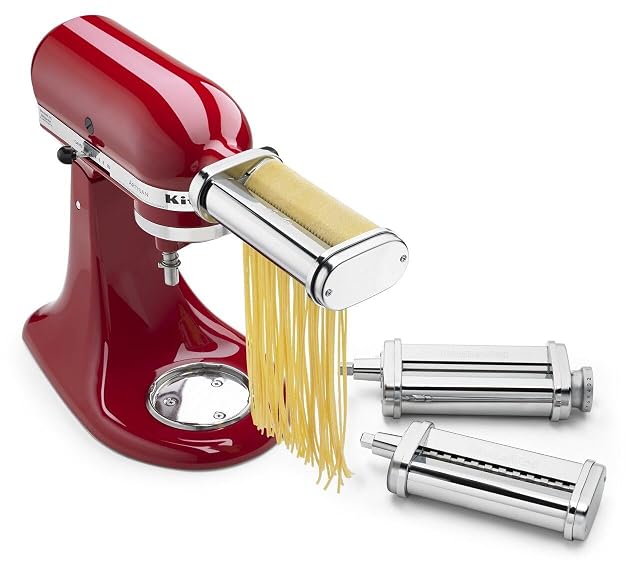
A stainless pasta roller with eight thickness settings plus spaghetti and fettuccine cutters, for any KitchenAid mixer.
Best for: Fresh pasta in quantity, where eight thicknesses and clean stainless cutting earn the price