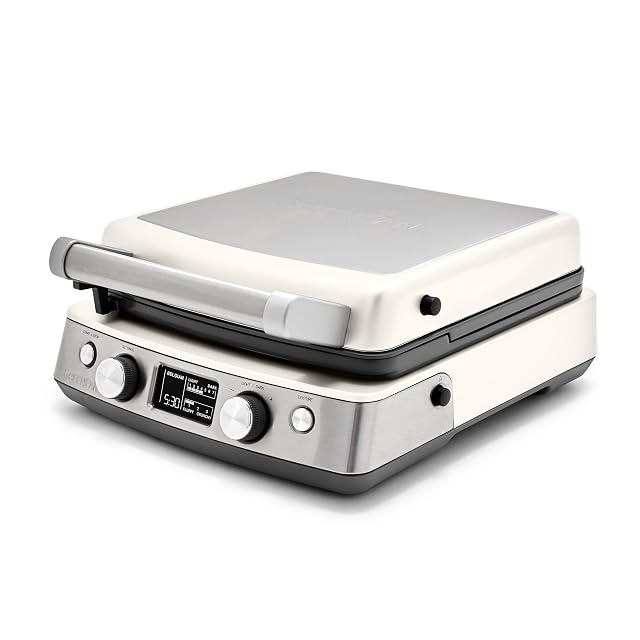
Best for: A household that wants Belgian and classic waffles without a fluoropolymer
≈ $300
Check price on Amazon Ceramic, PFAS-free, and two plate sets stored inside
A four-square waffle maker with diamond-infused ceramic cast plates free of PFAS and PFOA, two plate sets stored inside, an XL LCD, shade control and an extra-large moat.
Best for: A household that wants Belgian and classic waffles without a fluoropolymer
“Thermolon Volt, a ceramic nonstick coating… this diamond-infused ceramic nonstick is extra tough” · “free of PFAS, PFOA, lead or cadmium”
The three initialisms are nested rather than parallel. PFAS is the family of per- and polyfluoroalkyl substances. PTFE — sold as Teflon — is one member, and the standard non-stick film on cookware. PFOA is another, historically a processing aid in making PTFE and phased out of that use.
So “free of PFAS” is the claim that carries the weight. Without any fluoropolymer this is a silica-based sol-gel coating, which is a materially different thing rather than a reformulation.
And two rivals on this shelf name the alternative outright:
GVODE, $38.99 — “boards sprayed with double-layer TEflon”, plus “BPA free” Aigostar, $39.99 — “non-stick/teflon cooking surface”
The other nine items say “nonstick” and stop, including both Dash Flex Press machines, the BLACK+DECKER at $48.99, the Breville plates at $64.95, the Metine at $49.99 (which publishes “BPA-free materials”, a plastics claim rather than a coating one) and the Cuisinart GR-WAFP at $56.26.
What ceramic is better and worse at, honestly.
Better: it tolerates higher dry heat, it is harder, and it carries no fluoropolymer. Worse: ceramic coatings are hard but brittle, and generally lose slipperiness faster than PTFE does with use.
Which is consistent with what nobody on this shelf claims. Not at least one of the fourteen items here says metal-utensil safe — and the BLACK+DECKER at $48.99 is the only page that addresses care at all: “Avoid metal utensils, abrasive cleaners, and aerosol cooking sprays to help protect the coating.”
That third item matters on a ceramic plate as much as on a Teflon one. A spray can carries a propellant and usually lecithin, and the lecithin polymerizes on a hot surface into a hard brown-gold varnish that no dishwasher removes and that collects in the pockets. Brush melted butter instead.
8,165 grams. The next heaviest item on this shelf is the Metine at 3,602 g — four and a half kilos lighter.
The complete machines: Aigostar 1,814 g · both Dash Flex Press 2,268 g · OSTBA 2,313 g · BLACK+DECKER 2,812 g · Metine 3,602 g · this 8,165 g.
And the plate sets, for scale: Breville 1,619 g · Cuisinart 1,021 g · GVODE 980 g · Dash waffle pack 499 g.
Why mass is the right thing to buy on a waffle plate. Cold batter lands on a hot plate and drops its temperature, and how far it drops depends on how much heat the plate holds. A heavy plate recovers; a light one does not — which is why a second waffle off a light plate comes out paler than the first, and why you wait between batches.
“CAST PLATES” is the mechanism, and only one other item here names a plate material at all: the GVODE at $38.99, “food grade aluminum”.
Cast is the heavy end and pressed sheet the light end. A cast plate is thick metal with the pattern formed in the casting, so heat is stored in the plate rather than merely passing through it — which is exactly what “optimal heat conduction and superior performance” is reaching for.
And part of the eight kilos is the storage drawer, which is the next section.
The catalog footprint is 435 × 365 × 253 mm — about 17 × 14.4 × 10 inches — which is the largest carton on this shelf and consistent with a machine carrying a second set of cast plates inside it.
What is not published is any plate dimension. “4-Square” is the only output figure, and at least four of the fourteen items here publish a surface: 10.8 × 5.5 inches per plate on the Metine at $49.99, about 59 square inches · 8 × 5 inches on both Dash Flex Press units, 40 square inches · 4 inches on the Dash Mini pack at $9.99 · and “4-Square” here, with no measurement.
“TWO SETS OF WAFFLE PLATES: Perfect classic American-style waffles and thicker Belgian waffles” · “SIMPLE STORAGE: Belgian and Classic Waffle Plates store in the bottom of the unit for easy access”
It is the only item on this shelf that treats the two waffle styles as different foods, and the only one that stores its spare plates.
What separates them. A Belgian waffle is deep-pocketed and about three quarters of an inch thick — the only thickness figure published anywhere here, by the two Cuisinart Griddler plate sets: “4 deep pocketed, 3/4-inch thick Belgian waffles”. It comes from a batter with more leavening and sets into a crisp shell over a light, nearly hollow interior.
A classic American waffle is shallower and denser, with a finer grid and smaller pockets, and it holds syrup differently.
They want different batters. Pour a dense American batter into a ¾-inch pocket and you get a heavy slab; pour a thin Belgian batter into a shallow grid and it runs.
Everything else on this shelf picks one and mostly does not say which. The Dash waffle pack at $13.49 says “thick, fluffy”. The OSTBA at $29.99 says “fluffy waffles”. The Breville plates at $64.95 say “crispy golden waffles” and publish no count, no thickness and no pattern. The Dash Mini pack at $9.99 publishes only “4-Inch” and never states the shape at all, while its own title promises “Fun-Shaped Waffle Breakfast”.
And the storage bullet is what makes two sets practical rather than a nuisance.
Every three-plate machine on this shelf leaves two sets loose in a cupboard. The OSTBA, the Aigostar at $39.99, the BLACK+DECKER at $48.99 and the Metine at $49.99 all ship three plate sets and none says where the spares go. The Dash waffle pack at $13.49 manages only “stack neatly in cabinets or drawers”.
Three Metine plates at 10.8 × 5.5 inches is a real amount of cupboard. Here they live in the base.
“EXTRA-LARGE MOAT: To prevent batter from leaking, the large moat frames the plates on all sides.”
The other is the Breville plate set at $64.95: “the no-mess moat design feature prevents excess waffle batter spilling out and onto your counter top.”
Why overflow is the characteristic failure of a waffle plate. Waffle batter expands as it cooks — the steam that makes it light is the same steam that pushes it outward — so a plate filled level with the pattern overflows when the lid closes.
And there is no way to know the right quantity first time, because no item on this shelf publishes one. Not one of the twelve.
The overflow has somewhere to go, and all the destinations are bad. Down the outside onto the countertop. Into the seam between plate and body, where it sets hard. Or into the hinge — which the OSTBA at $29.99 names as a mechanism failure rather than a mess: “Avoid overfilling the sandwich press to prevent latch damage.” A press that will not close flat stops cooking the top face.
A moat makes the first guess survivable: the overflow runs into the channel and sets into a thin ring you snap off.
And “frames the plates on all sides” is the specification the Breville page lacks. A moat on three sides leaves one edge to run off, and a deep Belgian pattern has the smallest margin of any on this shelf — which is exactly why the item with two plate sets, one of them Belgian, has the larger moat.
Nine of the twelve items sold on Amazon.com say nothing about overflow at all.
The one habit no page gives: wipe the moat while it is still warm. Set batter on a cold plate is the worst cleaning job this shelf can produce — and on a ceramic coating you cannot reach for an abrasive.
“ADJUSTABLE SHADE & CRUNCH CONTROL: Easily find the setting for everyone—from light to golden brown” · “XL LCD DISPLAY: For total control over your settings” · “ONE-TOUCH DIAL… easy to pick your desired preset”
At least two of the fourteen machines on this shelf regulate anything.
this — shade and crunch control, an XL LCD, a one-touch dial with presets Metine, $49.99 — five levels: “1–2 for gentle warming, 3–5 for toasting and searing (from light toast to juicy steak)”
The other five have nothing: the OSTBA at $29.99, the Aigostar at $39.99, the BLACK+DECKER at $48.99, and both Dash Flex Press units — and the Dash Forged Iron at $34.99 has no on/off switch at all: “No on/off switch to fuss with; plug in and the… Cooking Surface heats up fast.”
What control is worth on a waffle. A waffle is a crust-versus-interior problem: too cool and it is pale and soft, too hot and the shell sets before the inside cooks. With a setting you can repeat, you find it once.
And “shade and crunch” is the right framing, because those are two different things a waffle maker decides: color comes from time at temperature, crispness from how much moisture leaves the shell.
What this page does not publish is a time. The Metine is the only item on this shelf that does: “we use level 3 for about 8 minutes and level 5 for about 5 minutes”, plus “Not crispy enough after opening? Just close the lid and toast for 1–2 more minutes.”
And the Metine carries the warning this page needs too: “we bake our waffles by time, not by the indicator light. The green light going off does NOT mean your waffle is ready.” An XL LCD with presets largely removes that problem — but no preset times are published here either.
No wattage is published, which on the heaviest machine on this shelf is the sharpest omission. Three of the seven machines sold on Amazon.com give one: 1200 W on the Metine, 750 W on the OSTBA at $29.99 and the Aigostar at $39.99, which also publishes 120 V. Eight kilos of cast plate takes real power to bring up to temperature, and the figure that would prove the point is absent.
No wattage, as above.
No plate dimensions. “4-Square” is the output and no measurement is given, where the Metine at $49.99 publishes 10.8 × 5.5 inches per plate and both Dash Flex Press machines publish 8 × 5 inches.
No waffle thickness. Three quarters of an inch, from the two Cuisinart Griddler plate sets at $56.26, is the only thickness figure on this shelf — and this is the one item that ships a Belgian plate and a classic plate and distinguishes them in words alone.
No batter quantity, which no item on this shelf publishes.
No preheat time and no cooking times, where the Metine publishes both.
No sandwich, grill or griddle plate. This is a waffle maker. Four machines on this shelf ship three plate sets — the OSTBA at $29.99, the Aigostar at $39.99, the BLACK+DECKER at $48.99 and the Metine at $49.99 — and both Dash Flex Press units open a full 180 degrees to lie flat as a griddle, which this does not do.
No metal-utensil guidance. Only the BLACK+DECKER at $48.99 publishes any — and on a brittle ceramic coating the advice matters more, not less.
No upright or compact storage claim, where four machines here make one. At 8,165 grams and 435 × 365 mm in plan, this is a countertop appliance rather than a cupboard one.
No cool-touch handle, where three machines here publish one — and the OSTBA is the only page on this shelf to say the body gets hot at all: “The outer surface gets hot during use—handle with care.”
No warranty, which no item on this shelf publishes — and at $299.95, ten times the cheapest whole machine here, this is the page where a term would have mattered most.
No country of manufacture, which no item on this shelf publishes either.
Read on the day this page was built: $300 at the American Amazon shop.
Read from Keepa on the day this page was last revised; stock and price both move without notice.
Prices quoted in this text were read on 2026-10-17. The live price is at the top of the page.
No fluoropolymer, and this is the only plate on this shelf that offers that. Two bullets carry it. "REVOLUTIONARY CERAMIC NONSTICK: Thermolon Volt, a ceramic nonstick coating specially designed to withstand the strain of modern appliances—this diamond-infused ceramic nonstick is extra tough." And: "TOXIN-FREE: Our signature ceramic nonstick coating is free of PFAS, PFOA, lead or cadmium." The three initialisms are nested, not parallel. PFAS is the family of per- and polyfluoroalkyl substances. PTFE — sold as Teflon — is one member of it, and the standard non-stick film on cookware. PFOA is another, historically a processing aid in making PTFE and phased out of that use. So "free of PFAS" is the load-bearing claim: without any fluoropolymer, this is a silica-based sol-gel coating, which is a genuinely different material. And two rivals on this shelf name the alternative outright. The GVODE at $38.99 — "boards sprayed with double-layer TEflon" — and the Aigostar at $39.99 — "non-stick/teflon cooking surface". The other nine items say "nonstick" and stop. What ceramic is better and worse at. Better: it tolerates higher dry heat, it is harder, and it carries no fluoropolymer. Worse: ceramic coatings are hard but brittle and generally lose slipperiness faster than PTFE does with use — which is why no page on this shelf, this one included, claims metal-utensil safety. The practical consequence: no metal in it, and no aerosol cooking spray, which the BLACK+DECKER at $48.99 is the only page here to warn about: propellant and lecithin polymerize into a varnish no dishwasher removes.
Only on the two things nothing else here offers, and you should know what you are giving up. It is ten times the cheapest whole machine on this shelf. The OSTBA at $29.99 is a 750 W three-in-one with sandwich, waffle and grill plates. The Metine at $49.99 is a 1200 W three-in-one with three plates each measured at 10.8 × 5.5 inches, five browning levels and published cooking times — the best-documented machine here by a wide margin. And what this one does not do is press or grill at all. It is a waffle maker. No sandwich plate, no grill plate, no griddle, no 180-degree hinge — where both Dash Flex Press machines at $34.99 and $49.74 "lie flat for indoor flat top grilling". What it alone offers. A ceramic coating free of PFAS, PFOA, lead and cadmium, where two rivals name Teflon. Cast plates at 8,165 grams — 4.5 kilos more than anything else here — and mass is what keeps a waffle plate hot when cold batter lands on it, which is why a second waffle off a light plate comes out paler. Two sets of plates, classic and Belgian, with somewhere to put the spare set: "SIMPLE STORAGE: Belgian and Classic Waffle Plates store in the bottom of the unit" — the only plate storage on this shelf, where every three-plate rival leaves two sets loose in a cupboard. An extra-large moat. And an XL LCD with a one-touch dial, where five of the seven machines sold on Amazon.com have no control at all. So: a dedicated waffle maker at a dedicated price, and the fair comparison is not against the three-in-ones but against buying one of them and accepting a Teflon plate.
Because a Belgian waffle and a classic American waffle are different foods, and this is the only item on this shelf that treats them that way. Bullet five: "TWO SETS OF WAFFLE PLATES: Perfect classic American-style waffles and thicker Belgian waffles." What separates them. A Belgian waffle is deep-pocketed and about three quarters of an inch thick — the only thickness figure published anywhere on this shelf comes from the two Cuisinart Griddler plate sets at $56.26, which both state "4 deep pocketed, 3/4-inch thick Belgian waffles". It comes from a batter with more leavening and sets into a crisp shell over a light, nearly hollow interior. A classic American waffle is shallower and denser, with a finer grid and smaller pockets, and it holds syrup differently because the pockets take less. They want different batters. Pour a dense American batter into a ¾-inch pocket and you get a heavy slab; pour a thin Belgian batter into a shallow grid and it runs. Everything else on this shelf picks one and does not say which. The Dash waffle pack at $13.49 says "thick, fluffy". The OSTBA at $29.99 says "fluffy waffles". The Breville plates at $64.95 say "crispy golden waffles" and publish no count, no thickness and no pattern. The Dash Mini pack at $9.99 publishes only "4-Inch" and never states the shape at all, while its title promises "Fun-Shaped Waffle Breakfast". And the storage bullet is what makes two sets practical rather than a nuisance — because on every three-plate machine here, the plates not in use have nowhere to go.
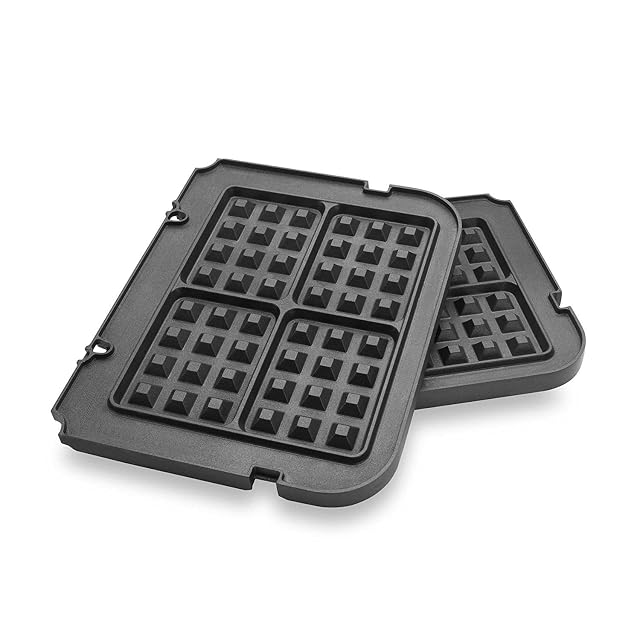
A two-plate waffle set in food-grade aluminum with double-layer non-stick for the Cuisinart Griddler GR-4N, GR-5B, GR-6 and GRID-8N, baking four ¾-inch Belgian waffles.
Best for: A Cuisinart Griddler GR-6 or GRID-8N, which nothing else here fits
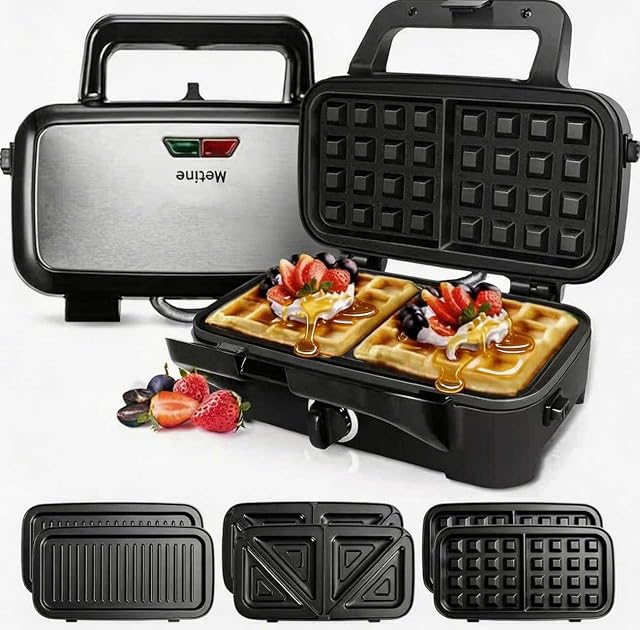
A 1,200-watt three-in-one with waffle, sandwich and grill plates each 10.8 × 5.5 inches, five browning levels, a ready light and published cooking times.
Best for: A household that wants control and repeatability from a three-in-one press
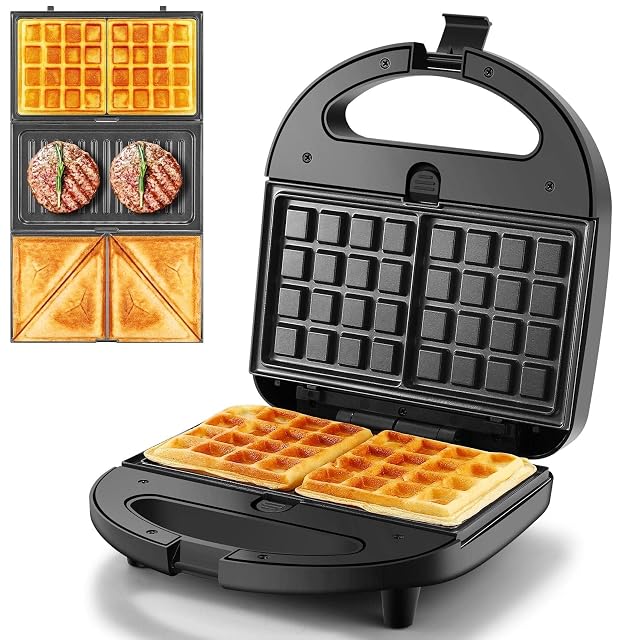
A 750-watt three-in-one sandwich, waffle and grill press with interchangeable non-stick plates, a cool-touch handle, anti-slip feet and upright storage.
Best for: A first three-in-one press, where price and plate count matter most
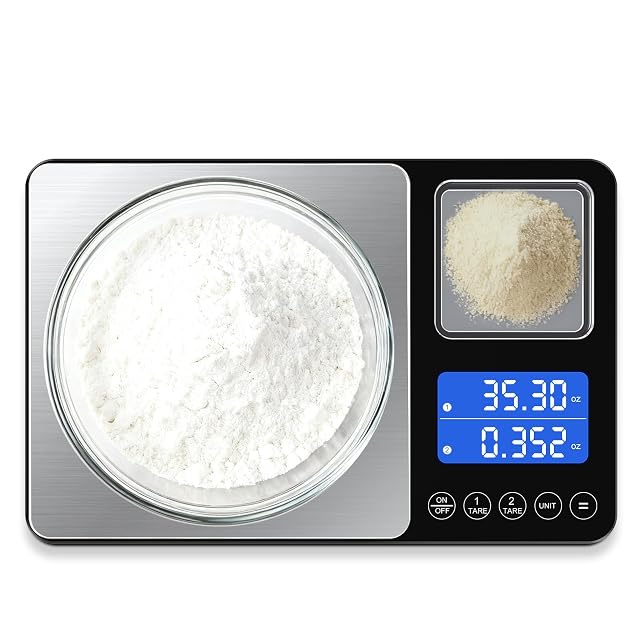
A dual-platform kitchen scale with a 33 lb / 1 g large platform and a 1.1 lb / 0.01 g mini platform, a dual-line display that adds both, and a five-minute shutoff.
Best for: Bread baking by percentage, where salt and yeast have to be weighed too
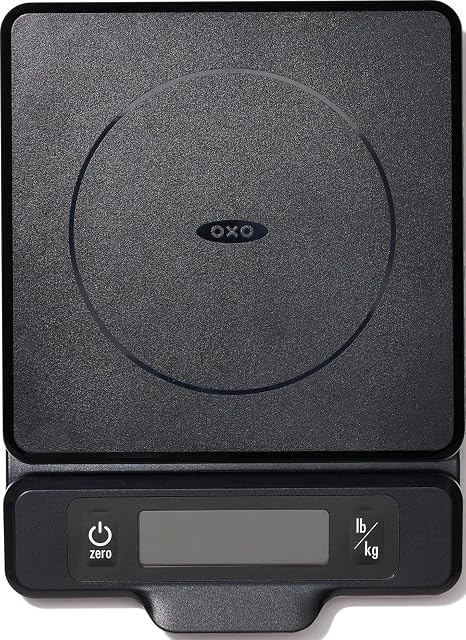
A 5-pound kitchen scale with a display that pulls away from the base, a removable platform, a capacity meter, an optional backlight and 1/8-ounce increments.
Best for: Baking in bowls, where reading the display matters more than capacity
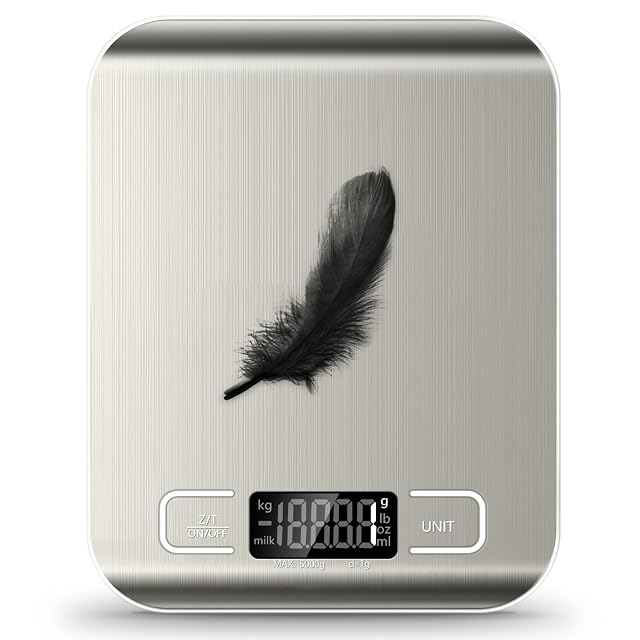
An 11-pound stainless kitchen scale reading to 1 g (0.04 oz) in six units, with tare, a backlit LCD, overload and low-battery warnings and a two-minute shutoff.
Best for: Flour, sugar and portions, at the lowest price on this shelf