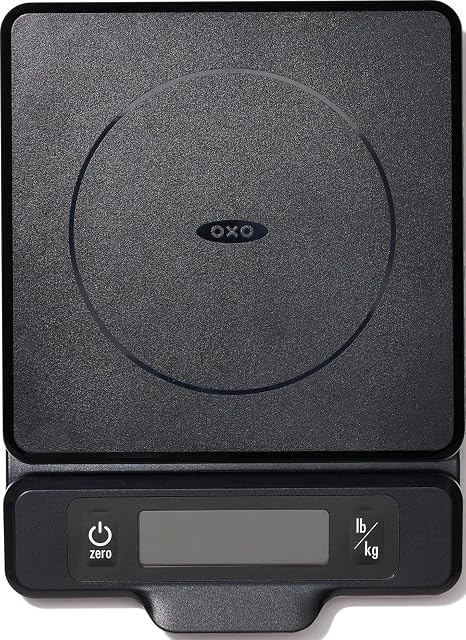
Best for: Baking in bowls, where reading the display matters more than capacity
≈ $38
Check price on Amazon A pull-out display, and the only capacity meter
A 5-pound kitchen scale with a display that pulls away from the base, a removable platform, a capacity meter, an optional backlight and 1/8-ounce increments.
Best for: Baking in bowls, where reading the display matters more than capacity
The capacities here:
5 lb / 2.27 kg — this, alone 11 lb / 5 kg — eight scales, from $6.98 to $64.95, including this maker’s own at $64.95 22 lb / 10 kg — the Greater Goods at $24.99, the Etekcity USB at $29.99 33 lb / 15 kg — the GGQ at $17.98, the Letron at $34.99
The commonest figure on this shelf is double this. The highest is more than six times it. And ten of the thirteen scales sold on Amazon.com cost less than this one.
What five pounds covers. 2.27 kilograms. A 1 kg bag of flour with the bowl: fine. 500 g of butter, a dozen eggs, a kilo of sugar: fine. Almost all domestic baking by weight sits under two kilos, and this is a scale for exactly that.
What it does not cover. A stand-mixer bowl alone can be 1.5 kg before anything goes in it — two thirds of this capacity on an empty bowl. A cast-iron Dutch oven is 4 to 6 kg empty, which is over the limit untouched. A turkey, a stockpot, a batch of mince for the freezer: all out.
And the quiet failure is overload. A strain-gauge scale measures the deflection of a beam, and pushing past capacity bends the beam permanently — after which the scale reads consistently wrong rather than failing outright, which is worse than a blank display because you keep trusting it.
Which is why the pairing on this page is the right one. The lowest-capacity scale on the shelf is also the only one with a capacity meter.
“Convenient meter shows how much of Scale’s capacity remains”
Nothing else among the thirteen items here has one.
Two scales publish an overload warning instead: the SOYOK at $6.98 (“automatic overload and low battery warning modes”) and the GGQ at $17.98 (“overload remind”).
And a warning is the worse answer, because it fires after the event. A meter tells you you are at four pounds of five before you add the next thing. A warning tells you you have already gone past.
On a five-pound scale that distinction is the whole argument. A bowl plus flour plus sugar plus butter reaches 2.27 kg faster than a cook expects, and the meter is what stops the last addition from being the one that bends the beam.
Ten scales on this shelf have neither.
The second thing the meter does, which the page does not say: it tells you whether the reading you are looking at is near the top of the range, where any strain-gauge scale is least linear. A scale is most accurate in the middle of its span.
And one habit no page on this shelf gives, since nothing here has a calibration function: check it against a known mass now and again. A liter of water from the tap is 1,000 g to within a gram or two — which on a 2,270 g scale is a useful mid-range reference.
“Display pulls away from base to avoid shadowing from plates or bowls”
This is the one genuine design problem of a kitchen scale, and at least three of the fifteen items here address it.
The problem: the platform sits above the display. Put a mixing bowl on the scale and it covers the number you need — and no backlight shines through a mixing bowl.
The three answers:
Pulling the display out of the body — this, and this maker’s own 11 lb scale at $64.95, in the same words Extending the display past the platform — the Greater Goods at $24.99: “the bright Hi-Def LCD display extends beyond the weighing platform for better visibility under large mixing bowls” A backlight, which does not solve the geometry at all — the SOYOK at $6.98, the Ultrean at $6.98, the Etekcity at $13.99, and this, which has one too: “optional backlight”
Nine scales ignore it entirely.
Which is better. A pull-out display reaches furthest. It can be set clear of a 12-inch pot, which an extended display cannot. And it is a mechanism, with a cable and a slide to fail, where an extended display has nothing to go wrong.
More reach, more to break.
The “optional” in “optional backlight” is worth noting as well. A backlight that can be turned off is a backlight that is not costing you battery on every weighing — and four scales on this shelf publish a backlight while only this one makes it switchable.
The workaround on every scale that does neither, which no page here suggests: zero the scale, add the ingredient, then lift the bowl to read — or use a HOLD function. Three scales on this shelf have one: the Greater Goods at $24.99 (up to 5 minutes, the only duration published anywhere here), the Etekcity USB at $29.99, and not this one.
“Platform removes for hand washing, thin profile allows for simple storage”
The OXO at $64.95 publishes the same: “Removable platform for convenient cleaning.” Nobody else on this shelf does.
Where the problem lies. A scale platform meets raw meat, lemon juice, flour and spills. On a fixed-platform scale the join between platform and housing is a crevice no cloth reaches — and the path water takes to the load cell.
A damp load cell drifts rather than dies, which is the worst way for a scale to fail: you keep trusting the number.
The shelf, on water:
A published rating — the Etekcity USB at $29.99 alone, IPX6: “allowing you to easily measure liquids and wipe the scale clean” A claim with no rating — the SOYOK at $6.98 (“more waterproof and wear-resistant”), the GGQ at $17.98 (“waterproof Anti-collision glass weighing panel”) A sealed panel — the Escali at $25: “Display and controls are sealed under a protective shield to guard against accidental spills” An explicit prohibition — the KitchenAid at $23.99: “Hand wash only; do not immerse in water or put in dishwasher; wipe with a damp cloth and dry thoroughly” A removable platform — this, and the OXO at $64.95 Silence — the other six
So the two OXO scales take the mechanical route rather than the sealing route, and it is arguably the better one. The part that gets dirty comes off; the part with electronics in it never goes near the tap.
One habit the page does not give: dry the housing under the platform too. That is where spills collect once the platform is off, and it is directly above the load cell.
“Thin profile allows for simple storage” is the second half of the bullet, and the catalog qualifies it: 46 mm, which is in fact the third thickest on this shelf. The slim scales here are the Ultrean and the SOYOK at 15 mm, the GGQ at 18 mm and the Etekcity at 19 mm — the last of which sells exactly that, “easily storable in cabinets”. The thickest are the KitchenAid at 53 mm and the Letron at 47 mm.
At 581 grams it is in the upper half by weight: Etekcity 200 g · SOYOK 222 g · GGQ 250 g · Greater Goods 367 g · Amazon Basics 381 g · Escali 431 g · KitchenAid 535 g · Letron 544 g · Etekcity nutritional 544 g · this 581 g · Etekcity USB 700 g · OXO 11 lb 816 g.
And weight is not nothing: a heavier scale slides less when you stir a bowl standing on it.
“measures in 1/8-ounce and 1-gram increments”
One gram is the resolution of at least twelve of the fifteen scales on this shelf. Only the Letron at $34.99 reads finer, with two platforms: a mini one at 0.001 oz / 0.01 g up to 1.1 lb / 500 g, and a large one at 1 g up to 33 lb.
And the ounce figure is the coarser of the two published here. An eighth of an ounce is about 3.5 grams — so the ounce display moves in roughly 3.5-gram jumps while the gram display moves in one.
The same is true across this shelf. 0.05 oz, which four scales publish, is about 1.4 g. 0.1 oz, on the KitchenAid at $23.99 and the GGQ at $17.98, is about 2.8 g. And the KitchenAid’s 0.1 fluid ounce is about 3 g, since a US fluid ounce of water weighs about 29.6 grams.
So the practical rule on every scale here is the same and no page states it: weigh in grams. Every ounce and every milliliter reading is a derived number with a coarser step — and for volume, it rests on an assumed density, because a scale cannot measure volume at all.
What one gram cannot do. A sachet of dried yeast is about 7 g — at ±1 g that is ±14 percent, the difference between a dough that proves in an hour and one that takes three. Three grams of salt in a loaf is ±33 percent. Baking powder, bicarbonate and ground spices sit in the same range.
What it is exactly right for is everything else. 500 g of flour at ±1 g is ±0.2 percent.
One gram is the resolution of flour, not of salt. And the only page on this shelf to say so is the Greater Goods at $24.99: “Not for laboratory or microgram measurements.”
No unit list. The page gives ounces and grams and nothing else — no milliliters, no fluid ounces, no pounds-and-ounces. Across the shelf: six units — the SOYOK at $6.98, the Ultrean at $6.98, the Greater Goods at $24.99 · five — the Amazon Basics at $11.14, the Etekcity at $13.99, the GGQ at $17.98, the Etekcity USB at $29.99 · four — the Letron at $34.99 · three — the Escali at $25. On a five-pound scale, lb:oz is the unit an American recipe will actually ask for, and it is not confirmed.
No minimum weighable load. Five scales here publish one: 2 g — the Amazon Basics at $11.14, the Etekcity USB at $29.99 · 3 g — the GGQ at $17.98, the Etekcity nutritional at $39.99 · 0.01 g — the Letron’s mini platform. Resolution is the step; the minimum is the floor — and a 1-gram scale with a 2-gram floor shows 0 for 1.5 g, not approximately but zero.
No auto shutoff. The durations on this shelf run from two to five minutes: 2 minutes — the SOYOK, the GGQ, the Greater Goods · 3 minutes — the KitchenAid, triggered by no change in weight rather than idleness · 4 minutes — the Escali · 5 minutes — the Letron. Six scales, including this and its stablemate, publish none. Why it matters: a recipe is weighed cumulatively, and a scale that switches off between two additions loses the tare.
No HOLD function, as above.
No battery type. Four scales here use 2 AAA, two use 3 AAA, and two are rechargeable — the GGQ at $17.98 and the Etekcity USB at $29.99 (Type-C, cable supplied). Neither OXO publishes a power source at all.
No material. Three scales name 304 stainless — the Ultrean at $6.98, the Etekcity at $13.99, the Etekcity nutritional at $39.99 — and this maker’s own $64.95 scale names “Stainless Steel” as “smudge and fingerprint-resistant”. This page names nothing, on the one feature it sells for cleaning.
No platform dimensions. Only the GGQ at $17.98 publishes a platform figure on this shelf — “7.5” x 5.5"" — and three publish overall dimensions. The catalog here gives 234 × 203 mm — about 9.2 × 8 inches — which is the body, and includes the pull-out.
No load-sensor count, where the GGQ and the Etekcity nutritional both publish four. Four corner cells sum the load so the reading does not depend on where the bowl sits. The test on any scale: put a full tin in the middle, note the number, then move it to each corner.
No anti-slip feet, where the SOYOK at $6.98 publishes four and the GGQ “4 no-slip rubbers”.
No warranty. Three items on this shelf publish something: the Escali at $25 — a lifetime warranty, the only one here · the Greater Goods at $24.99 — 5 years limited plus “lifetime support from our St. Louis team” · the GGQ at $17.98 — “12 Months Support”. Ten publish nothing, including both OXO scales.
No country of manufacture, which no item on this shelf publishes.
Read on the day this page was built: $33 at the American Amazon shop.
Read from Keepa on the day this page was last revised; stock and price both move without notice.
Prices quoted in this text were read on 2026-10-17. The live price is at the top of the page.
For baking by the bowl, yes. For a mixer bowl, a turkey or a Dutch oven, no — and this is the lowest capacity on the shelf. Bullet one: "5-pound-capacity Food Scale measures in 1/8-ounce and 1-gram increments." The capacities here: 5 lb / 2.27 kg — this, alone · 11 lb / 5 kg — eight scales, from $6.98 to $64.95, including this maker’s own at $64.95 · 22 lb / 10 kg — the Greater Goods at $24.99 and the Etekcity USB at $29.99 · 33 lb / 15 kg — the GGQ at $17.98 and the Letron at $34.99. So the commonest figure on this shelf is double this and the highest is more than six times it — and ten of the thirteen scales sold on Amazon.com cost less than this one. What five pounds covers. 2.27 kilograms. A 1 kg (2.2 lb) bag of flour with the bowl: fine. 500 g (17.6 oz) of butter, a dozen eggs, a kilo of sugar: fine. Almost all domestic baking by weight sits under two kilos, and this is the scale for it. What it does not cover. A stand-mixer bowl alone can be 1.5 kg (3.3 lb) before anything goes in — which uses two thirds of this capacity on an empty bowl. A cast-iron Dutch oven is 4 to 6 kg (8.8 to 13.2 lb) empty, which is over the limit untouched. A turkey, a stockpot, a batch of mince for the freezer: all out. And the quiet failure is overload. A strain-gauge scale measures the deflection of a beam, and pushing past capacity bends the beam permanently — after which the scale reads consistently wrong rather than failing outright, which is worse than a blank display. Which is precisely why this scale has the feature that nothing else here does: "Convenient meter shows how much of Scale’s capacity remains." On the lowest-capacity scale on the shelf, that is the right pairing.
The one genuine design problem of a kitchen scale, and only at least three of the fifteen items here address it. Bullet two: "Display pulls away from base to avoid shadowing from plates or bowls." The problem. The platform sits above the display. Put a mixing bowl on the scale and it covers the one number you need — and no backlight shines through a mixing bowl. Three answers on this shelf. Pulling the display out of the body — this, and this maker’s own 11 lb scale at $64.95, with the same wording. Extending the display past the platform — the Greater Goods at $24.99: "the bright Hi-Def LCD display extends beyond the weighing platform for better visibility under large mixing bowls." And a backlight, which does not solve the geometry at all — the SOYOK at $6.98 (a "night vision mode"), the Ultrean at $6.98 (a "negative white display"), the Etekcity at $13.99 ("Backlit LCD with large fonts") and this, which has one as well: "optional backlight". Nine scales ignore it entirely. Which answer is better. A pull-out display reaches furthest — it can be set clear of a 12-inch pot, which an extended display cannot — and it is a mechanism, with a cable and a slide to fail, where an extended display has nothing to go wrong. The honest trade: more reach, more to break. And the workaround on every other scale here, which no page suggests: zero the scale, add the ingredient, then lift the bowl to read — or use a HOLD function, which three scales on this shelf have: the Greater Goods at $24.99 (up to 5 minutes, the only duration published), the Etekcity USB at $29.99, and not this one.
Because almost nothing on this shelf can be washed properly, and this is one of only two that can. Bullet six: "Platform removes for hand washing, thin profile allows for simple storage." Its stablemate at $64.95 publishes the same: "Removable platform for convenient cleaning." Nobody else does. Where the problem lies. A kitchen scale platform meets raw meat, lemon juice, flour and spills — and on a fixed-platform scale the join between platform and housing is a crevice no cloth reaches and the path water takes to the load cell. A damp load cell drifts rather than dies, which is the worst way for a scale to fail, because you keep trusting the number. The shelf, on water: a published rating — the Etekcity USB at $29.99 alone, IPX6: "allowing you to easily measure liquids and wipe the scale clean" · a claim with no rating — the SOYOK at $6.98 ("more waterproof"), the GGQ at $17.98 ("waterproof Anti-collision glass") · a sealed panel — the Escali at $25: "Display and controls are sealed under a protective shield to guard against accidental spills" · an explicit prohibition — the KitchenAid at $23.99: "Hand wash only; do not immerse in water or put in dishwasher; wipe with a damp cloth and dry thoroughly" · a removable platform — this and the $64.95 OXO · and silence — the other six. So the two OXO scales take the mechanical route rather than the sealing route, and it is arguably the better one: the part that gets dirty comes off, and the part with electronics in it never goes near the tap. The habit the page does not give: dry the housing under the platform too, because that is where spills collect once the platform is off.
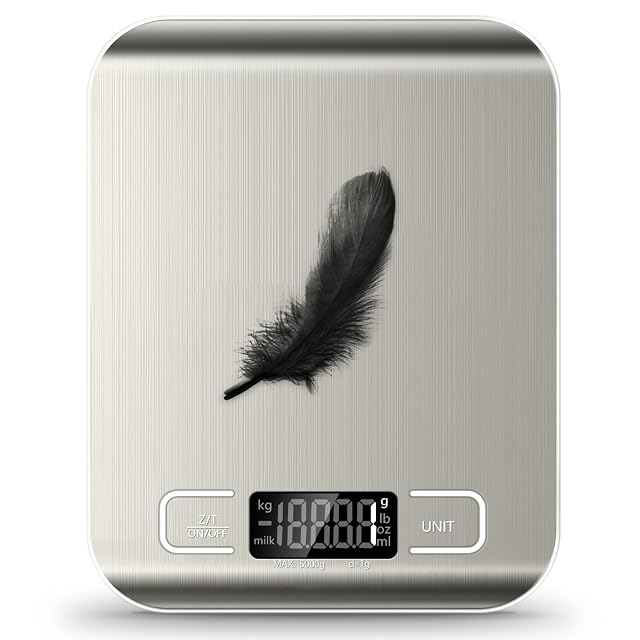
An 11-pound stainless kitchen scale reading to 1 g (0.04 oz) in six units, with tare, a backlit LCD, overload and low-battery warnings and a two-minute shutoff.
Best for: Flour, sugar and portions, at the lowest price on this shelf
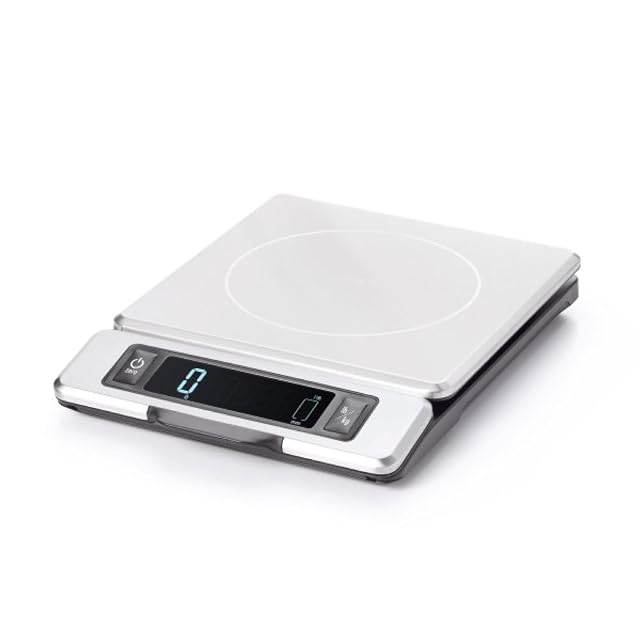
An 11-pound stainless steel food scale with a display that pulls away from the base, a removable platform, large digital numbers and a zero function.
Best for: A buyer who wants the display and the platform to be the whole specification
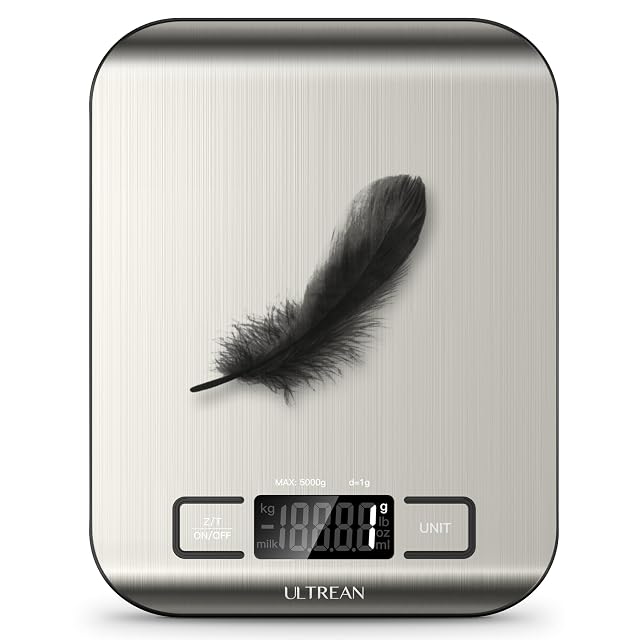
An 11-pound 304 stainless kitchen scale with six units including milk volume, tare, a negative white backlit display and batteries included.
Best for: Everyday weighing where 304 steel and a legible display matter most
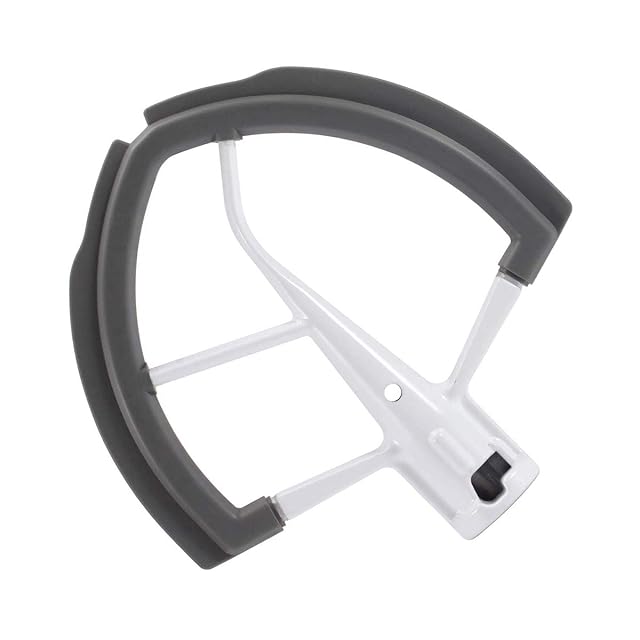
A coated-metal flex edge beater with silicone edges for 6 quart bowl-lift KitchenAid mixers, dishwasher safe, with the bowl size and exclusions published.
Best for: A 6 quart bowl-lift KitchenAid with a stainless bowl, measured first
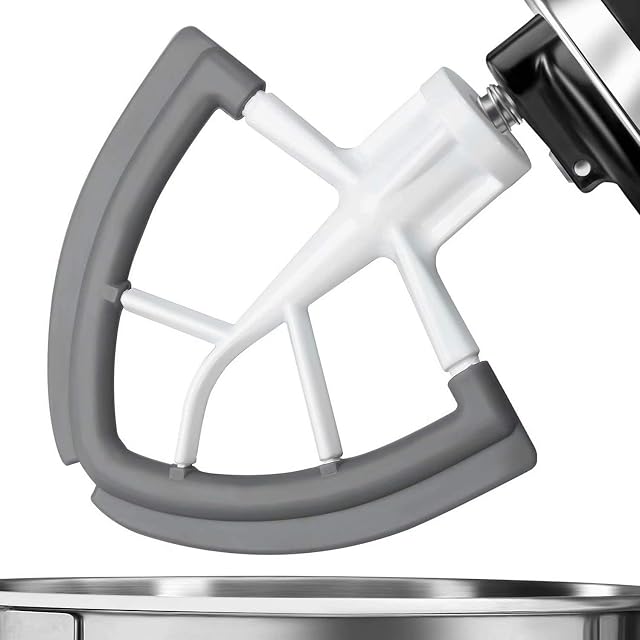
A die-cast aluminum flex edge beater with a Teflon coating and silicone edges for 4.5 and 5 quart tilt-head KitchenAid mixers, stated to cut mixing time by half.
Best for: A 4.5 or 5 quart tilt-head KitchenAid, for batters rather than dough
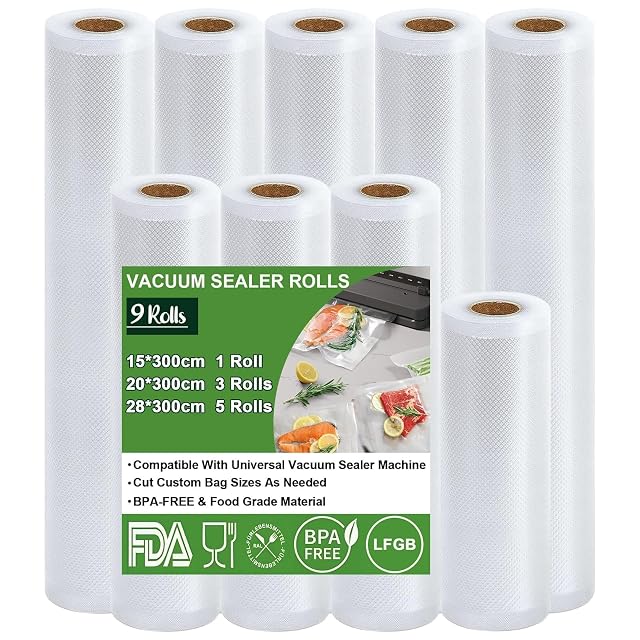
Nine rolls across three widths — 5.9, 7.9 and 11 in (15, 20 and 28 cm), each 9.8 feet — with a published thickness of 190 microns from a seven-layer coextruded film. Omtofo states BPA-free, reusable material suitable for the microwave and for sous-vide.
Best for: A kitchen that seals a lot of small things and hates wasting wide film.