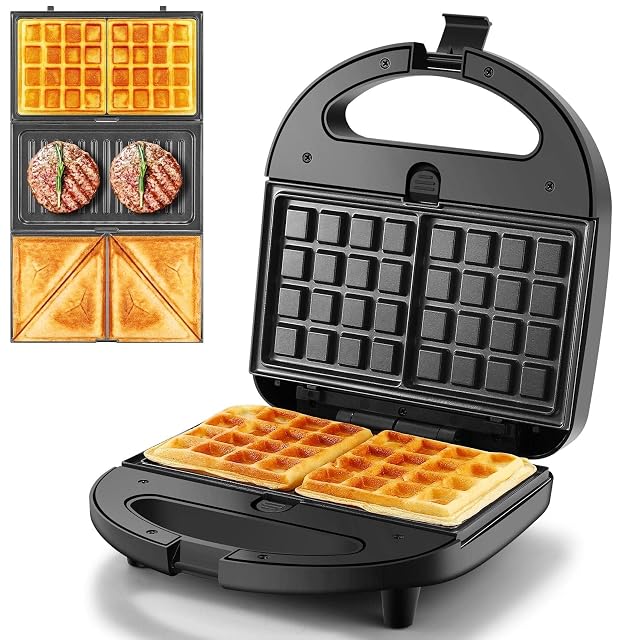
Best for: A first three-in-one press, where price and plate count matter most
≈ $30
Check price on Amazon The cheapest whole machine here, at 750 watts
A 750-watt three-in-one sandwich, waffle and grill press with interchangeable non-stick plates, a cool-touch handle, anti-slip feet and upright storage.
Best for: A first three-in-one press, where price and plate count matter most
This shelf holds five plate-only sets and seven complete machines, and this is the cheapest machine on it.
The machines, by price:
OSTBA, $29.99 — three plate sets: sandwich, waffle, grill · 750 W Dash Forged Iron, $34.99 — two sets: grill and griddle, with waffle plates sold separately at $13.49 Aigostar, $39.99 — three sets: panini, grill, waffle · 750 W, 120 V BLACK+DECKER, $48.99 — three sets: waffle, grill, sandwich Dash Graphite, $49.74 — two sets: grill and waffle Metine, $49.99 — three sets, each 10.8 × 5.5 inches · 1200 W · five browning levels GreenPan, $299.95 — two waffle sets, classic and Belgian, with an LCD and shade control
And three plate-only sets on this shelf cost more than this entire appliance: the Breville waffle plates at $64.95, the Cuisinart GR-WAFP at $56.26 and the GVODE at $38.99. The Breville plates alone weigh 1,619 grams against this machine’s 2,313.
Which is the honest frame for the whole shelf. If you already own a Cuisinart Griddler or a Breville Smart Grill, a plate set is the cheap way to add waffles. If you own neither, a complete three-plate machine starts at thirty dollars.
What the extra money buys further up: control. Only at least two of the fourteen machines here regulate browning — the Metine’s five levels and the GreenPan’s shade and crunch control — and only two publish a moat against overflow, which is the thing this page warns you about instead.
“Avoid overfilling the sandwich press to prevent latch damage.”
It is the only mention of the mechanism on this shelf, and the mechanism is where a press actually fails.
A press closes with a latch that pulls the two plates together, sized for the gap the plates are meant to leave. Overfill it and the latch takes the load of holding the lid against a filling that will not compress.
On a waffle plate it is worse, because waffle batter expands as it cooks — the steam that makes a waffle light is the same steam that pushes it outward. A plate filled to the pattern will overflow when the lid comes down.
So the failure is not a mess, it is a mechanism. Batter and cheese forced into the hinge set hard, and a press that will not close flat stops cooking the top face at all.
Two items on this shelf solve the problem rather than warning about it:
Breville, $64.95 — “the no-mess moat design feature prevents excess waffle batter spilling out and onto your counter top” GreenPan, $299.95 — “EXTRA-LARGE MOAT: to prevent batter from leaking, the large moat frames the plates on all sides”
A moat is a recessed channel outside the pattern that catches the overflow and sets it into a thin ring you snap off.
At least nine of the fourteen items here say nothing about overflow, and no item on this shelf publishes a batter quantity.
So the method on this machine is empirical: underfill the first waffle deliberately, watch how far it spreads, and use that as the measure. And wipe the rim while it is still warm — set batter on a cold plate is the worst cleaning job this shelf can produce.
The second half of the same bullet is the other candid line: “The outer surface gets hot during use—handle with care and avoid direct contact.” Which is why the cool-touch handle in bullet four matters: three machines here publish one — this, the Aigostar at $39.99 and the BLACK+DECKER at $48.99 (“heat-resistant handle”).
The wattages on this shelf:
1200 W — the Metine at $49.99, with “dual-sided heat conduction” 750 W — this, and the Aigostar at $39.99, which also publishes 120 V None — both Dash Flex Press machines, the BLACK+DECKER at $48.99, and the GreenPan at $299.95
So the most expensive machine here publishes no power figure and the cheapest does.
What wattage governs is not the final temperature — a thermostat sets that — but how fast the plates reach it and how fast they recover.
A press loses heat every time the lid opens and every time cold food lands on it. Power decides whether the second sandwich takes as long as the first, and 1200 W against 750 W is a sixty percent difference in that recovery — which is part of why the Metine can offer five browning levels and this offers none.
At 120 volts, 750 watts is 6.25 amperes — well inside a 15-amp circuit, with room for a kettle alongside. 1200 W is 10 amperes, which is most of a circuit.
And “double-sided heating” is the other half of the claim. Both plates heated means the food cooks from above and below at once, which is the whole difference between a press and a pan. Only this and the Metine state it explicitly.
What is missing is the cooking surface, and without it the wattage cannot be interpreted. 750 watts over a small plate is hotter than 750 watts over a large one.
Four of the twelve items sold on Amazon.com publish a surface: 10.8 × 5.5 inches per plate on the Metine (about 59 square inches) · 8 × 5 inches on both Dash Flex Press machines (40 square inches) · 4 inches on the Dash Mini plate pack at $9.99 · “4-Square” on the GreenPan, with no dimension.
The catalog footprint here is 101 × 237 × 215 mm — about 4 × 9.3 × 8.5 inches — which is consistent with a compact press stored on its end, and is the carton rather than the plate.
“Compact and upright storage-friendly design fits easily in any kitchen” · “anti-slip feet ensure safety while cooking”
Upright storage is published by four machines here: this, the Aigostar at $39.99 (“locks shut and has a collectable cord”), the Metine at $49.99 (“stands upright for neat storage”) and the Dash Forged Iron at $34.99 (“this small Grill locks closed to store away”).
Which matters because a press is a flat, heavy object that is used occasionally, and on its end it occupies the depth of a book rather than the area of a chopping board.
The anti-slip feet are unique on this shelf, and they are not trivial on a press in particular. Closing a latch means pushing down and forward on a machine with a hot plate in it — and a press that slides is a press that slides towards you.
At 2,313 grams this is in the middle of the machines here: Aigostar 1,814 g · both Dash Flex Press 2,268 g · this 2,313 g · BLACK+DECKER 2,812 g · Metine 3,602 g · GreenPan 8,165 g.
The GreenPan is three and a half times this machine, which is what cast plates and a two-set storage drawer weigh.
What this page does not publish on storage is where the plates not in use go. Three plate sets means two sets are always out of the machine, and only one item on this shelf solves that: the GreenPan at $299.95 — “SIMPLE STORAGE: Belgian and Classic Waffle Plates store in the bottom of the unit.” The Dash waffle pack at $13.49 at least claims its plates “stack neatly in cabinets or drawers”.
“Each plate features a food-safe non-stick coating for effortless food release and easy cleanup. Dishwasher safe and simple to swap out.”
“Food-safe” is a claim with no content — a coating sold for cooking is food-safe by definition — and the page names no material.
Three of the twelve items sold on Amazon.com do name one:
GVODE, $38.99 — “boards sprayed with double-layer TEflon”, and “BPA free” Aigostar, $39.99 — “non-stick/teflon cooking surface” GreenPan, $299.95 — “Thermolon Volt, a diamond-infused ceramic nonstick… free of PFAS, PFOA, lead or cadmium”, which makes it the only non-fluoropolymer plate on this shelf
at least twelve of the fourteen items here say dishwasher safe. Two qualify it.
GVODE, $38.99: “Most of time, recommend hand wash with soap to protect the non-stick for long term use.” BLACK+DECKER, $48.99, the only care warning on the shelf: “Avoid metal utensils, abrasive cleaners, and aerosol cooking sprays to help protect the coating.”
That third item is the one nobody else mentions and it is the most useful. Aerosol cooking sprays carry propellant and lecithin, which polymerize on a hot non-stick plate into a gummy varnish that no dishwasher removes — and on a waffle pattern it collects in the corners. Brush a little melted butter or oil instead.
The metal-utensil point applies here in full too. A sandwich that sticks gets a knife to it, and one cut in a non-stick film propagates from that point for the rest of the plate’s life — which on a machine whose plates are its whole value is the expensive failure.
And one habit no page on this shelf gives: let the plates cool before pulling them out and washing them. Thermal shock from a hot plate into cold water is what crazes a coating, and a press is at its most vulnerable the moment you finish with it.
No cooking surface, as above, which also leaves the 750-watt figure uninterpretable.
No browning or temperature control of any kind. Only two of the seven machines sold on Amazon.com have one: the Metine’s five levels (“1–2 for gentle warming, 3–5 for toasting and searing”) and the GreenPan’s “ADJUSTABLE SHADE & CRUNCH CONTROL” with an XL LCD and a one-touch dial.
No indicator light. The BLACK+DECKER publishes a green ready light that “cycles on and off with the thermostat” and tells you to “wait for the green light before adding food”; the Aigostar publishes a red power light and a green preheat light. This machine has neither — so preheat by the clock, about five minutes, and judge doneness by time.
No timer. The Metine is the only page here with times: “level 3 for about 8 minutes and level 5 for about 5 minutes”, and the only one that warns the light is not a doneness signal.
No moat, as above, on the one machine that warns about overfilling.
No waffle thickness or count. The Cuisinart at $56.26 and the GVODE at $38.99 both publish “4 deep pocketed, 3/4-inch thick Belgian waffles” — the only thickness on this shelf.
No plate material. Two items name one: the GVODE’s “food grade aluminum” and the GreenPan’s “CAST PLATES”. Mass is what keeps a plate hot when cold batter lands on it.
No drip tray, where the Dash Forged Iron at $34.99 publishes one: “the Drip Tray channels grease away”. On a machine sold for “crispy bacon” and “juicy steak”, the fat goes somewhere.
No 180-degree hinge. Both Dash Flex Press machines open flat — “opens a full 180 degrees to lie flat, creating an indoor grill on your countertop” — which doubles the surface and is the clearest functional difference on this shelf. The BLACK+DECKER explicitly forbids it: “Always operate the unit in the closed position.”
No warranty, which no item on this shelf publishes.
No country of manufacture, which no item on this shelf publishes either.
Read on the day this page was built: $30 at the American Amazon shop.
Read from Keepa on the day this page was last revised; stock and price both move without notice.
Prices quoted in this text were read on 2026-10-17. The live price is at the top of the page.
The real failure mode of a hinged press, and this is the only page on this shelf to name it. Bullet five: "Usage Tips: Avoid overfilling the sandwich press to prevent latch damage. The outer surface gets hot during use—handle with care and avoid direct contact." Why it happens. A press closes with a latch that pulls the two plates together, and the latch is sized for the gap the plates are meant to leave. Put too much in and the latch takes the load of holding the lid against a filling that will not compress — and on a waffle plate it is worse, because waffle batter expands as it cooks: the steam that makes a waffle light also pushes it outward. So the failure is not a mess, it is a mechanism. Batter and cheese forced into the hinge set hard, and a press that cannot close flat stops cooking the top face. Two items on this shelf solve the problem instead of warning about it, and both call it a moat. The Breville at $64.95: "the no-mess moat design feature prevents excess waffle batter spilling out and onto your counter top." The GreenPan at $299.95: "EXTRA-LARGE MOAT: to prevent batter from leaking, the large moat frames the plates on all sides." A moat is a recessed channel outside the pattern that catches overflow and sets it into a thin ring you snap off. At least nine of the fourteen items here say nothing about overflow at all, and no item on this shelf publishes a batter quantity. So the practical method on this machine is to underfill the first waffle deliberately, watch how far it spreads, and use that as the measure for the rest.
It is the shelf’s lower figure and only three of the seven machines sold on Amazon.com publish one at all. The published wattages here: 1200 W — the Metine at $49.99, with "dual-sided heat conduction" · 750 W — this, and the Aigostar at $39.99, which also states 120 V · nothing — both Dash Flex Press machines at $34.99 and $49.74, the BLACK+DECKER at $48.99, and the GreenPan at $299.95. So the most expensive machine on this shelf publishes no power figure and the cheapest does. What wattage governs. Not the final temperature, which is set by a thermostat, but how fast the plates get there and how fast they recover. A press loses heat every time the lid opens and every time cold food lands on it — so power is what decides whether the second sandwich takes as long as the first. 1200 W against 750 W is a 60 percent difference in that recovery, which is why the Metine can offer five browning levels and this cannot offer any. At 120 volts, 750 watts is 6.25 amperes — comfortably inside a 15-amp circuit, with room for a kettle alongside. 1200 W is 10 amperes, which is most of a circuit. And the other half of the claim is the one that matters as much: "double-sided heating". Both plates heated means the sandwich cooks from above and below at once, which is the difference between a press and a pan. Both this and the Metine state it; the other five machines do not — though a hinged press that heated only one face would be a remarkable thing to sell. What is missing is the cooking surface. 750 watts over a small plate is hotter than 750 watts over a large one, and this page publishes no plate dimension at all.
You do not, and this is the only machine on this shelf with neither a light nor a control. At least five of the fourteen machines here publish something. BLACK+DECKER, $48.99: "PREHEAT INDICATOR LIGHT: The green ready light illuminates when the correct cooking temperature is reached and cycles on and off with the thermostat during use. Wait for the green light before adding food." Aigostar, $39.99: "a red power light and a green preheat light... lets you know when it’s time to cook." Metine, $49.99: five browning levels, a ready light, and the most honest warning on this shelf — "we bake our waffles by time, not by the indicator light. The green light going off does NOT mean your waffle is ready - it’s just a signal. Always follow the timer." GreenPan, $299.95: an XL LCD display, a one-touch dial with presets and adjustable shade and crunch control. Dash Forged Iron, $34.99: the opposite extreme — "No on/off switch to fuss with; plug in and the 8 x 5-inch Cooking Surface heats up fast." This page publishes none of it. What that means in practice. Preheat by the clock: give it five minutes from plugging in before the first item, because a press used cold gives you a pale sandwich and a waffle that sticks. And judge doneness by time, not by appearance through a closed lid — which is exactly what the Metine page tells its own buyers to do, with figures: "level 3 for about 8 minutes and level 5 for about 5 minutes". Write down what works on the first batch. With no control and no light, repeatability is your stopwatch and nothing else.
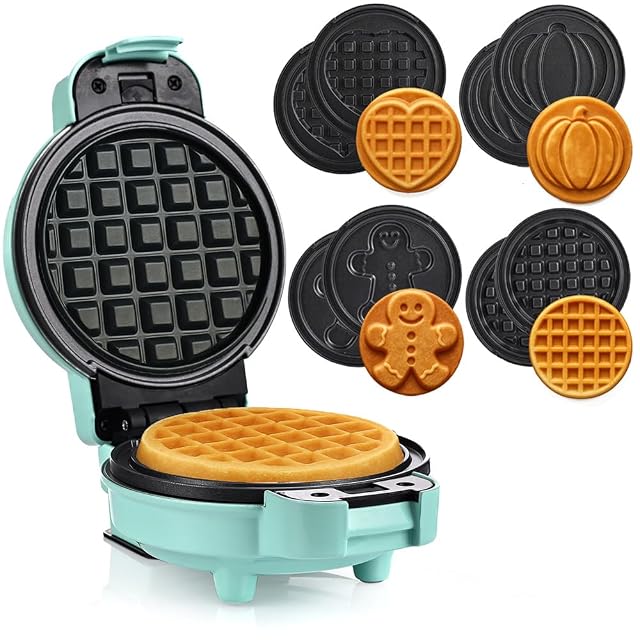
Four interchangeable waffle plates — heart, classic, pumpkin and gingerbread — on a compact 490 W mini iron. LEHMANN publishes a 4.9 in (12.5 cm) plate size and a non-stick, BPA-free coating. It is a 230 V European appliance: the Amazon.com listing gives 230 volts and shows it as currently unavailable.
Best for: A European household that wants four waffle shapes and does not already own an iron.
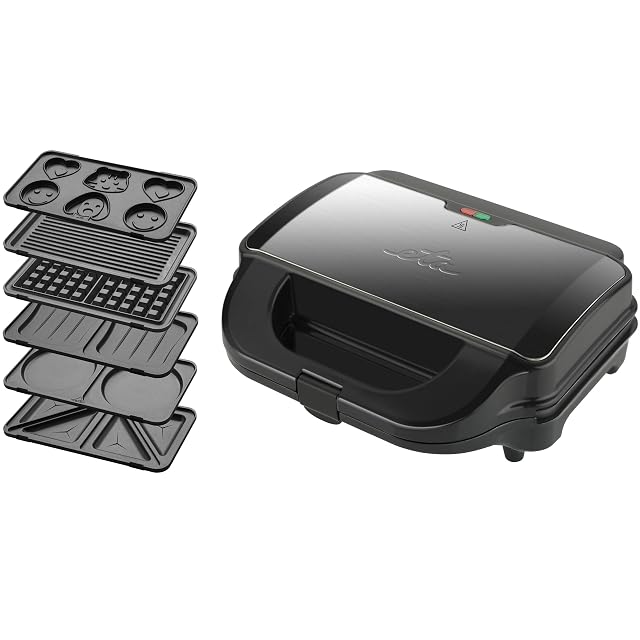
Six interchangeable plate sets on one 900 W body: waffle, grill, pancake, children’s shapes and two sandwich patterns, all stated non-stick. It is a 230 V European appliance: the Amazon.com listing gives 230 volts and shows it as currently unavailable.
Best for: A European household that wants waffles, paninis and pancakes without three appliances.
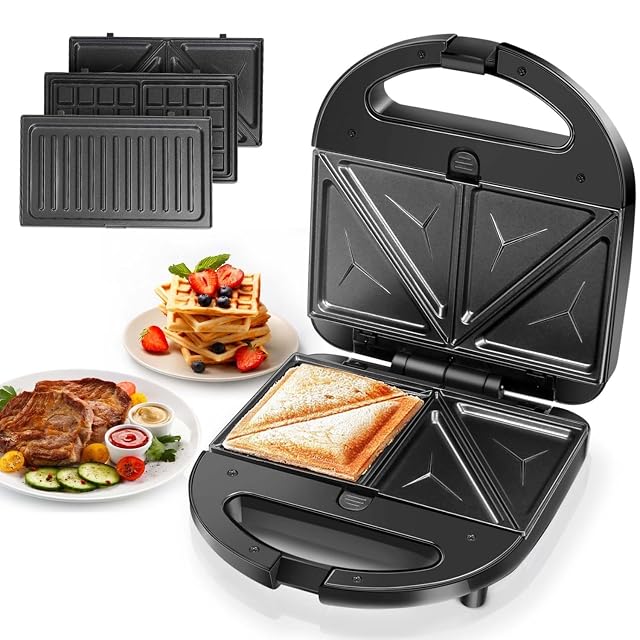
A 750-watt, 120-volt three-in-one panini, grill and waffle press with detachable Teflon plates, a red power light, a green preheat light and upright locking storage.
Best for: A dorm room, an office or a van, where weight and locking storage matter
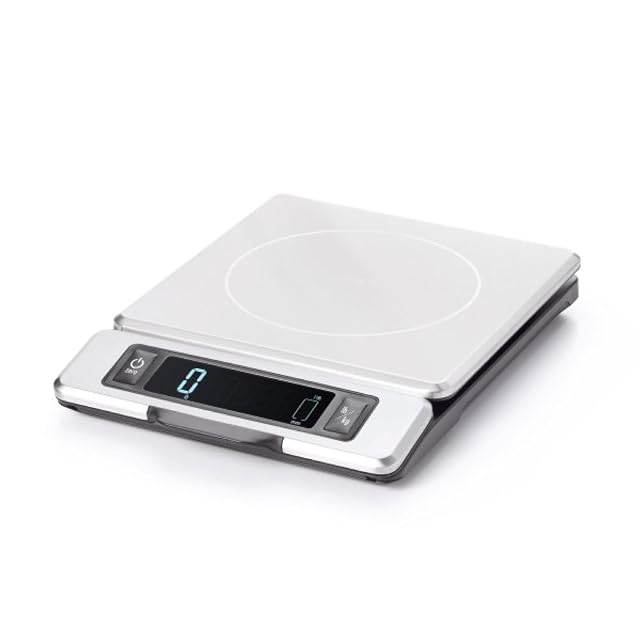
An 11-pound stainless steel food scale with a display that pulls away from the base, a removable platform, large digital numbers and a zero function.
Best for: A buyer who wants the display and the platform to be the whole specification
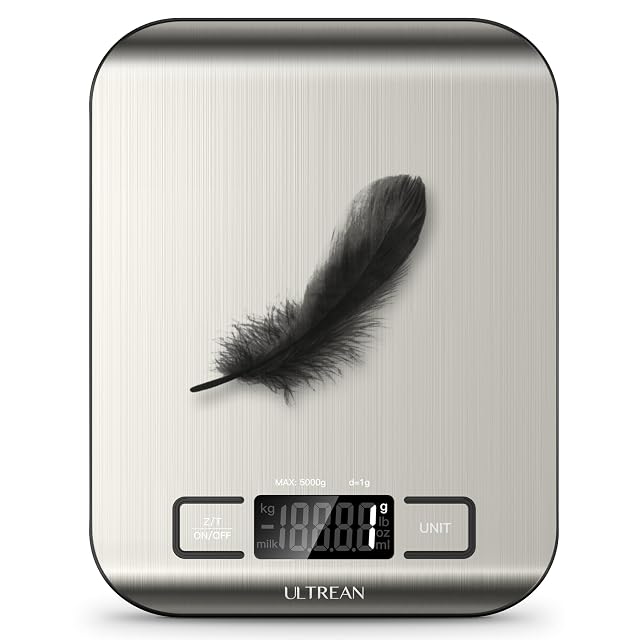
An 11-pound 304 stainless kitchen scale with six units including milk volume, tare, a negative white backlit display and batteries included.
Best for: Everyday weighing where 304 steel and a legible display matter most
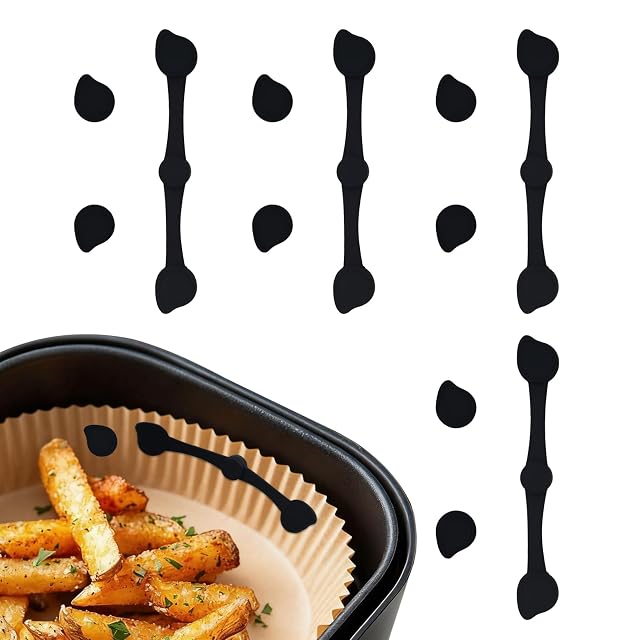
A twelve-piece set of silicone-sleeved magnets, four long and eight short, made to hold baking paper flat in an air fryer basket. lompyeu states food-grade BPA-free silicone, a non-stick sleeve, strong magnets, and compatibility with any air fryer carrying metal or magnetic accessories.
Best for: Anyone who has watched a sheet of baking paper leave the basket.