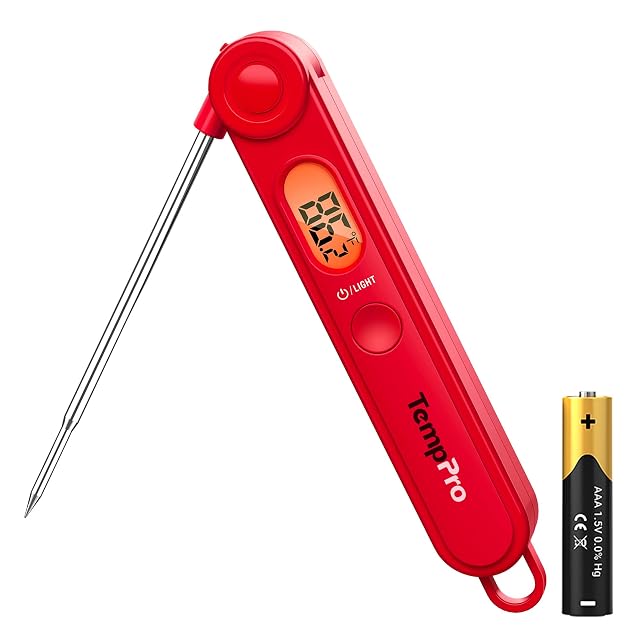
Best for: Everyday grilling and roasting, from a magnet on the hood, without hunting for button cells
≈ $10
Check price on Amazon The only AAA battery on this shelf
A one-second folding-probe thermometer accurate to ±0.9 °F, with a backlit display, a magnet, a hook and a single AAA battery instead of a button cell.
Best for: Everyday grilling and roasting, from a magnet on the hood, without hunting for button cells
“Includes 1 AAA battery instead of a button cell; this digital thermometer lasts twice as long and makes battery replacement easier.”
A CR2032 lithium button cell holds about 220 milliamp hours. A AAA alkaline holds roughly 1000 — four to five times the energy. So “twice as long” is conservative, not marketing.
And the second half is the part you will actually feel. A button cell lives behind a hatch opened with a coin or a screwdriver, goes in the wrong way round easily, and is the cell you do not have at six on a Sunday. A AAA is in every drawer in the house.
What the shelf publishes about batteries:
1 AAA — this, and it is the only page to make an argument of it 2 AAA — the Etekcity at $18.99, an infrared gun “4000+ Hour Battery Life” with auto-sleep and motion wake, cell not named — both ONFIKY units at $9.97 and $9.98 “Battery included”, type not named — the KitchenAid at $11.99 and the TempPro TP-02S at $9.99 Nothing at all — the remaining nine items, including the ThermoMonster at $16.99 and both Taylor units
What it costs is bulk. 48 grams, folded to 155 × 33 × 41 mm. The rigid TempPro TP-02S at $9.99 is 23 grams — less than half — and it is the lightest item on this shelf.
A AAA is about 11 mm across and 44 mm long, which has to go somewhere, and on a 33 mm wide body that is most of the handle.
The accuracy figures on this shelf:
±0.5 °F — ThermoMonster $16.99, a thermocouple, NIST cited ±0.9 °F — this, and the TempPro TP-02S at $9.99 ±1 °F — ANDAXIN $9.99, both ONFIKY units at $9.97 and $9.98, LONICERA $12.99 ±1.8 °F — TempPro TempTrack $19.99, a leave-in unit
Seven of the fourteen items sold on Amazon.com publish none — the KitchenAid at $11.99, both Taylor units at $18.99 and $24.24, the Alpha Grillers at $14.97 (“advanced, highly accurate technology”), the Etekcity at $18.99 (“Better Accuracy”) and the TempPro TP03H at $9.98.
On speed:
0.5 s — ThermoMonster · 1 s — all three TempPro instant-reads · 1–2 s — ONFIKY ×2, LONICERA, Alpha Grillers · 3 s — ANDAXIN · under 6 s — the KitchenAid at $11.99, which is the one page here to name its sensor: a “Digital thermistor”
The twelvefold gap between the KitchenAid and the ThermoMonster is the gap between the two sensor types, and only those two pages say which they have. A thermocouple reads a voltage across a junction and responds almost instantly; a thermistor is a bead of semiconductor that has to come up to temperature.
What ±0.9 °F actually covers. Chicken is safe at 165 °F. Beef and lamb move through rare to well done in 5 °F bands. A custard splits within a few degrees of setting. Under a degree sits inside all of them.
What it does not cover is drift, and this model has no calibration function — where five items on this shelf do, including the maker’s own TP03H, a cent cheaper.
“Foldable probe and compact design… Use the built-in magnet or hook to keep it handy on your fridge or hanging nearby”
Three things follow from the fold.
It sits flat on metal. Eight of the fourteen items sold on Amazon.com have a magnet and a folded body is what makes one useful — a bare probe will not lie against a grill hood. The thermometer on the hood gets used; the one in the drawer does not.
The body protects the tip. A blunted or bent tip is the commonest way a thermometer goes out of true, and the rigid TP-02S has to ship a probe tip cover to achieve the same thing.
And it fits a drawer. 155 mm folded against 218 mm rigid — two and a half inches shorter.
What it costs is reach, and this page does not publish a probe length at all. Only four items on this shelf do:
6.5 inches — the TempPro TempTrack at $19.99, with a “stepdown tip” 5.3 inches — the rigid TempPro TP-02S at $9.99 5 inches — the LONICERA at $12.99 4 inches — the ThermoMonster at $16.99
A folding probe is generally shorter than a rigid one, because it must stow inside a body you can hold. For a deep fryer or a stock pot, reach is the whole point — and the rigid sibling publishes 5.3 inches for the same price.
The two-button layout is worth noting as a design choice. One button releases the probe, the other does backlight and power — so there is no hold or lock function, where five items on this shelf publish one: the ANDAXIN at $9.99, the LONICERA at $12.99, the Taylor Compact at $18.99, the ThermoMonster at $16.99, and both leave-in units by their nature.
Without a lock you read the display while the probe is in the food, which on a one-second thermometer is less of a penalty than on the three-second ANDAXIN — but it still means leaning over the heat.
“checking meat, water, milk, candy, fried foods”
Three of the five are what the 572 °F top end exists for. Food does not exceed 212 °F in moist cooking. Deep frying runs 325 to 375 °F, and sugar work goes to 300 °F and beyond — hard crack about 300 to 310 °F, caramel 340 to 350 °F. Oil and sugar are the only things in a kitchen that reach those numbers.
Milk is the low-temperature case and it is the one most often guessed at. Milk scalds for bread at about 180 °F, yoghurt cultures near 110 °F, and a milk-based custard sets in a band a few degrees wide — above which it is scrambled egg.
And water is the self-check. Boiling water is 212 °F at sea level, falling about 1 °F per 500 feet of altitude. A thermometer that reads 207 °F in a rolling boil at sea level is five degrees low everywhere — which, on a model with no calibration function, is something you can only note.
The companion test at the other end is free too: crushed ice topped with water, stirred, holds 32 °F / 0 °C while ice remains.
One use this page does not name and the shelf does. Dough. The LONICERA at $12.99 is the only item here written for it — “measure dough temperature during fermentation and proofing… for sourdough, artisan bread” — and the TempPro TP-02S at $9.99 calls itself a “bread thermometer sourdough” in its own bullets. Dough temperature is what governs fermentation speed, and at ±0.9 °F in one second this thermometer does the job as well as either.
No waterproof rating of any kind. The maker’s own TP03H at $9.98 publishes IPX6, and four other items here publish IP67 or IP65. The practical rule for this one: wipe the probe, keep water off the body, dry it before it goes on the magnet. The seam where probe meets housing is where juices collect and where water gets in, and a damp board reads wrong for weeks before it fails.
No calibration, as above, where five items on this shelf have one — including the ONFIKY pair at this exact price, which publishes IP67 and calibration and ±1 °F in 1–2 seconds.
No probe length, as above.
No auto shutoff. The rigid TP-02S at $9.99 publishes a 10-minute one, as does the Taylor Compact at $18.99; the ONFIKY pair and the ThermoMonster use motion-sensing sleep and wake. On a thermometer with a AAA that matters less, which may be why it is absent.
No hold or lock, as above.
No display size, which no item on this shelf publishes — “large, easy-to-read numbers” is the standard phrase, and two items go further in kind: the KitchenAid’s display pivots, the ThermoMonster’s auto-flips for left-handed users.
No sensor type, which only two pages among the items sold on Amazon.com name.
No warranty. Three items here publish one: the LONICERA at $12.99 (18 months plus 60-day money-back, the longest on the shelf), the ANDAXIN at $9.99 (one year, with CE and RoHS) and the Taylor at $24.24 (one year limited). Eleven publish none.
No warning against leaving it in the food, which only the KitchenAid publishes: “Digital thermometers are not meant to be left in food during cooking. The plastic and electronic components could be damaged with excessive heat.” It applies here in full — this is an instant-read, not one of the two leave-in units on this shelf.
No country of manufacture, which no item on this shelf publishes.
Read on the day this page was built: $10 at the American Amazon shop.
Read from Keepa on the day this page was last revised; stock and price both move without notice.
Prices quoted in this text were read on 2026-10-17. The live price is at the top of the page.
It is one of the few genuinely practical things published on this shelf, and only this page makes the point. Bullet five: "Includes 1 AAA battery instead of a button cell; this digital thermometer lasts twice as long and makes battery replacement easier." Why it matters. A typical kitchen thermometer runs on a CR2032 lithium button cell: about 220 milliamp hours. A AAA alkaline is roughly 1000 — four to five times the energy — which is the mechanism behind "lasts twice as long" and probably understates it. And the second half is the half you will feel. A CR2032 lives in a hatch closed with a coin or a small screw, is easy to insert the wrong way round, and is the cell you do not have in the drawer at six on a Sunday. A AAA is in every drawer in the house. What it costs is bulk. This unit is 48 grams folded to 155 × 33 × 41 mm (6.10 × 1.30 × 1.61 in); the TempPro TP-02S at $9.99, with a rigid probe and most likely a button cell, is 23 grams — less than half. And the shelf is mostly silent on this. The ONFIKY pair at $9.97 and $9.98 publishes "4000+ Hour Battery Life" with auto-sleep and motion wake and names no cell; the Etekcity at $18.99 publishes 2 AAA; the KitchenAid at $11.99 and the TempPro TP-02S say only "battery included"; nine items publish nothing at all. So two of the fourteen items sold on Amazon.com tell you what to buy when it dies, and the one that makes an argument of it is this.
Where the thermometer lives, which is the difference between using it and guessing. Bullet one: "Easily release the meat probe at the push of a button, and control the backlight or power with another button." Bullet four: "Foldable probe and compact design make this BBQ thermometer portable and easy to store; Use the built-in magnet or hook." Folded it is 155 × 33 × 41 mm (6.10 × 1.30 × 1.61 in) — about 6 × 1.3 × 1.6 inches — and 48 grams. The rigid sibling is a different object. The TempPro TP-02S at $9.99 has a 5.3 inch probe that does not fold, so it catalogs at 218 × 30 × 30 mm (8.58 × 1.18 × 1.18 in) — two and a half inches longer, with a probe tip cover and a hanging hole instead of a magnet. Three consequences of folding. It goes on the fridge or the grill hood, because a folded body sits flat against metal and a bare probe does not. Eight of the fourteen items sold on Amazon.com have a magnet and this is one. The tip is protected by the body itself, so nothing needs a cap — and a blunted or bent tip is the most common way a thermometer goes out of true. And the fold doubles as the switch on many designs, though this page does not say so: here there are two explicit buttons. What folding costs is reach, and this page does not publish a probe length at all. Only four items on this shelf do — 6.5 in on the TempTrack $19.99, 5.3 in on the rigid TP-02S, 5 in on the LONICERA $12.99, 4 in on the ThermoMonster $16.99. A folding probe is generally shorter than a rigid one, because it has to stow inside a body you can hold.
It depends on whether you want a rating or a number, because the two models from the same maker publish different things. This, at $9.99: ±0.9 °F, 1 second, −58 to 572 °F, a folding probe, a magnet and hook, a backlit display, and 1 AAA battery. Five bullets. The TempPro TP03H at $9.98: IPX6 waterproof, a calibration function, a folding probe, a magnet and hook, a backlit display — and four bullets, with no accuracy figure and no temperature range at all. So the same money buys sealing and calibration, and loses the published specification. Which way to go turns on one habit. If the thermometer gets rinsed, take the IPX6 — and note what the code means: high-pressure jets, with dust not rated at all, which is what the X stands for. This page publishes no rating of any kind, so the rule here is wipe the probe, keep water off the body, and dry it before it goes on the magnet. If you want to be able to check it, take the calibration. ±0.9 °F is a specification when new, and a thermometer drifts; the ice-point test is free — crushed ice topped with water, stirred, holds 32 °F — but without a calibration function a wrong reading can only be noted, not corrected. Five items sold on Amazon.com publish calibration and this is not one of them. The third option is neither: the ONFIKY pair at $9.97 and $9.98 publishes IP67, which is the only sealing sold on Amazon.com that survives immersion, and calibration, and ±1 °F in 1–2 seconds — at this price.
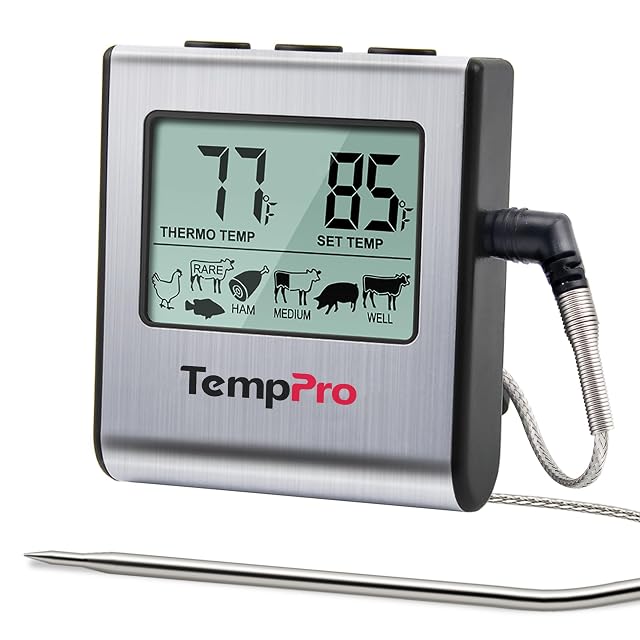
A leave-in probe thermometer with USDA preset alarms, a 99-hour timer, a 6.5 inch stepdown probe and a 40 inch mesh cable rated to 716 °F.
Best for: Long cooks — a smoker, a brisket, a roast — where the door stays shut
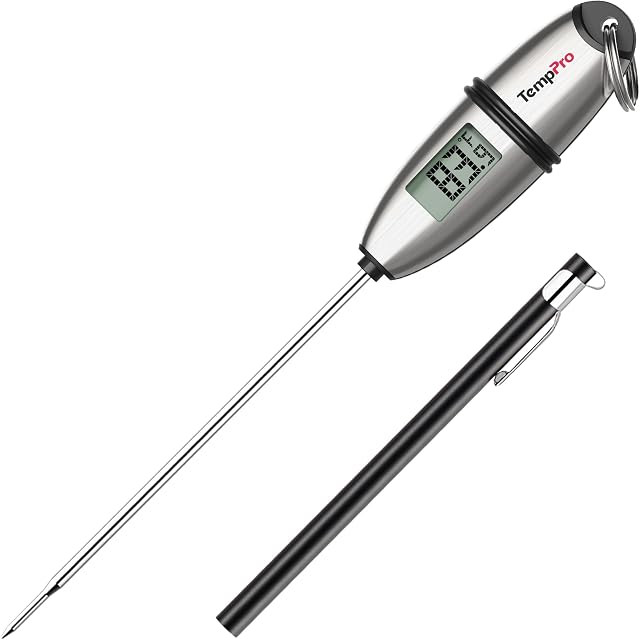
A one-second instant-read thermometer accurate to ±0.9 °F, with a rigid 5.3 inch stainless probe, −58 to 572 °F and a ten-minute auto shutoff.
Best for: Bread, deep pots and liquids, where probe reach matters more than a magnet
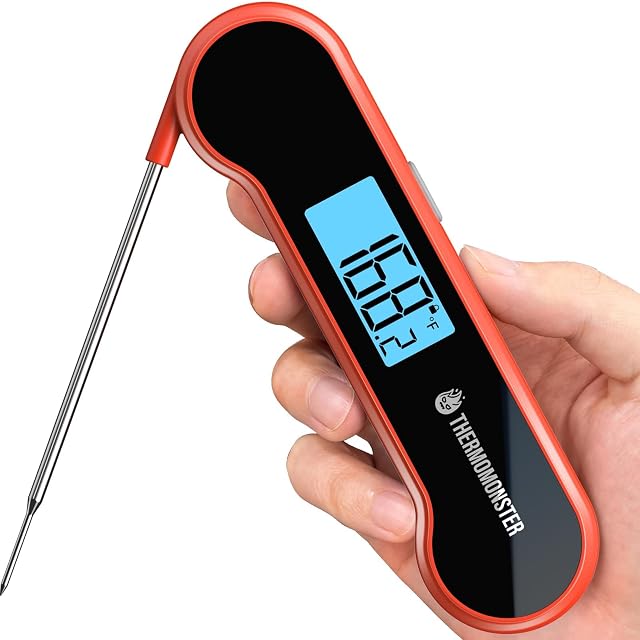
A thermocouple thermometer with NIST-certified ±0.5 °F accuracy in half a second, a 4-inch probe, a temperature lock, an auto-flip display and motion wake.
Best for: Thin cuts, fast reads and anyone who holds a thermometer in the left hand
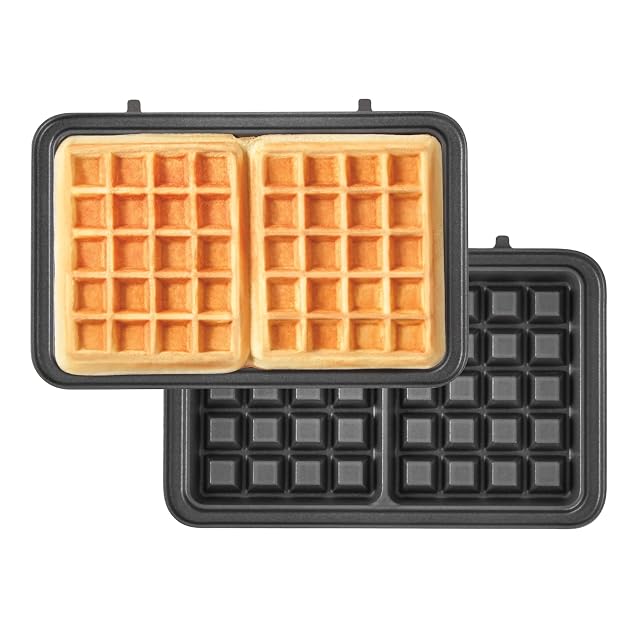
A two-plate waffle set for the Dash MultiMaker Flex Press Grill System, removable, non-stick, dishwasher safe and stackable for storage.
Best for: An existing Dash Flex Press that came with grill and griddle plates
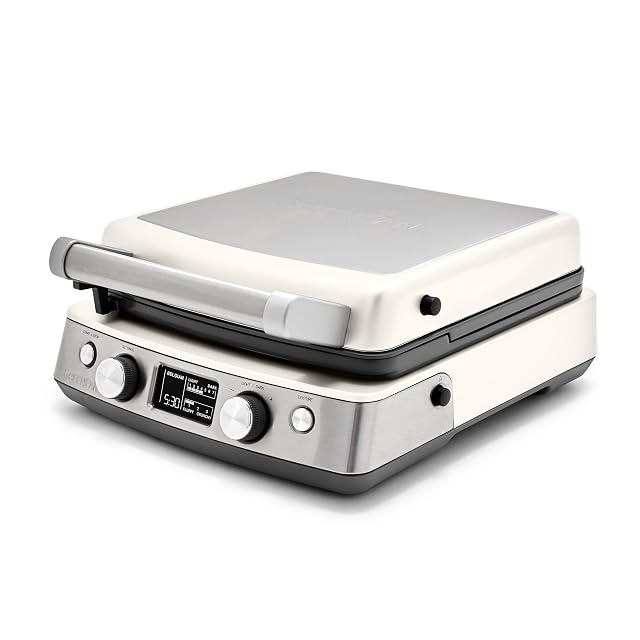
A four-square waffle maker with diamond-infused ceramic cast plates free of PFAS and PFOA, two plate sets stored inside, an XL LCD, shade control and an extra-large moat.
Best for: A household that wants Belgian and classic waffles without a fluoropolymer
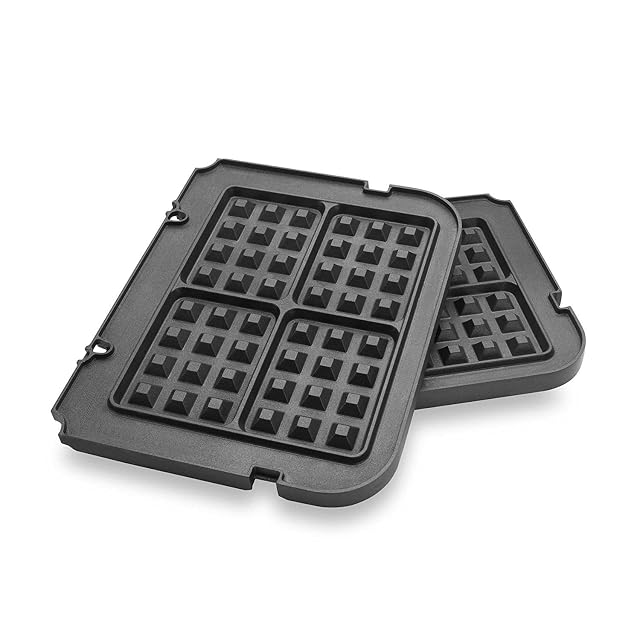
A two-plate waffle set in food-grade aluminum with double-layer non-stick for the Cuisinart Griddler GR-4N, GR-5B, GR-6 and GRID-8N, baking four ¾-inch Belgian waffles.
Best for: A Cuisinart Griddler GR-6 or GRID-8N, which nothing else here fits