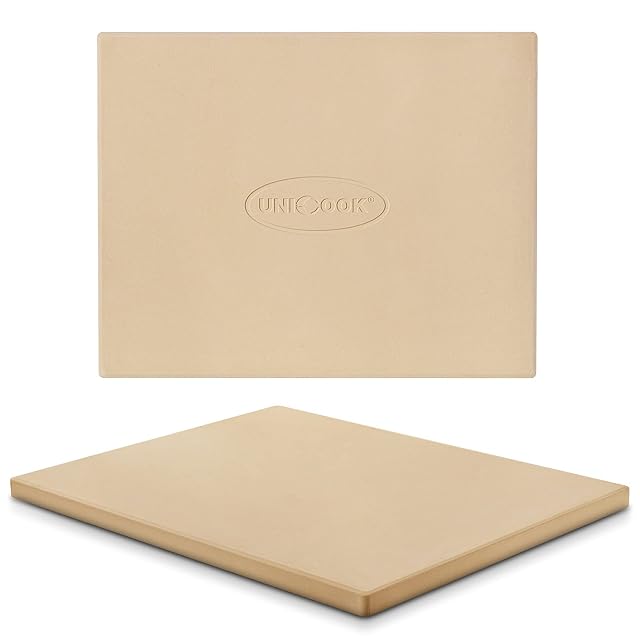
Best for: Personal pizzas and bread in an oven with room round the stone
≈ $34
Check price on Amazon Cordierite to 1450 °F, and a clearance instruction
A 15 × 12 inch cordierite baking stone 0.6 inches thick and 6.8 pounds, heat-resistant to 1450 °F, reversible, with a plastic dough cutter and a no-detergent instruction.
Best for: Personal pizzas and bread in an oven with room round the stone
“Important: Please ensure a minimum of 1-2 inches of clearance on ALL sides inside your oven or grill for proper fit and airflow.”
Two separate reasons, and the bullet names both.
Fit. A stone wedged against the oven walls cannot expand. Cordierite expands very little with heat — that is its whole virtue — but a stone touching metal on two sides is a stone under stress, and a stone under stress at 500 °F finds its weakest line.
Airflow. An oven works by moving hot air. A stone that fills the cavity blocks the convection, so the top of the oven stays hot and the bottom stalls — which is exactly the uneven bake the stone was bought to prevent.
And it is the figure that decides whether the stone fits at all. 15 × 12 inches plus two inches each way is 19 × 16 inches of cavity — which a standard domestic oven has and a countertop oven does not.
Compare the two other stones on this shelf.
Ritual Life, $36.95 — publishes “15 inch”, and a bullet giving “Dimensions: 44cm x 34cm x 7.5cm”. Which is the box: 7.5 cm is three inches thick, and its catalog reads 15 × 12 × 0.6 inches (381 × 305 × 15 mm) — the same size as this stone. Emile Henry, $109.95 — no dimensions at all. Its catalog reads about 18 × 14 inches (457 × 356 × 28 mm) — the largest surface on this shelf, and the one most likely to foul an oven wall.
Neither mentions clearance.
The other instruction this page gives that matters as much: “Please preheat the stone to ensure even cooking and crispy crust.”
The Ritual Life says it too — “Simply preheat the stone in your oven or on the grill” — and the Emile Henry does not.
A cold stone is a tray. A stone works by holding heat it already has, and putting a pizza on a cold stone in a cold oven gives you a pale base and a dry top.
“made of high-quality Cordierite, heat-resistant up to 1,450°F (787°C), and ensures even heat distribution for consistent cooking without hot spots”
The temperature divide is the central fact of this shelf.
450 °F (230 °C) — the Emporio Kitchen at $15.43, the BAKKENMASTER pizza pan at $15.99, the Moss & Stone set at $23.99, the NutriChef set at $36.99: four coated steel items, one number No limit published — the Bakken-Swiss at $12.59, both GoodCook pans at $18.99 and $25.19, the Breville at $19.95, the BAKKENMASTER 18-piece set at $57.99 1,450 °F (787 °C) — this 1500 °F (815 °C) — the Ritual Life at $36.95 900 °F on gas, charcoal and wood grills, and under the broiler — the Emile Henry at $109.95
A thousand degrees of difference, because a stone has no coating to lose.
And it matters because the recipe asks for more than 450 °F. A commercial pizza oven runs 700 to 900 °F. Most home pizza recipes call for 475 to 550 °F — the top of a domestic oven — because a crust needs enough bottom heat to set the base before the top overcooks.
So a coated steel pan rated to 450 °F is rated below its own recipe, while a cordierite stone is rated three times past the hottest a domestic oven goes.
What else cordierite does that steel cannot.
Heat storage. 6.5 pounds of stone at oven temperature is a reservoir. When cold dough lands on it the surface barely drops — where an 11-ounce to 1.5-pound steel pan loses its temperature instantly and has to recover. That first thirty seconds is what sets a base.
And “without hot spots” is the other half of the same property. A thin steel pan transmits whatever pattern the oven element gives it. A thick stone averages it out across its own mass.
What it gives up is speed and convenience. A stone takes thirty to forty-five minutes to come up to temperature, which is why the preheat instruction is not optional — and no page on this shelf publishes a preheat time.
“0.6” thickness and weighs about 6.8 lbs”
It is the only stone on this shelf to publish a thickness, and thickness is the specification.
Why. Thermal mass is what gives a crust its bottom heat, and mass on a flat stone is thickness. A thin stone comes up to temperature faster and gives it up faster; a thick one is slower both ways and holds through a bake.
The weights and areas, which is the only comparison the other two pages allow:
this — 6.5 lb over 15 × 12 in = 180 in² → about 0.0361 lb per square inch Ritual Life, $36.95 — 7.5 lb over 15 × 12 in (by catalog) = 180 in² → about 0.0417 lb per square inch Emile Henry, $109.95 — 7.3 lb over 18 × 14 in (by catalog) = 252 in² → about 0.0290 lb per square inch
So per square inch the Ritual Life holds the most mass and the Emile Henry the least — the largest stone here is spread the thinnest.
Which is the trade on a stone: area against depth. A big stone takes a bigger pizza and recovers more slowly per square inch; a small thick one does one pizza well.
And this page is honest about the area in a way neither rival is. “ideal for baking personal pizzas up to 11 inches in diameter. For 12-inch or larger pizzas, please check our larger models.”
A 15 × 12 inch stone taking an 11-inch pizza is a two-inch margin all round — which is what you need, because a pizza slid onto a stone does not land where you aim it.
The page also states what it is not for: “For charcoal kettle grill, please check our round stone models.” A round kettle takes a round stone, and a rectangle in a kettle blocks the airflow bullet one warns about.
“The reversible smooth surface allows use on both sides.”
It is a small claim with a real consequence.
A stone stains and it stains where the food sits. Bullet five says so plainly: “Frequently used pizza pans may develop discolored areas over time. This is normal and does not require cleaning.”
So a stone with one usable face accumulates its history on that face. A reversible stone gives you a second one — and more usefully, a side you can keep for bread and a side you can keep for anything that has leaked cheese onto it.
Neither of the other two stones here claims it. The Ritual Life at $36.95 has handles and a detachable carrying tray, which implies a particular orientation. The Emile Henry at $109.95 has handles too.
Which is the other side of this stone’s ledger: it has no handles at all.
6.5 pounds of stone at 1450 °F with nothing to lift it by. The Ritual Life at $36.95 makes exactly that point for itself: “Easy Transfers with Handles”, plus a detachable carrying tray. The Emile Henry at $109.95: “Handles make it easy to use and carry.”
And the practical consequence on this stone is the one habit it does not state: do not move it hot. Put it in the oven before you heat the oven, and leave it there until the oven is cold. Which also avoids thermal shock, which is what cracks stones.
The scraper is the compensating accessory. “Includes a multi-purpose plastic scraper that functions as a dough cutter or cleaning tool for removing residue.”
One tool, two jobs, and both of them matter on a stone. Dough is cut and portioned before it goes on, and residue is scraped off after it has cooled — bullet five says exactly when: “After the pizza stone has cooled.”
It is one of three items on this shelf to include anything beyond the baking surface itself. The Ritual Life at $36.95 includes a dough tool and a carrying tray; the Moss & Stone set at $23.99 includes a red oven glove, the only protective equipment on this shelf.
“Hand wash with warm water, using a brush if necessary. Do not use detergent.”
Why. The same porosity that absorbs water from dough absorbs soap. A stone washed with detergent gives it back to the next loaf.
One of the other two stones sold on Amazon.com says the same thing. The Ritual Life at $36.95: “Simple hand washing with warm water (no soap needed).”
And the third disagrees outright. The Emile Henry at $109.95: “Dishwasher safe or hand wash with soap and water.”
Which is consistent with what it is made of. That page describes “Emile Henry proprietary BBQ ceramic” rather than cordierite — and a glazed or vitrified ceramic is not porous in the same way. A non-porous stone can take soap, and it also loses the moisture-absorbing property this page sells.
So the three stones on this shelf are not the same material and are not washed the same way, and the pages are consistent with their own materials rather than contradicting each other.
The frankness about staining is the part worth having. A used stone goes brown and stays brown, and this is the only page on this shelf that says so. The alternative — scrubbing it — is exactly what ruins it.
And the Ritual Life adds the counter-intuitive instruction this page omits. “Do not pre-season the stone, as this will cause an odor. The naturally seasoned surface improves with each use.” People oil stones. They should not.
One more habit neither page gives: thermal shock is the thing that breaks a stone. Do not put a cold stone into a hot oven, do not put anything frozen onto a hot stone, and do not run water over a warm one. In with the cold oven, out with the cold oven.
No handles, as above — on a 6.5-pound stone rated to 1450 °F. The other two stones sold on Amazon.com both have them.
No preheat time. The instruction to preheat is given and the duration is not — and a stone of this thickness takes a good half hour for the mass to reach oven temperature, not the ten minutes an oven light takes to go out. No page on this shelf gives a figure.
No grill guidance beyond the exclusion. The page says it is for “oven and grill” and tells you a kettle wants a round stone — and says nothing about gas against charcoal, where the Emile Henry at $109.95 is explicit: “Safe to use on gas, Charcoal and natural wood grills up to 900 degrees F.”
No bread guidance, where the Ritual Life at $36.95 is sold specifically for it: “BAKE ARTISAN BREAD AT HOME… perfect for creating crusty, delicious bread.” This page names “fresh and frozen pizzas, bread, rolls, cookies” in bullet three and gives no method for any of them.
No warranty. Two items on this shelf publish one: the Emile Henry at $109.95 — a 10 year Guarantee, and the only one here whose terms are stated: “covers any production fault or quality problem… when used in a normal domestic environment, and respecting the care and use Instructions” — and the Moss & Stone set at $23.99 (“1-year warranty”). The Ritual Life at $36.95 offers support rather than a term: “respond within 24 hours”. Nine publish nothing, this included — which on a ceramic object whose commonest failure is a crack is the omission that matters most.
No country of manufacture, which no item on this shelf publishes.
Read on the day this page was built: $33.99 at the American Amazon shop.
Read from Keepa on the day this page was last revised; stock and price both move without notice.
Prices quoted in this text were read on 2026-10-17. The live price is at the top of the page.
Because it is what keeps a stone from cracking, and no other page on this shelf gives it. Bullet one: "Important: Please ensure a minimum of 1-2 inches of clearance on ALL sides inside your oven or grill for proper fit and airflow." Two separate reasons, and the bullet names both. Fit. A stone wedged against the oven walls cannot expand. Cordierite expands very little with heat — that is its whole virtue — but a stone touching metal on two sides is a stone under stress, and a stone under stress at 500 °F is a stone that finds its weakest line. Airflow. An oven works by moving hot air. A stone that fills the cavity blocks the convection, so the top of the oven stays hot and the bottom stalls — which gives you exactly the uneven bake the stone was bought to prevent. It is also the figure that decides whether this stone fits at all. 15 × 12 inches plus two inches each way is 19 × 16 inches of cavity — which a standard domestic oven has and a countertop oven does not. Compare the two other stones here. The Ritual Life at $36.95 publishes "15 inch" and a bullet giving "Dimensions: 44cm (17.3 in) x 34cm (13.4 in) x 7.5cm (3 in)" — which is the box, since 7.5 cm (3 in) is three inches thick and its catalog reads 15 × 12 × 0.59 in (381 × 305 × 15 mm), the same size as this. And the Emile Henry at $109.95 publishes no dimensions at all; its catalog reads about 18 × 14 × 1.1 inches (457 × 356 × 28 mm) — the largest surface on this shelf, and the one most likely to foul an oven wall. Neither of them mentions clearance. The other habit this page gives and they do not: "Please preheat the stone." The Ritual Life says it too; the Emile Henry does not — and a cold stone is a tray, because a stone works by holding heat it already has.
Hold heat, absorb water, and survive a thousand degrees more than any coated pan on this shelf. Bullet two: "made of high-quality Cordierite, heat-resistant up to 1,450°F (787°C), and ensures even heat distribution for consistent cooking without hot spots." Bullet three: "The porous surface... effectively absorbs excess moisture from pizza dough, creating a crispy, golden pizza crust." Three mechanisms, and all three are unavailable to steel. Heat storage. 6.5 pounds of stone at oven temperature is a reservoir. When cold dough lands on it the surface barely drops — where an 11-ounce to 1.5-pound steel pan loses its temperature instantly and has to recover. That first thirty seconds is what sets a base. Moisture absorption. A pizza base releases water as steam, and a porous stone takes it in rather than trapping it underneath. The nine steel items on this shelf solve the same problem by venting it through holes — and one, the Bakken-Swiss at $12.59, by suspending the food in a basket above a tray. Three answers: soak it up, vent it, or lift it off. Temperature. 1450 °F against the 450 °F that four coated steel items on this shelf publish — the Emporio Kitchen at $15.43, the BAKKENMASTER pizza pan at $15.99, the Moss & Stone set at $23.99, the NutriChef set at $36.99. A thousand degrees, because a stone has no coating to lose. Which matters because most home pizza recipes call for 475 to 550 °F — the top of a domestic oven — and a 450 °F-rated pan is rated below its own recipe. What cordierite gives up: convenience. No handles here, 6.5 pounds, no detergent, and it must be preheated — and the Ritual Life at $36.95 rates to 1500 °F and the Emile Henry at $109.95 to 900 °F on a grill and under a broiler, so all three live in the same world.
Because the stone is porous, and the page is unusually frank about what that means. Bullet five: "After the pizza stone has cooled, use a scraper to remove any food residue. Hand wash with warm water, using a brush if necessary. Do not use detergent. Frequently used pizza pans may develop discolored areas over time. This is normal and does not require cleaning." Why detergent is forbidden. The same porosity that absorbs water from dough absorbs soap. A stone washed with detergent gives it back to the next loaf — which is why one of the other two stones sold on Amazon.com says the same thing. The Ritual Life at $36.95: "Simple hand washing with warm water (no soap needed)." And the third disagrees outright. The Emile Henry at $109.95: "Dishwasher safe or hand wash with soap and water." Which is consistent with it being described as "Emile Henry proprietary BBQ ceramic" rather than cordierite — a glazed or vitrified ceramic is not porous in the same way, and a non-porous stone can take soap and loses the moisture-absorbing property this page sells. So the three stones on this shelf are not the same material and not washed the same way. The frankness about staining is the part worth having. A used stone goes brown and stays brown. No page on this shelf except this one says so, and the alternative — scrubbing it — is exactly what ruins it. And the Ritual Life adds the counter-intuitive instruction this page omits: "Do not pre-season the stone, as this will cause an odor. The naturally seasoned surface improves with each use." People oil stones. They should not. One more habit neither gives: a cold stone into a hot oven is thermal shock. Put it in while the oven heats, and let it cool in the oven afterwards.
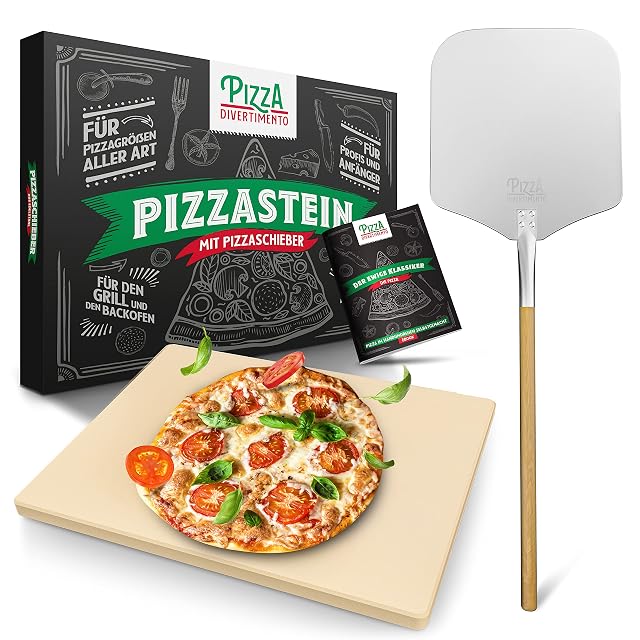
A rectangular cordierite pizza stone, 15 × 12 × 0.6 inches, sold with a 32.5-inch pizza peel whose aluminum blade is 12 × 12 inches. Stated for ovens and covered gas or charcoal grills, on indirect heat.
Best for: A first stone, bought with the peel instead of six weeks later.
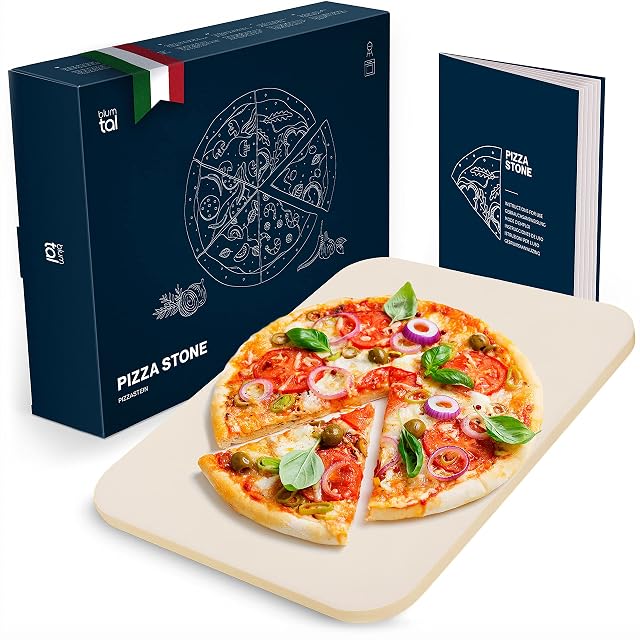
A rectangular natural cordierite stone of 15 × 11.8 inches (38 × 30 cm), which Blumtal states is heat-resistant to 1,652 °F (900 °C) and distributes heat evenly. Suitable for the oven, gas grills and charcoal grills, and cleaned by hand. It is not sold on Amazon.com.
Best for: A full-size oven or a grill, and bread as much as pizza.
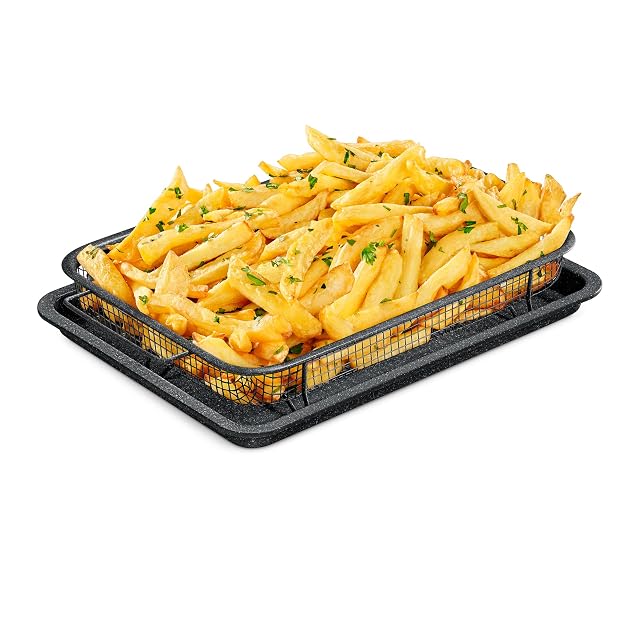
A two-piece crisper set — a carbon steel baking tray and a removable basket — in a grey stone non-stick coating, dishwasher safe and PTFE free.
Best for: Chips, bacon and anything you want crisp on both sides
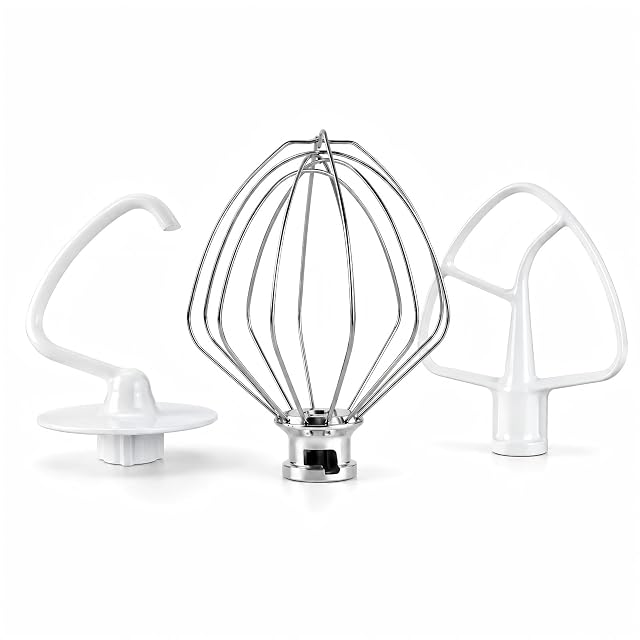
A K45WW wire whip, K45DH dough hook and K45B coated flat beater for KitchenAid tilt-head mixers of 4.5 to 5 quarts.
Best for: A tilt-head KitchenAid of 4.5 or 5 quarts whose original tools have worn or gone missing
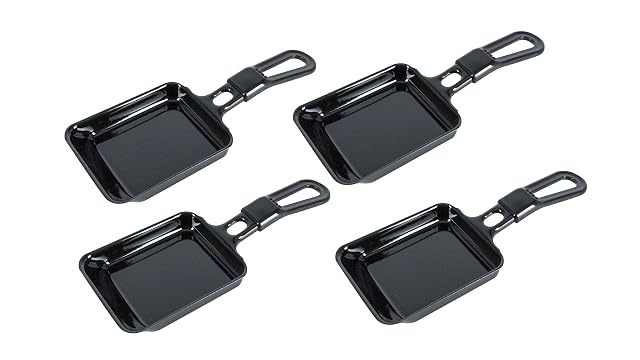
A set of four universal raclette pans in enamelled black steel with heat-resistant PPE handles. Steba publishes both the overall size — 8.1 by 3.1 by 1.1 inches — and the pan itself at 3.9 by 3.1 by 0.7 inches, which is what lets the fit be checked against any grill.
Best for: Any raclette grill, once you have measured the slot with a ruler.
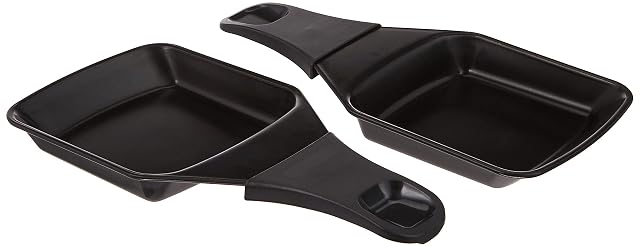
Two square non-stick raclette pans for Tefal's Ovation and Ambiance raclette grills. Tefal names the compatible machines one by one — nine references from 7814012 to RE600012 — rather than a range alone. Sold on the European Amazon stores, not on Amazon.com.
Best for: A Tefal Ovation or Ambiance raclette that came back from the cellar two pans short.