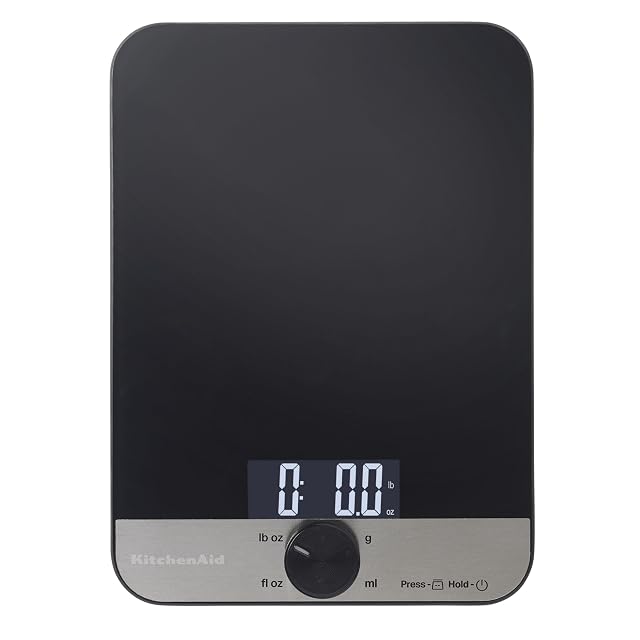
Best for: A buyer who wants one-handed control and weighs liquids by volume
≈ $24
Check price on Amazon A rotating knob, and 0.1 fl oz on liquids
An 11-pound glass-surface kitchen scale with a rotating knob for units and tare, separate dry and liquid resolutions, a three-minute shutoff and hand-wash-only care.
Best for: A buyer who wants one-handed control and weighs liquids by volume
Dry: 11 lb × 0.1 oz, and 5,000 g × 1 g. Liquid: 5,000 ml × 1 ml, and 176 fl oz × 0.1 fl oz.
No other page on this shelf separates them.
What a scale is actually doing with volume. It cannot measure volume. It measures mass and divides by an assumed density, and the assumption is water, at 1.00 gram per milliliter.
So 5,000 g and 5,000 ml are the same measurement with a different label, and both step by one unit.
The fluid ounce figure is the one worth stopping on. A US fluid ounce of water is about 29.6 grams, so 0.1 fl oz is roughly 3 grams — which means the liquid display rounds a 1-gram measurement into 3-gram steps.
It is the finest liquid resolution published on this shelf, and it is coarser than the gram figure behind it.
The dry ounce figure has the same shape. 0.1 oz is about 2.8 grams, so the ounce display also moves in roughly 3-gram jumps while the gram display moves in 1.
Which is the practical conclusion no page on this shelf draws: weigh in grams.
Every ounce and every milliliter reading on every scale here is a derived number with a coarser step and, for volume, an assumed density. And five scales here compound it with a second density — a milk mode at about 1.03 g/ml: the SOYOK at $6.98, the Ultrean at $6.98 (“Yes! It includes milk volume measurement”), the Etekcity USB at $29.99 and the Etekcity nutritional at $39.99. The whole content of that feature is a three percent difference — about 8 ml on 250, 30 ml on a liter.
This page offers no milk mode, which is the more honest arrangement: one density assumption, clearly labeled.
On resolution the shelf is otherwise uniform. Twelve of the thirteen scales sold on Amazon.com read in 1-gram steps. The only exception is the Letron at $34.99, with two platforms: a mini one at 0.01 g up to 500 g, and a large one at 1 g up to 33 lb.
So one gram is the resolution of flour, not of salt. A 7 g sachet of yeast at ±1 g is ±14 percent; 3 g of salt is ±33 percent; 500 g of flour is ±0.2 percent. And the only page on this shelf to state that limit is the Greater Goods at $24.99: “Not for laboratory or microgram measurements.”
“Rotating knob design inspired by KitchenAid countertop electric ovens. Twist to set the units of measurement and push to Tare or power on/off.”
Why it suits a kitchen scale. The other hand is holding a bag of flour.
Buttons need looking at. A unit button, a tare button, often a power button — and on the SOYOK at $6.98 a single UNIT button cycling six units, which is five presses to get back to grams.
A knob is found by feel and pushed without aiming.
And push-to-tare is the right action to put on it, because taring is what you do most: bowl on, tare, flour in, tare, sugar in, tare. Bullet three states exactly that use: “Weigh all ingredients into one container by using the Tare feature to zero out weights in-between additions.”
What a knob costs is sealing. A rotary control has a shaft through the housing — a path for water and flour that a flat panel does not have. Which is consistent with bullet five forbidding immersion.
Two scales on this shelf go the other way: the GGQ at $17.98 (“Screen touch and LCD display”) and the Greater Goods at $24.99 (“touch-sensitive controls resist stains and buildup”).
A touch panel has no seams to admit anything — and does not work with wet or floury fingers, which is precisely when a kitchen scale is in use. So the two approaches trade sealing against operability, and this page picks operability and admits the consequence.
One genuine advantage over every button scale here: there is nothing to mis-press. One control, three functions.
And the shutoff is cleverer than the shelf average. “will auto shut-off after a 3 minutes of no change in weight on the platform.”
Most scales here time idleness; this one times a stable weight. The durations: 2 minutes — the SOYOK at $6.98, the GGQ at $17.98, the Greater Goods at $24.99 · 3 minutes — this · 4 minutes — the Escali at $25 · 5 minutes — the Letron at $34.99 · unspecified — the Ultrean at $6.98 · nothing — six scales, including both OXO models and three Etekcity scales.
Why the trigger matters as much as the duration. A recipe is weighed cumulatively, and going to the cupboard between two additions costs you the tare on any scale that shuts down. Three minutes is better than two. The Greater Goods at $24.99 answers it differently with the only timed HOLD on this shelf — “keep readings on screen for up to 5 minutes”.
The product name publishes it: “Glass Surface”.
The shelf, by platform material:
304 stainless, grade named — the Ultrean at $6.98, the Etekcity at $13.99, the Etekcity nutritional at $39.99 Stainless, unqualified — the SOYOK at $6.98, the GGQ at $17.98, the Greater Goods at $24.99, the OXO at $64.95 (“Stainless Steel is smudge and fingerprint-resistant”) Steel platform on BPA-free plastic — the Amazon Basics at $11.14 “Chrome”, with no material named — the Escali at $25 Stainless and glass together — the Letron at $34.99: “a stainless steel weighing platform and glass panel… scratch-resistant, stain-resistant” Glass alone — this
What glass is good at. It is chemically inert and perfectly non-porous, so nothing stains it — not turmeric, not beetroot, not tomato. It wipes with a cloth and shows no marks from acid, which is more than a lesser stainless can claim.
What it is bad at. It is brittle. A dropped tin or a knocked corner is a crack, not a dent — where the SOYOK at $6.98 publishes a “rounded corner design” against edge collisions and the GGQ at $17.98 calls its own panel “Anti-collision”.
And it shows fingerprints, which the OXO at $64.95 makes a bullet of in the opposite direction: “Stainless Steel is Smudge and fingerprint-resistant.”
The glass also partly explains the thickness. The catalog reads 53 × 259 × 212 mm, which makes this the tallest scale on this shelf at 53 mm: the two cheapest are 15 mm, the Etekcity at $13.99 is 19 mm, the GGQ 18 mm, the Amazon Basics 32 mm, the Escali 30 mm, the OXO 5 lb 46 mm, the Letron 47 mm.
Which matters for storage. A 15 to 19 mm scale goes in a drawer; a 53 mm one does not. The Etekcity at $13.99 sells exactly that — “easily storable in cabinets” — and the GGQ at $17.98 publishes a hanging hook, the only one on this shelf.
At 535 grams it is in the upper half by weight: Etekcity 200 g · SOYOK 222 g · GGQ 250 g · Greater Goods 367 g · Amazon Basics 381 g · Escali 431 g · this 535 g · Letron 544 g · Etekcity nutritional 544 g · OXO 5 lb 581 g · Etekcity USB 700 g · OXO 11 lb 816 g.
And weight is not nothing: a heavier scale slides less when you stir a bowl standing on it.
“Hand wash only; do not immerse in water or put in dishwasher; for best results, wipe with a damp cloth and dry thoroughly.”
The shelf, on water:
A published rating — the Etekcity USB at $29.99 alone: “IPX6 waterproof design, allowing you to easily measure liquids and wipe the scale clean” A claim with no rating — the SOYOK at $6.98 (“more waterproof and wear-resistant”), the GGQ at $17.98 (“waterproof Anti-collision glass weighing panel”) A mechanical answer — both OXO scales: “Platform removes for hand washing” An explicit prohibition — this Silence — the other seven
Which makes this page the honest one rather than the restrictive one. Every scale on this shelf has electronics under the platform and almost none is sealed. The difference is that most pages do not say so.
And a glass surface makes it more pointed. A glass platform is bonded or clamped to a plastic housing, and the join is the path water takes — so a scale with a glass top and a knob shaft has two openings a steel-topped button scale does not.
“Dry thoroughly” is the half of the instruction that matters most. Water sitting in a seam reaches the load cell, and a damp cell drifts rather than dies — which is the worst way for a scale to fail, because you keep trusting the number.
What to do: wipe the glass, dry the seams, never run water across the knob.
And one habit no page on this shelf gives, since nothing here has a calibration function: check it against a known mass now and again. A liter of water from the tap is 1,000 g to within a gram or two.
No minimum weighable load. Five scales on this shelf publish one: 2 g — the Amazon Basics at $11.14, the Etekcity USB at $29.99 · 3 g — the GGQ at $17.98, the Etekcity nutritional at $39.99 · 0.01 g — the Letron’s mini platform. Resolution is the step; the minimum is the floor — and a 1-gram scale with a 2-gram floor shows 0 for 1.5 g, not approximately but zero. On the one page here that publishes four separate capacity-and-step pairs, the floor is still absent.
No backlight. Four scales here publish one: the SOYOK at $6.98 (a “night vision mode”), the Ultrean at $6.98 (a “negative white display”), the Etekcity at $13.99 (“Backlit LCD with large fonts”), the OXO 5 lb at $37.95 (“optional backlight”). On a black scale with a glass top, that is the omission a buyer feels at dusk.
No answer to the shadow problem. The platform sits above the display, so a bowl wider than the body covers the number. Three items on this shelf address it: both OXO scales — “Display pulls away from base to avoid shadowing from plates or bowls” — and the Greater Goods at $24.99 — “the display extends beyond the weighing platform for better visibility under large mixing bowls”.
No HOLD function, where three scales here have one and only the Greater Goods gives it a duration.
No platform dimensions. One scale publishes its platform as distinct from its body: the GGQ at $17.98 — “7.5” x 5.5"". Three publish overall dimensions: the Amazon Basics, the Escali and the Greater Goods. The catalog here gives 259 × 212 mm — about 10.2 × 8.3 inches — which is the body.
No load-sensor count, where the GGQ at $17.98 and the Etekcity nutritional at $39.99 both publish four. Four corner cells sum the load so the reading does not depend on where the bowl sits, which matters on a wide platform. The test on any scale: put a full tin in the middle, note the number, then move it to each corner.
No overload warning and no capacity meter. Two scales here publish an overload warning — the SOYOK at $6.98 and the GGQ at $17.98 — and one a capacity meter, the OXO 5 lb at $37.95. It matters because of how a load cell fails: pushing a strain gauge past capacity bends the beam permanently, after which the scale reads consistently wrong rather than failing outright.
No anti-slip feet, where the SOYOK publishes four and the GGQ “4 no-slip rubbers”.
No warranty. Three items on this shelf publish something: the Escali at $25 — a lifetime warranty, the only one here · the Greater Goods at $24.99 — 5 years limited plus “lifetime support from our St. Louis team” · the GGQ at $17.98 — “12 Months Support”. Ten publish nothing, including the $64.95 OXO and this.
No country of manufacture, which no item on this shelf publishes.
Read on the day this page was built: $25 at the American Amazon shop.
Read from Keepa on the day this page was last revised; stock and price both move without notice.
Prices quoted in this text were read on 2026-10-17. The live price is at the top of the page.
Because a scale converts volume from mass, and the two conversions round differently — and this is the only page on this shelf to separate them. Bullet one: "Dry ingredients: 11 LB X 0.1 Oz and 5000 grams x 1 gram. Liquid ingredients: 5000 milliliter x 1 milliliter and 176 FL Oz x 0.1 FL Oz." What a scale is actually doing with volume. It cannot measure volume. It measures mass and divides by an assumed density, and the assumption is water at 1.00 gram per milliliter. So 5,000 g (176.4 oz) and 5,000 ml are the same measurement with a different label, and both step by one unit. The fluid ounce figure is the interesting one. A US fluid ounce of water is about 29.6 grams, so 0.1 fl oz is roughly 3 grams — which means the liquid display is rounding a 1-gram measurement into 3-gram steps. It is the finest liquid resolution published on this shelf and it is coarser than the gram figure behind it. The dry ounce figure has the same shape: 0.1 oz is about 2.8 grams, so the ounce display also steps in roughly 3-gram jumps while the gram display steps in 1. Which is the practical point nobody on this shelf makes: weigh in grams, always. Every ounce and every milliliter reading on every scale here is a derived number with a coarser step and, for volume, an assumed density. Five scales on this shelf even offer a second volume mode for milk at about 1.03 g (0.04 oz)/ml — the SOYOK at $6.98, the Ultrean at $6.98, the Etekcity USB at $29.99, the Etekcity nutritional at $39.99 — and the whole content of that feature is a three percent difference. This page offers no milk mode, which is the more honest arrangement.
For one-handed use, yes — and it is the only one on this shelf. Bullet two: "Rotating knob design inspired by KitchenAid countertop electric ovens. Twist to set the units of measurement and push to Tare or power on/off." Why it suits a kitchen scale. The other hand is holding a bag of flour. Buttons need looking at — a unit button, a tare button, often a power button, and on the SOYOK at $6.98 a single UNIT button cycling six units, which is five presses to get back to grams. A knob is found by feel and pushed without aiming. And push-to-tare is the right action to put on the knob, because taring is what you do most: a cumulative recipe is bowl on, tare, flour in, tare, sugar in, tare. What a knob costs. A rotary control has a shaft through the housing, which is a path for water and flour that a sealed touch panel does not have — and that is consistent with bullet five forbidding immersion. Two scales on this shelf go the other way with touch panels: the GGQ at $17.98 ("Screen touch and LCD display") and the Greater Goods at $24.99 ("touch-sensitive controls resist stains and buildup"). A touch panel has no seams to admit anything — and does not work with wet or floury fingers, which is precisely when you are using a kitchen scale. So the two approaches trade sealing against operability, and this page picks operability and says so by forbidding the sink. One genuine advantage over every button scale here: you cannot mis-press a knob. There is one control, and it does three things.
Everything except a damp cloth — and it is the only explicit prohibition on this shelf. Bullet five: "Hand wash only; do not immerse in water or put in dishwasher; for best results, wipe with a damp cloth and dry thoroughly." The shelf, on water: a published rating — the Etekcity USB at $29.99 alone: "IPX6 waterproof design, allowing you to easily measure liquids and wipe the scale clean" · a claim with no rating — the SOYOK at $6.98 ("more waterproof and wear-resistant") and the GGQ at $17.98 ("waterproof Anti-collision glass weighing panel") · a mechanical answer — both OXO scales at $37.95 and $64.95: "Platform removes for hand washing" · an explicit prohibition — this · and silence — the other seven. Which makes this page the honest one rather than the restrictive one. Every scale on this shelf has electronics under the platform, and almost none of them is sealed. The difference is that most pages do not say so. Why a glass surface makes it more pointed. A glass platform is bonded or clamped to a plastic housing, and the join is the path water takes — so a scale with a glass top and a knob shaft has two openings a steel-topped button scale does not. What to do instead. Wipe the glass; dry the seams; never run water across the knob. And the two OXO scales show what the alternative looks like — a platform that comes off and goes under the tap, which nothing else on this shelf offers. Dry thoroughly is the half of the instruction that matters most: water sitting in a seam gets into the load cell, and a damp cell drifts rather than dies.
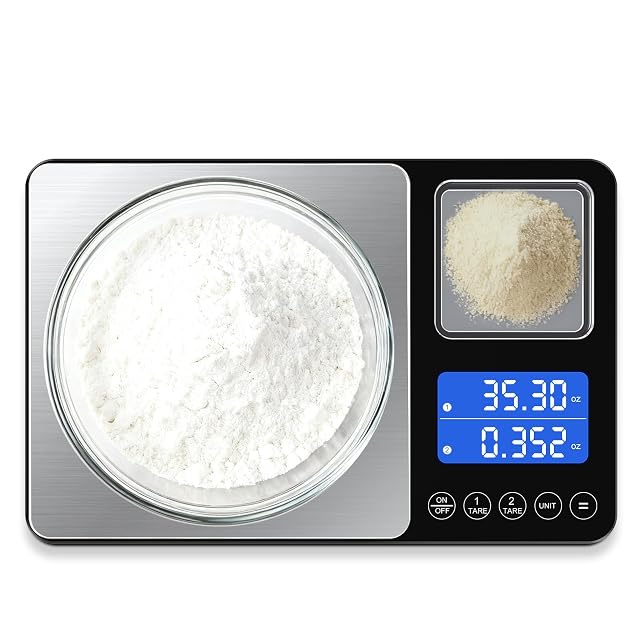
A dual-platform kitchen scale with a 33 lb / 1 g large platform and a 1.1 lb / 0.01 g mini platform, a dual-line display that adds both, and a five-minute shutoff.
Best for: Bread baking by percentage, where salt and yeast have to be weighed too
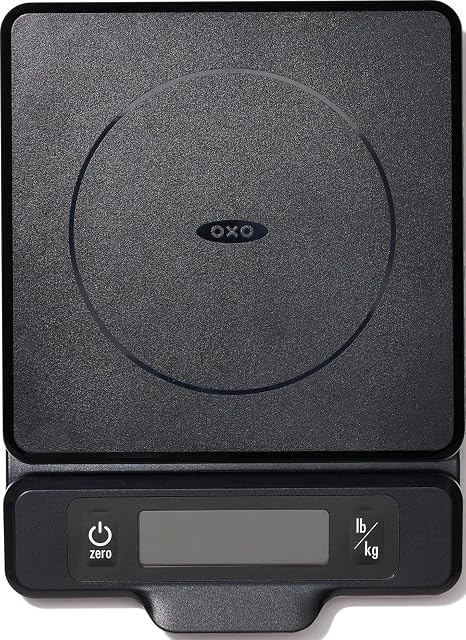
A 5-pound kitchen scale with a display that pulls away from the base, a removable platform, a capacity meter, an optional backlight and 1/8-ounce increments.
Best for: Baking in bowls, where reading the display matters more than capacity
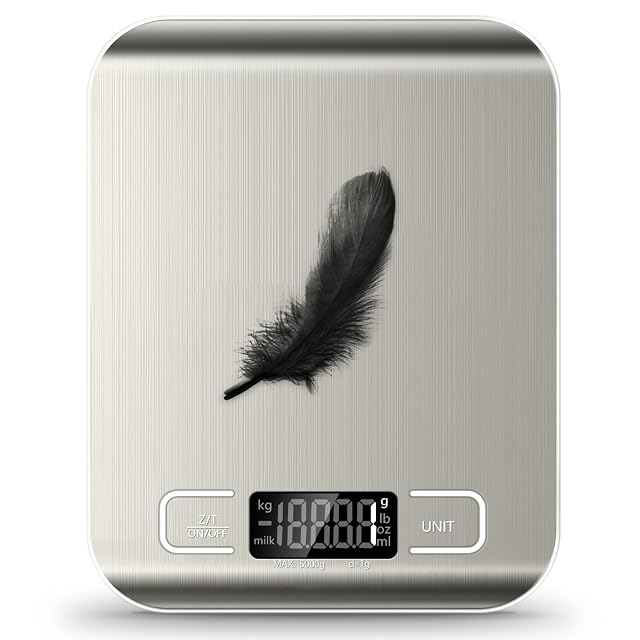
An 11-pound stainless kitchen scale reading to 1 g (0.04 oz) in six units, with tare, a backlit LCD, overload and low-battery warnings and a two-minute shutoff.
Best for: Flour, sugar and portions, at the lowest price on this shelf
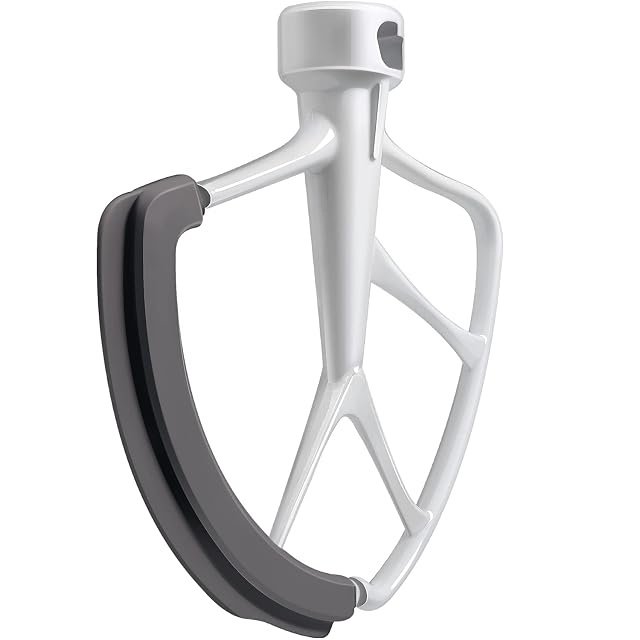
A coated-aluminum flex edge beater with silicone edges for 6 quart bowl-lift KitchenAid mixers, dishwasher safe, with its own dimensions and thirteen models published.
Best for: A 6 quart bowl-lift KitchenAid, or a Professional 5-Plus
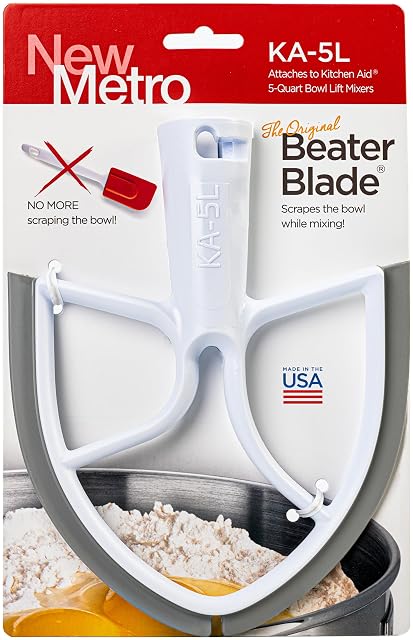
A USA-made high-impact plastic BeaterBlade for 5 quart bowl-lift KitchenAid mixers with stainless bowls of 8 to 8.5 inches, scraping to the dimple and dishwasher safe.
Best for: A 5 quart bowl-lift KitchenAid with a stainless bowl, measured first
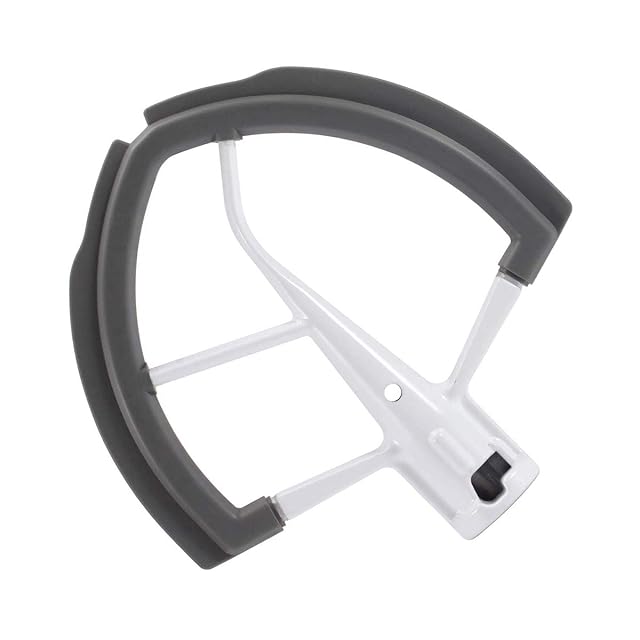
A coated-metal flex edge beater with silicone edges for 6 quart bowl-lift KitchenAid mixers, dishwasher safe, with the bowl size and exclusions published.
Best for: A 6 quart bowl-lift KitchenAid with a stainless bowl, measured first