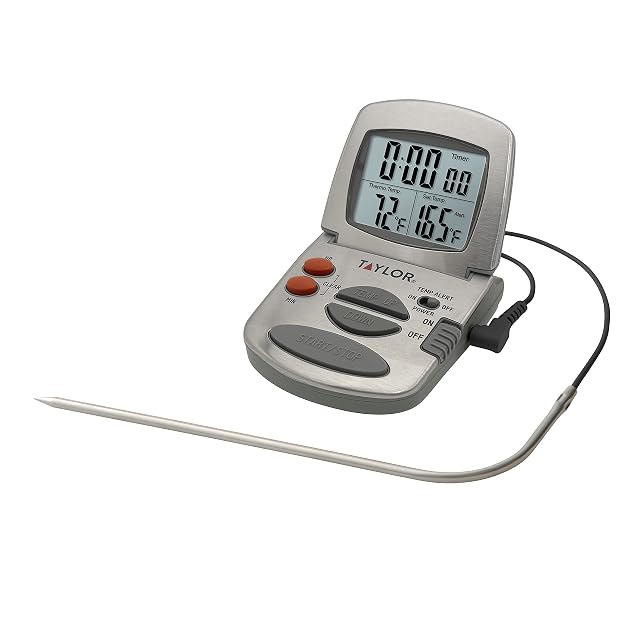
Best for: Oven roasting where the door stays shut and the display sits on it
≈ $24
Check price on Amazon A four-foot cord and a year of warranty
A leave-in probe thermometer with a 4-foot silicone cord, a programmable temperature alarm, a 24-hour timer, a magnetized back and a one-year warranty.
Best for: Oven roasting where the door stays shut and the display sits on it
The KitchenAid at $11.99 publishes the warning no other page here does: “Digital thermometers are not meant to be left in food during cooking. The plastic and electronic components could be damaged with excessive heat.”
That applies to all eleven instant-reads on this shelf, from $9.99 to $19.99.
This is built the other way round. The probe goes in the meat, a 4-foot silicone cord runs out of the oven, and the display sits outside — standing on a countertop or magnetized to the oven door.
What it buys is continuous watching. A roast or a brisket is a long cook, and with an instant-read the only way to know where you are is to open the door — which costs heat every time. Here you set a target and it tells you.
The two leave-in units on this shelf, side by side:
this, $24.24 — a 4-foot silicone cord · a 24 hour timer · a programmable target · no probe length · 32 to 392 °F · no accuracy figure · no heat rating · a stand and a magnet · one year limited warranty TempPro TempTrack, $19.99 — a 40 inch stainless mesh cable · a 99 hour 59 minute timer · USDA presets, all resettable · a 6.5 inch stepdown probe · 32 to 572 °F · ±1.8 °F at 1 degree resolution · probe and wire rated 716 °F · three storage modes · no warranty
So the cheaper unit publishes nearly everything and offers no recourse, and the dearer publishes almost nothing and offers a year.
“this digital thermometer measures temperatures from 32°F to 392°f”
392 °F is 200 °C — a round metric figure converted, which tells you the instrument was specified in Celsius.
The shelf, by range:
−58 to 842 °F — the Etekcity infrared gun at $18.99, which reads surfaces and cannot read inside anything −58 to 572 °F — six items, from $9.99: both TempPro instant-reads under ten dollars, the ANDAXIN at $9.99, both ONFIKY units at $9.97 and $9.98, the LONICERA at $12.99 −40 to 482 °F — the KitchenAid at $11.99 −40 to 450 °F — the Taylor Compact at $18.99, from this same maker 32 to 572 °F — the TempPro TempTrack at $19.99, the other leave-in, plus a 716 °F survival rating 32 to 392 °F — this, the most expensive item sold on Amazon.com
For the job this tool does, the range is not the constraint. Food does not exceed 212 °F in moist cooking, and the highest internal temperature in cooking is brisket and pulled pork at 195 to 205 °F. 392 °F is nearly twice what any food needs.
What it rules out is everything else. Deep frying runs 325 to 375 °F — inside, and close to the ceiling. Sugar work: hard crack about 300 to 310 °F, caramel 340 to 350 °F — inside, and a dry caramel taken further is not.
And the bottom end cuts out the fridge and freezer check entirely. 32 °F is the freezing point, so this cannot confirm that a freezer holds 0 °F — a job six items on this shelf do with their −58 °F floor.
The honest summary: correct for a leave-in oven thermometer, narrowest on the shelf, and the wrong single instrument for a kitchen.
“Highly accurate” is the bullet heading and no tolerance follows it. Seven of the fourteen items sold on Amazon.com publish one: ±0.5 °F (the ThermoMonster at $16.99, a thermocouple, with NIST cited), ±0.9 °F (two TempPro models from $9.99), ±1 °F (four items), ±1.8 °F (the TempTrack). This is one of the seven that does not — as is the maker’s own Taylor Compact at $18.99.
“durable stainless steel probe with a 4-foot silicone cord allows monitoring of food inside oven without opening the door”
It is the longest cord on this shelf — eight inches more than the TempTrack’s 40 inches — and that buys real freedom. With forty inches the base practically has to live on the oven door; with four feet it can sit on a countertop.
What is missing is how hot the cord may get.
The other leave-in publishes it: “Meat probe and wire can withstand up to 716 degrees Fahrenheit.” And it is a different material: stainless steel mesh against silicone.
Food-grade silicone is generally serviceable to around 220 °C — about 430 °F. Likely adequate for a door gap, and not the same thing as a published figure, and well below the mesh cable’s rating.
Where the cord actually sits is the reason to care. A domestic oven door closes on a flexible gasket, and a thin cord passes under or beside it without meaningfully breaking the seal. So the cord is compressed by a door and heated by the gap at the same time — the one part of a leave-in thermometer under mechanical and thermal stress together.
What silicone gives in exchange is flexibility. A mesh cable holds a kink; a silicone one does not — and a kinked cable is a cable with a broken conductor inside it, which on a leave-in is the commonest failure there is.
Which is also the reason the one-year warranty on this page is worth something, since the cord is exactly the part a term covers.
Two habits neither leave-in page gives. Route the cord out of the side of the door, where hinge pressure is lowest. And never close the door on the plug — the probe-to-cord junction is the part that fails.
No probe length is published, where four items on this shelf publish one: 6.5 in (the TempTrack, with a stepdown tip), 5.3 in (the TempPro TP-02S at $9.99), 5 in (the LONICERA at $12.99), 4 in (the ThermoMonster at $16.99).
On a leave-in, length is what stops the probe working loose. The meat shrinks around the probe over hours, and a short probe backs out into the air — which produces the classic leave-in failure: a reading that suddenly climbs to 300 °F because the tip is measuring the oven. The catalog total of 225 mm covers the whole package, so the probe cannot be deduced from it.
“set the target temperature and monitor the ACTUAL temperature on the display. Also has timer feature that has a range up to 24 hours.”
Two alarms on two different quantities — one on temperature, one on the clock — which is the complete arrangement for a long cook, because a long cook has two failure modes: the meat finishing early while you are out of the room, and a stall that outlasts the time you have.
The difference from the rival is presets. The TempTrack at $19.99 carries USDA preset temperatures per food, all resettable — the only presets on this shelf. Here you set the number yourself.
Which is fine if you know the numbers, and most people do not. The useful ones:
Poultry — 165 °F (USDA), though many cooks pull breast lower and rest it Ground meat — 160 °F Whole cuts of beef, pork, lamb, veal — 145 °F with a three-minute rest (USDA); pork at 145 °F is faintly pink and correct Beef by taste — about 125 °F rare, 135 medium rare, 145 medium: ten degrees apart and unguessable Brisket and pulled pork — 195 to 205 °F, far above safety, because that is where collagen turns to gelatine
The nearest thing to a chart on this shelf is printed: the Alpha Grillers at $14.97 ships “instructions, meat temperature chart” in its box.
On the timer: 24 hours against the TempTrack’s 99 hours 59 minutes. For meat, 24 hours is enough — the longest domestic cook is a 16- to 20-hour brisket or shoulder. Beyond that you are into cheese making and multi-day proofs, which the TempTrack page names and this one does not.
“Display can stand up to be seen easily, and the magnetized back can be used to attach to oven door.”
It is the only page on this shelf to name the oven door as the place for the magnet, and that is the right call: the door is the shortest cable run there is, so even four feet goes further than it needs to.
The shelf, on storage: a magnet on eight of the fourteen items sold on Amazon.com · a hang hole on three · a folding probe on the two TempPro folders · a probe cover that becomes a handle on the Taylor Compact at $18.99, the only storage feature here that improves the grip in use · a tabletop stand on this and the TempTrack, which also has a magnet and a hanging hole — three modes to this one’s two.
The catalog figure is 127 × 32 × 225 mm — about 5 × 1.3 × 8.9 inches — which is the package rather than the display, and no weight is published. For reference, seven items on this shelf have a catalog weight, from the 23 g TempPro TP-02S to the 113 g Etekcity gun, with the TempTrack base at 96 g.
One caution about a magnet on an oven door that no page here gives. The door is the hottest outside surface of the oven, and a magnet holds by friction against a vertical face. A base on the door of an oven you then open swings with the door — which is how a cord gets yanked out of a probe.
“this thermometer is backed with a 1-year so you can make your purchase with Confidence”
Three of the fourteen items sold on Amazon.com publish a term:
LONICERA, $12.99 — 18 months, plus a 60-day money-back guarantee: the longest here, on an item costing little over half this one ANDAXIN, $9.99 — one year, with CE and RoHS certification this, $24.24 — one year limited
Eleven publish none, including the TempTrack at $19.99 — the other leave-in — the ThermoMonster at $16.99, the Etekcity at $18.99, the KitchenAid at $11.99, all three TempPro instant-reads, both ONFIKY units, the Alpha Grillers and this maker’s own Taylor Compact at $18.99.
And on a leave-in the term is worth more than on an instant-read, for a specific reason. The failure mode of a wired thermometer is the cord — compressed by a door, heated by a gap, flexed every time you move the base — and a broken conductor inside an intact sheath is invisible. You find out when the reading goes to dashes halfway through a brisket.
The other thing that fails is the probe-to-cord junction, for the same reason.
Neither of those is a fault you can detect on arrival, which is the whole argument for cover beyond a return window.
“Limited” is doing work in that sentence and the page does not define it. A limited warranty typically excludes the consumable and the abused — and a cord trapped in an oven door is exactly the thing a maker would call wear.
No accuracy figure. “Highly accurate” is a bullet heading followed by a measuring range. Seven of the fourteen items sold on Amazon.com publish a tolerance, from ±0.5 °F to ±1.8 °F — including the other leave-in, which states ±1.8 °F at 1 degree resolution.
No heat rating for probe or cord, as above, where the rival publishes 716 °F for both.
No probe length, as above.
No presets, as above.
No weight, as above.
No waterproof rating, which is probably honest for the format: the base has a socket for the probe plug, and a socket cannot be sealed the way a handheld can. Four items on this shelf publish IP67 or IPX6 and one IP65; neither leave-in publishes anything. Wash the probe, wipe the base.
No calibration function, where five items on this shelf have one. The free check still works — crushed ice topped with water, stirred, holds 32 °F / 0 °C, and boiling water is 212 °F at sea level, falling about 1 °F per 500 feet — though this unit’s 32 °F floor means the ice point is the very bottom of its range.
No battery type or battery life. On a unit meant to run unattended through a long roast, this matters. Only the TempPro TP03A at $9.99 makes the cell an argument — “1 AAA battery instead of a button cell… lasts twice as long” — and both ONFIKY units publish “4000+ Hour Battery Life”.
No alarm volume, on a unit whose whole value is that it beeps while you are in another room.
No second probe or channel, so one food at a time.
No country of manufacture, which no item on this shelf publishes.
Read on the day this page was built: $23 at the American Amazon shop.
Read from Keepa on the day this page was last revised; stock and price both move without notice.
Prices quoted in this text were read on 2026-10-17. The live price is at the top of the page.
For an oven roast, yes. For anything else on this shelf, no — and it is the narrowest range here on the most expensive item sold on Amazon.com. The page publishes "temperatures from 32°F to 392°f". 392 °F is 200 °C (392 °F), which is a round metric figure converted — so the instrument was specified in Celsius. The shelf, by range: −58 to 842 °F — the Etekcity infrared gun at $18.99 · −58 to 572 °F — six items, from $9.99 · −40 to 482 °F — the KitchenAid at $11.99 · −40 to 450 °F — the Taylor Compact at $18.99, from this same maker · 32 to 572 °F — the TempPro TempTrack at $19.99, the other leave-in · 32 to 392 °F — this. What it covers. Food does not exceed 212 °F in moist cooking, and the highest internal temperature in cooking is brisket and pulled pork at 195 to 205 °F — so 392 °F is nearly twice what any food needs. For the job this tool does, the range is not the constraint. What it does not cover is everything else a thermometer gets used for. Deep frying runs 325 to 375 °F — inside the range but close to the top. Sugar work goes past it: hard crack is about 300 to 310 °F and caramel 340 to 350 °F, both inside, but a dry caramel taken further is not. And the bottom end cuts out the fridge and freezer check entirely: 32 °F is the freezing point, so this cannot verify that a freezer holds 0 °F — a job six items on this shelf do. The honest summary: the range is correct for a leave-in oven thermometer and it is the narrowest on the shelf, and a buyer expecting one instrument to do everything should buy a different one.
The page does not say, and on a cord that lives in an oven door that is the figure to want. The bullet states the length and the purpose: "durable stainless steel probe with a 4-foot silicone cord allows monitoring of food inside oven without opening the door." The other leave-in on this shelf publishes the rating this one omits. The TempPro TempTrack at $19.99: "Meat probe and wire can withstand up to 716 degrees Fahrenheit." And it is a different material. This cord is silicone; that one is stainless steel mesh. Food-grade silicone is generally serviceable to around 220 °C (428 °F) — about 430 °F — which is likely adequate for a door gap and is not the same as a published figure, and is well below the mesh cable’s 716 °F. Where the cord actually sits. A domestic oven door closes on a flexible gasket, and a thin cord passes under or beside it without breaking the seal. The cord is therefore compressed by a door and heated by the gap — which is the one part of a leave-in thermometer that is being mechanically and thermally stressed at once. What silicone gives you in exchange is flexibility: a mesh cable holds a kink and a silicone one does not, and a kinked cable is a cable with a broken conductor inside it. Four feet is the longest on this shelf, eight inches more than the TempTrack’s 40 inches, which buys real freedom: the base can sit on a countertop rather than only on the door. Two habits neither page gives. Route it out of the side of the door, where hinge pressure is lowest. And never close the door on the plug — the probe-to-cord junction is the part that fails.
The cheaper one publishes nearly everything and offers no warranty; this one publishes almost nothing and offers a year. What this has that the TempTrack does not. A 4-foot cord against 40 inches. A one year limited warranty — and at least eleven of the sixteen items on this shelf publish none, the other two being the LONICERA at $12.99 with 18 months plus a 60-day money-back guarantee and the ANDAXIN at $9.99 with one year plus CE and RoHS. And a magnetized back stated for the oven door, which is the shortest cable run there is. What the TempTrack has that this does not. USDA preset temperatures per food, all resettable — the only presets on this shelf. A 99 hour 59 minute timer against 24 hours. A 6.5 inch probe with a stepdown tip — the longest here — where this publishes no probe length at all. A 32 to 572 °F range against 32 to 392. A published accuracy of ±1.8 °F at 1 degree resolution, where this publishes none. A 716 °F rating for probe and wire, where this publishes none. And three storage modes against two. So the question is what you are buying. If you want the specification, the TempTrack publishes it and costs $2.70 less. If you want recourse when it fails — and the failure mode of a leave-in is the cord, which is the part under mechanical stress — this is the only one of the two with a term. And for what it is worth, this maker’s own instant-read on this shelf, the Taylor Compact at $18.99, publishes no warranty at all.
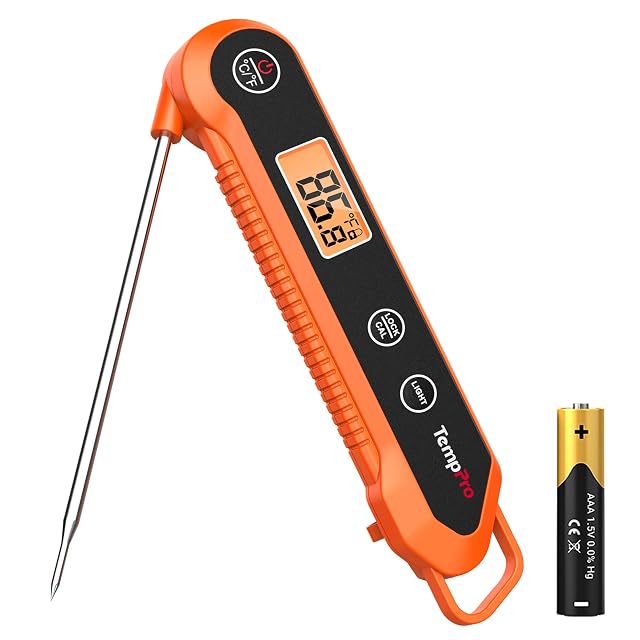
A one-second folding-probe thermometer rated IPX6 waterproof, with a calibration function, a bright backlit display, a magnetic back and a hook.
Best for: A folding thermometer that gets rinsed and can be checked against ice water
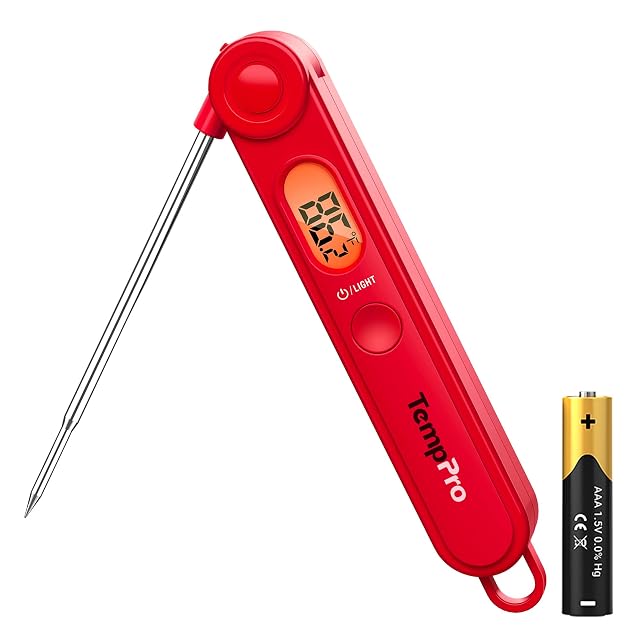
A one-second folding-probe thermometer accurate to ±0.9 °F, with a backlit display, a magnet, a hook and a single AAA battery instead of a button cell.
Best for: Everyday grilling and roasting, from a magnet on the hood, without hunting for button cells
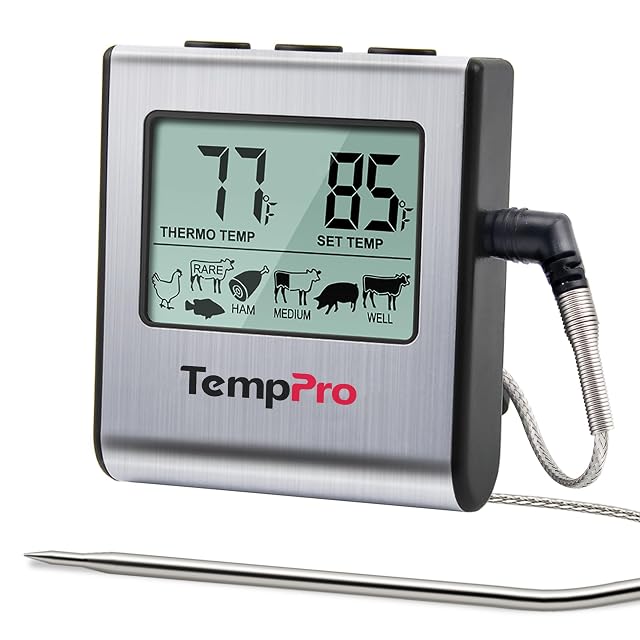
A leave-in probe thermometer with USDA preset alarms, a 99-hour timer, a 6.5 inch stepdown probe and a 40 inch mesh cable rated to 716 °F.
Best for: Long cooks — a smoker, a brisket, a roast — where the door stays shut
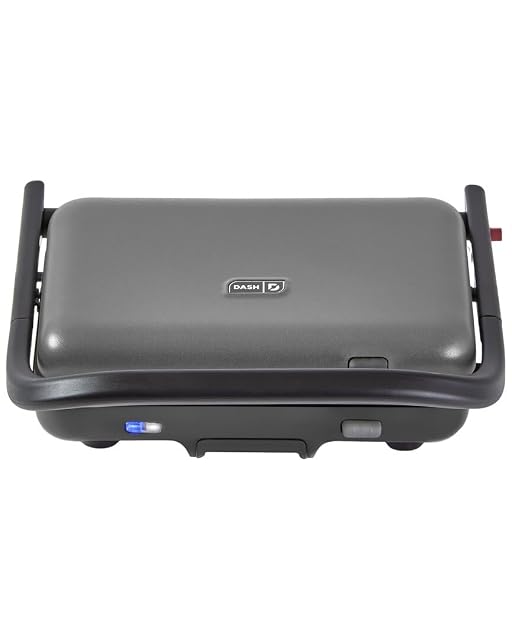
A 180-degree hinged press with removable grill and waffle plates, flat-top grilling, dishwasher-safe plates and a compact countertop footprint.
Best for: Waffles and paninis from one machine, with no further purchases
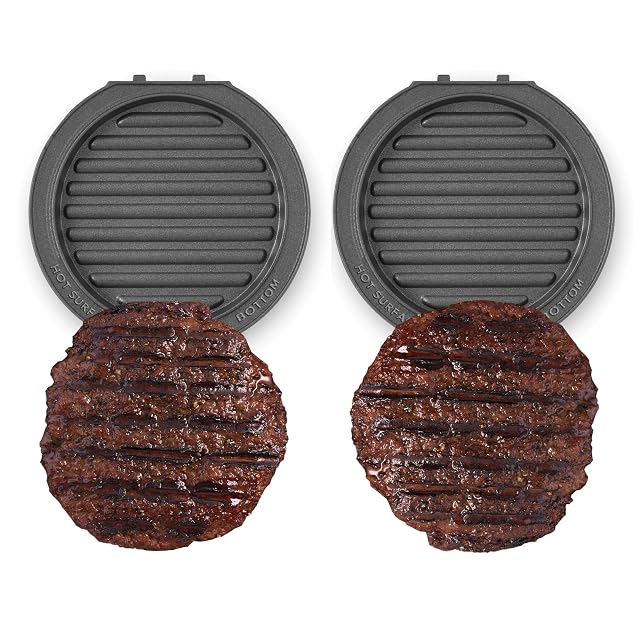
A two-pack of 4-inch removable non-stick plates for the Dash MultiMaker Mini system, dishwasher safe, with the maker sold separately.
Best for: An existing Dash MultiMaker Mini, when you want a second pattern
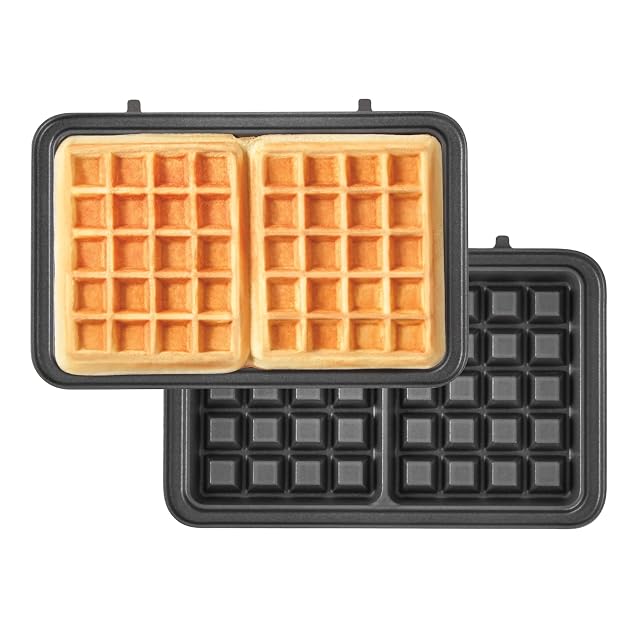
A two-plate waffle set for the Dash MultiMaker Flex Press Grill System, removable, non-stick, dishwasher safe and stackable for storage.
Best for: An existing Dash Flex Press that came with grill and griddle plates