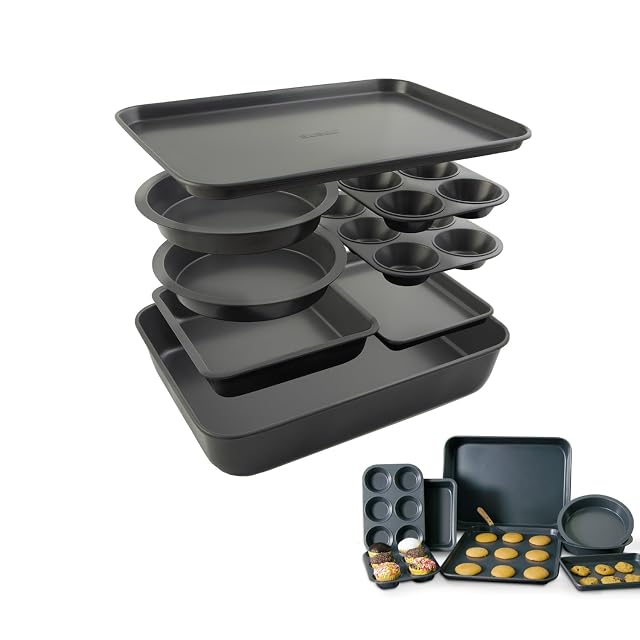
Best for: A small kitchen that needs eight pans and has one shelf for them
≈ $60
Check price on Amazon Eight pans in three and a half inches, verified
Eight nesting nonstick pans — a roaster, two oven trays, two 8-inch rounds, a square pan and muffin cups — stacking to 17.63 × 13.11 × 3.58 inches.
Best for: A small kitchen that needs eight pans and has one shelf for them
The page publishes a stack of 17.63 × 13.11 × 3.58 inches for eight pieces.
The catalog reads 448 × 333 × 91 mm — 17.64 × 13.11 × 3.58 inches. Exact, to the hundredth.
And the other set here can be checked the same way. The Amazon Basics six-piece at $31.99 publishes 16.25 × 11.75 × 6.25 inches and catalogs at 413 × 298 × 159 mm. Also exact.
So the volumes are comparable:
this — about 827 cubic inches for eight pieces: 103 a piece Amazon Basics — about 1,193 cubic inches for six: 199 a piece
This set stores a pan in roughly half the space, which is precisely what bullet one claims: “eight items store in the footprint of the deep roaster at the bottom.”
The mechanism is the taper. Pans that nest have walls sloped enough for each to sit inside the next — the same geometry that lets fifty Waytiffer pie tins at $9.99 fit in one box, and the same geometry that makes a 9 × 5 loaf pan catalog at 11 × 6.
The cost is wasted depth in use. A steeply tapered 8-inch round holds less than a straight-sided one of the same rim diameter, and nothing on this page gives a depth for any piece.
And the stack is wider, not smaller. 231 square inches of plan against the Amazon set’s 191. It is shorter — three and a half inches against six and a quarter — which is right for a cupboard shelf and wrong for a shallow drawer.
“stores as a single 17.63 x 13.11 x 3.58 inch stack, roughly the drawer space of one cake pan.”
By footprint: the stack is 231 square inches; one of the set’s own 8-inch round tins occupies a bounding square of 64 square inches, or about 50 of actual circle. Three and a half to four and a half times, not “roughly one”.
By volume: the stack is 827 cubic inches; an 8-inch round about two inches deep is roughly 100. Eight times.
By height alone, the most generous reading: 3.58 inches against about 2. Still 1.8 times.
Which is a pity, because the real claim is strong and needs no flourish. Eight pans at 103 cubic inches each against 199 for the six-piece set is a genuine halving of storage, verified by two catalog figures, and bullet one states it correctly.
Bullet five is the sentence to ignore. Bullet one is the one to buy on.
The weight in the same bullet is reliable, and it is the only self-published weight on this shelf. “8 pounds” is 3,629 grams — 454 g a piece against 302 g for the Amazon Basics pieces, 310 g for the MegaGrip 8 × 8, 268 g for the GoodCook 9 × 5 and 794 g for the KitchenAid 12-cup muffin pan.
So these are the second-heaviest pans on the shelf on average, which is consistent with a set built round a “deep roaster”.
“A large roasting pan, two oven trays in large and small, two 8 inch round cake tins, one square pan and a pair of muffin cups”
The count is right — 1 + 2 + 2 + 1 + 2 = 8 — and the 8-inch rounds are the only dimension published anywhere.
What is left undefined:
“a large roasting pan” — no size, on the piece the whole stack is built round “two oven trays in large and small” — no sizes, and the difference between a tray and a sheet is the rim depth, which is not given either “one square pan” — no size, where the GoodCook MegaGrip at $10.09 is a measured 8 × 8 and the Amazon Basics set contains none at all “a pair of muffin cups” — the vaguest item on this shelf: two trays, or two cups out of the eight pieces? The Amazon Basics set says “a 12-cup muffin pan” and the KitchenAid at $21.99 says “12 Cup”, so a count is the minimum, and neither of those publishes a cup diameter or volume either
And there is no loaf pan in the set, which is worth stating plainly: seven of the thirteen items on this shelf are loaf pans — the GoodCook 9 × 5 at $5.99, the Sur La Table at $11.70, the KitchenAid at $14.99, the GoodCook 8 × 4 pair at $11.99, the Waytiffer foil loaf pans, and two European loaf tins, the steel Kaiser and the silicone Backefix — plus another inside the Amazon Basics set. This is the only multi-piece set here without one.
On the cake tins, the size difference from the rival set matters. Two 8-inch rounds here; two 9-inch rounds in the Amazon Basics set. An 8-inch round is 50 square inches; a 9-inch is 63.6 — a fifth smaller. A box mix written for two 9-inch rounds will either overflow these or leave batter over, and box instructions are written for 9.
“Safe to use in a convection oven, and oven safe in a conventional one up to 420 degrees Fahrenheit”
Two firsts on this shelf in one bullet.
This is the only convection statement anywhere here. A convection oven moves air, which browns faster and more evenly at a given setting — and for a nesting set that is relevant in a way the page does not explain: tapered thin pans in moving air flex more, and a light pan on a wire shelf in a fan oven can lift. The statement is reassurance, not instruction.
And it is one of only two published temperature limits. The other is the Amazon Basics six-piece at $31.99: “Oven-safe to 428 degrees F”, which is exactly 220 °C — a metric figure converted.
420 °F is about 216 °C, so the two sets are within four degrees of each other and both sit below what some baking asks for. Many bread recipes call for 450 °F; roasting is commonly 425 to 450 °F — and bullet two sells this set for roasting: “so you can roast and bake with one set”.
Eleven of thirteen items on this shelf publish no limit at all, including both KitchenAid pans (“stands up to high heat”) and the Waytiffer foil loaf pans (“extremely high temperatures”). They are not necessarily better; they are simply silent.
The limit is the coating, not the pan. Steel is untroubled at these temperatures; non-stick films degrade above their rated range. Above 450 °F, use something with no coating to lose — on this shelf, only the two Waytiffer foil packs.
Eight pans, five bullets, and nothing says what they are made of. Not steel, not aluminum, not carbon steel, not aluminized.
The nearest thing is “rust resistant”, and that implies ferrous: aluminum does not rust, so a set sold on resisting rust is almost certainly steel. That is an inference, not a specification.
Everything else on this shelf names its material:
Plain carbon steel — the four GoodCook pans (“heavy-duty gauge steel”) and the Sur La Table (“carbon steel”) Aluminized steel — the two KitchenAid pans: carbon steel hot-dipped in an aluminum alloy that conducts about three times better and does not rust where the coating breaks “Heavy-weight steel” — the Amazon Basics six-piece 100 percent aluminum foil — the two Waytiffer packs
And no item on this shelf publishes a thickness or a gauge, so this set is missing the material as well as the number.
What the page does publish that nobody else does is “rust resistant” itself — the only mention of rust anywhere here, and the honest one. Plain carbon steel rusts wherever its non-stick film is broken, and a nesting set has pans rubbing against each other every time you put them away.
The habit that follows, and the page does not give it: dry every piece before nesting it. Trapped water between two nested pans is exactly where rust starts — and on a set whose selling point is nesting, that risk is structural rather than incidental.
“Dishwasher safe and rust resistant”
Eight pans is eight pans of washing up, and the dishwasher is the whole point of a set this size. This is the only unqualified dishwasher claim on a set here.
The shelf, on washing:
this — “Dishwasher safe and rust resistant” Amazon Basics, $31.99 — “Hand wash for best results”, and no dishwasher claim at all on a six-piece set KitchenAid, both pans — “DISHWASHER SAFE: for easy cleanup”, no caveat GoodCook, three pans — “dishwasher safe… hand washing is recommended for longer-lasting use”, and on the 8 × 4 set “but hand-washing is recommended” GoodCook 13 × 9 and Sur La Table — nothing either way
What a dishwasher does to any of them is attack the non-stick film — hot, alkaline, abrasive, repeatedly — and rust the bare steel at every break in it. Pairing the dishwasher claim with “rust resistant” is therefore the logically complete version, and the only one on this shelf that joins the two.
One habit the page does not give, specific to nesting: do not stack them straight out of the machine. Dishwasher-dry is not dry at the rims, and the stack is where the water gets trapped.
No material, as above — the largest gap on this shelf.
No gauge or thickness, as with every item here.
No size for seven of the eight pieces. Only the 8 inch rounds are measured, and no depth is given for anything, which on a tapered nesting pan is the figure that decides capacity.
No cup count or cup size on the “pair of muffin cups”, which is the vaguest item description on this shelf.
No loaf pan in the set, where seven of thirteen items here are loaf pans.
No metal-utensil claim. GoodCook claims it on three of four pans; nobody else here does — and on a nesting set the coating is under more mechanical stress than on any single pan.
No coating composition. “Nonstick” appears in the product name and nowhere is it described. Only the Sur La Table at $11.70 states what its coating is free of — “PFOA, PFAS, PTFE Free” — and only by negation.
No color. A dark pan absorbs more radiant heat and browns faster than a light one, which is a real baking variable; nothing here names a finish.
No handles or rims described. Three items on this shelf address getting a pan out of the oven — silicone grips on the MegaGrip, extended handles on both KitchenAid pans, wide rims on the GoodCook 13 × 9. A nesting set cannot have projecting handles and still nest, which is a trade worth stating and is not stated.
No warranty and no country of manufacture, which no item on this shelf publishes.
Read on the day this page was built: $60 at the American Amazon shop.
Read from Keepa on the day this page was last revised; stock and price both move without notice.
Prices quoted in this text were read on 2026-10-17. The live price is at the top of the page.
Yes, and it is the only promise on this shelf that the catalog data verifies by the number. The page publishes a stack of "17.63 x 13.11 x 3.58 inch" for eight pieces. The catalog reads 448 × 333 × 91 mm, which is 17.64 × 13.11 × 3.58 inches. Exact, to the hundredth. Now compare the other set here. The Amazon Basics six-piece at $31.99 publishes a stack of 16.25 × 11.75 × 6.25 inches in its product name, and its catalog confirms that too at 413 × 298 × 159 mm (16.3 × 11.7 × 6.26 in). Do the volumes. This set: 17.63 × 13.11 × 3.58 = about 827 cubic inches for eight pieces — 103 a piece. Amazon Basics: 16.25 × 11.75 × 6.25 = about 1,193 cubic inches for six — 199 a piece. So this stores a pan in roughly half the space, which is exactly what bullet one claims: "every piece nests together to save cabinet space, so eight items store in the footprint of the deep roaster at the bottom." The mechanism is the taper. Pans that nest have walls sloped enough for each to sit inside the next, which is the same geometry that lets fifty of the Waytiffer pie tins at $9.99 fit in one box. The cost is wasted depth in use — a steeply tapered 8-inch round holds less than a straight-sided one of the same rim diameter. And the stack is wider in plan: 231 square inches against the Amazon set’s 191. It is shorter, not smaller — which is right for a cupboard shelf and wrong for a narrow drawer.
It is wrong by a factor of several, in both readings — and it is a shame, because the rest of the claim is sound. Bullet five: "The complete set weighs 8 pounds and stores as a single 17.63 x 13.11 x 3.58 inch stack, roughly the drawer space of one cake pan." By footprint. The stack is 17.63 × 13.11 inches = 231 square inches. The set’s own cake tins are 8 inch rounds, which occupy a bounding square of 64 square inches — or 50 square inches of actual circle. So the stack takes between three and a half and four and a half times the drawer area of one of its cake pans. By volume. The stack is 827 cubic inches. An 8-inch round cake tin about 2 inches deep is roughly 100. Eight times, not "roughly one". By height alone — the most generous reading — 3.58 inches against about 2, which is 1.8 times. Every reading overstates the saving. Which is a pity, because the real claim is strong and does not need the flourish: eight pans in 103 cubic inches each against 199 for the Amazon Basics six-piece at $31.99 is a genuine, verifiable halving of storage, and bullet one states it correctly — "eight items store in the footprint of the deep roaster". That is the true sentence. Bullet five is the one to ignore. For what it is worth, the published weight is reliable: "8 pounds" is 3,629 grams, and at eight pieces that is 454 g (16 oz) a piece against 302 g (10.7 oz) for the Amazon Basics pieces.
The page does not say, and that is the biggest gap on this shelf. Eight pans, five bullets, and no material. Not steel, not aluminum, not carbon steel, not aluminized — nothing. The nearest thing to a material statement is "Dishwasher safe and rust resistant", and rust resistant implies ferrous: aluminum does not rust, so a pan sold on resisting rust is almost certainly steel. That is an inference, not a specification. Everything else on this shelf names its material. Plain carbon steel — the four GoodCook pans ("heavy-duty gauge steel") and the Sur La Table at $11.70 ("carbon steel"). Aluminized steel — the two KitchenAid pans, which is carbon steel hot-dipped in an aluminum alloy that conducts about three times better and does not rust where the coating breaks. "Heavy-weight steel" — the Amazon Basics six-piece at $31.99. 100 percent aluminum foil — the two Waytiffer packs. And nobody on this shelf publishes a thickness or a gauge, so this set is missing the material as well as the number. What the page does publish that nobody else does is "rust resistant" itself — the only mention of rust anywhere here, and the honest one, because plain carbon steel rusts wherever its non-stick film is broken and a nesting set has pans rubbing against each other every time you put them away. The habit that follows: dry every piece before nesting it. Trapped water between two nested pans is exactly where rust starts, and on a set designed to nest that risk is structural rather than incidental.
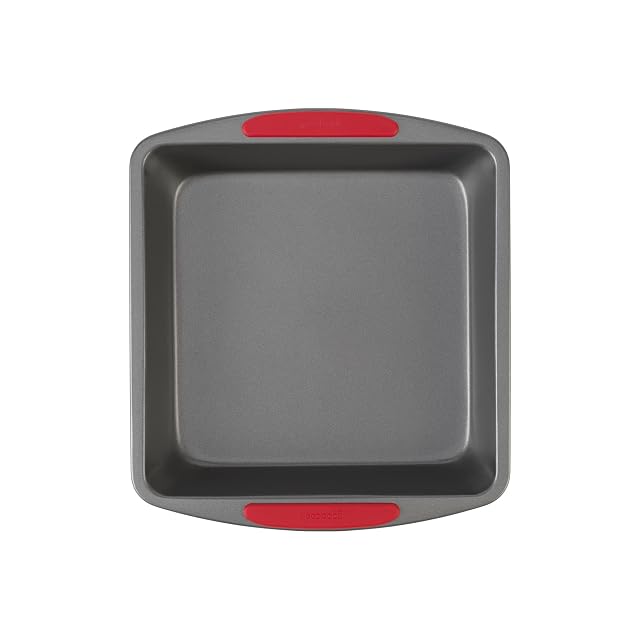
An 8 × 8 inch heavy-gauge steel square pan with ergonomic silicone grips on both handles, a scratch-resistant non-stick coating and a dishwasher-safe finish.
Best for: Brownies and half-batch cakes, lifted out of a hot oven without fumbling
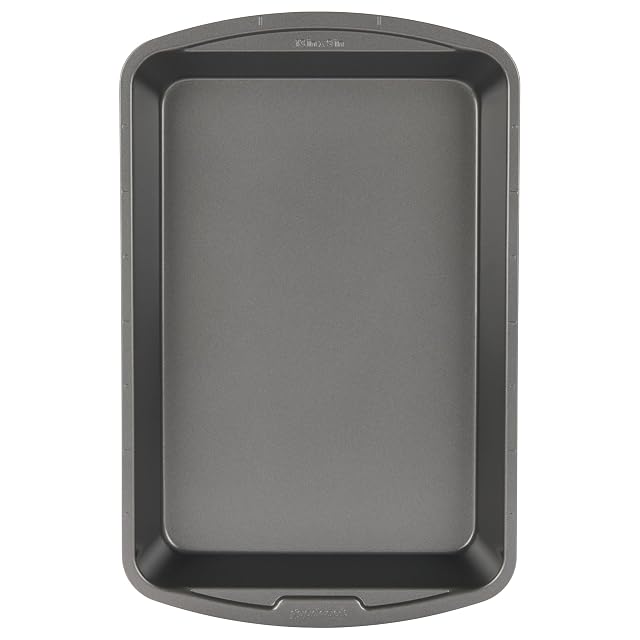
A 13 × 9 × 2 inch heavy-gauge steel bake and roast pan with a scratch-resistant metal-utensil safe non-stick coating and wide rims.
Best for: A box cake, a lasagne or a roast chicken, in one 13 × 9 pan
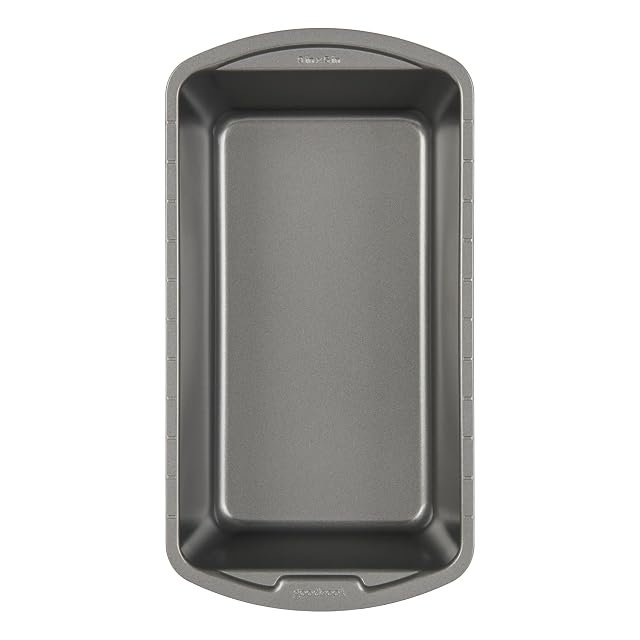
A standard 9 × 5 inch carbon steel loaf pan with a scratch-resistant non-stick coating, metal-spatula safe and dishwasher safe.
Best for: One standard loaf, at the lowest price on the shelf
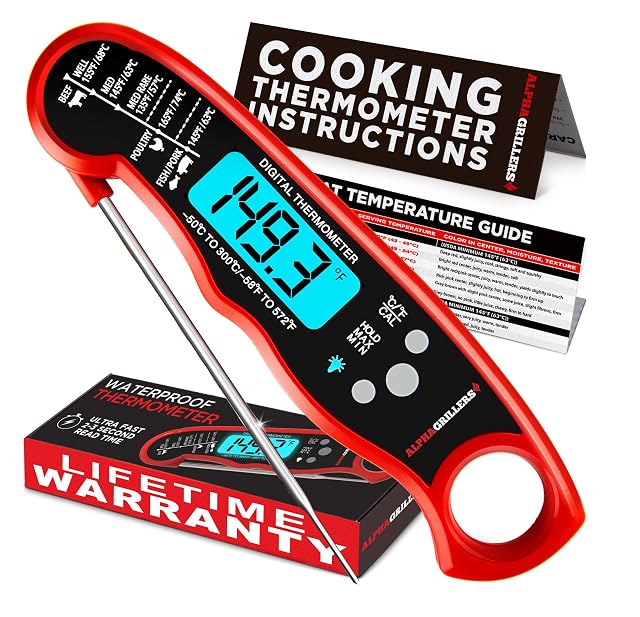
A one-to-two second instant-read thermometer, IP67 waterproof, supplied pre-calibrated with a recalibration function, a meat temperature chart and instructions in a gift box.
Best for: A first thermometer, or a gift, where the chart and the calibration matter most
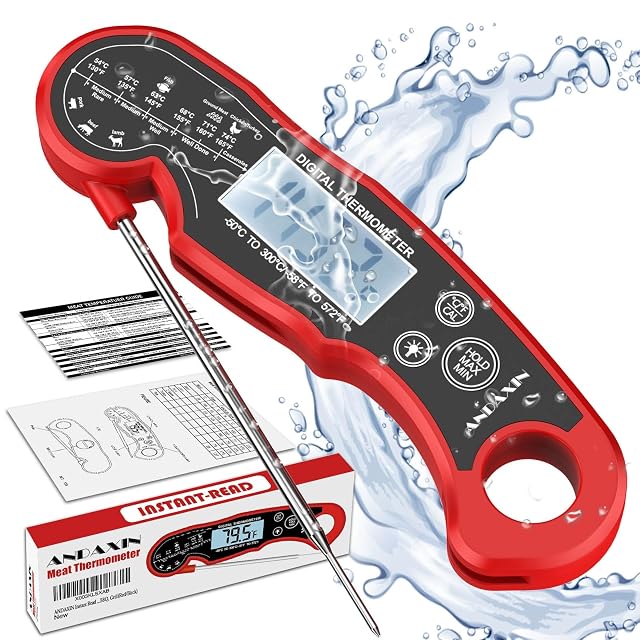
A three-second instant-read thermometer accurate within 1 °F, IP65 waterproof, with calibration, a temperature lock, a backlit LCD and a one-year warranty.
Best for: A nine-dollar thermometer you can check, correct and claim against
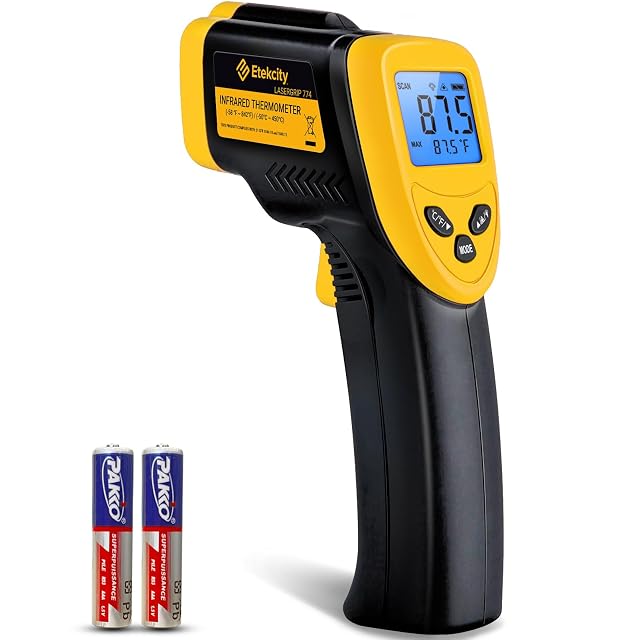
An infrared surface thermometer reading −58 to 842 °F in under half a second, with a 12:1 distance-to-spot ratio, a backlit LCD and a maximum display.
Best for: Pans, pizza stones, griddles and oil — the surfaces a probe cannot read