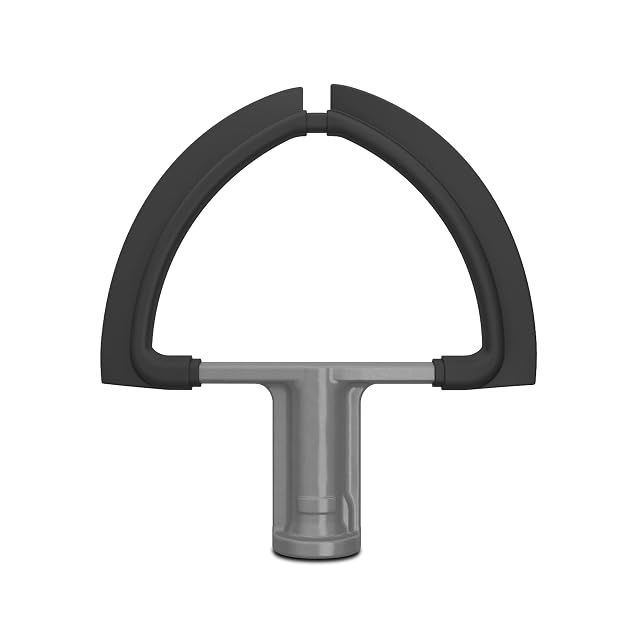
Best for: A KSM75, KSM55, KSM60 or KSM70 bowl-lift with a stainless bowl
≈ $45
Check price on Amazon Two edges, and top rack only
A double flex edge beater for KitchenAid bowl-lift mixers with stainless bowls in the KSM75, KSM55, KSM60 and KSM70 families, scraping twice as often, top-rack dishwasher safe.
Best for: A KSM75, KSM55, KSM60 or KSM70 bowl-lift with a stainless bowl
“Scrapes the bowl twice as often, compared to KitchenAid Single Flex Edge Beater, model KFEW6L.”
The arithmetic. A single flex edge sweeps a given patch of wall once per revolution. Two edges sweep it twice.
On a planetary mixer the paddle also orbits the bowl, so the real figure is twice as many passes per orbit — and a pass is what moves an ingredient off the wall and back into the mixture.
Why it matters more at the start than at the end. The ingredients that cling are the dry ones and the cold ones: flour thrown up the wall in the first ten seconds, butter smeared at the edge. Those are the passes that count, and a single edge has to come round again before it catches them.
Where the gain is smaller. In a loose batter the mixture self-levels and the wall stays wet, so the second edge has less to find. And two edges mean twice the drag, which on a loaded motor is real if small.
The six flex-edge or scraping beaters on this shelf:
Vaxaape, $9.99 — silicone flex edges, tilt-head Reikame, $14.99 — silicone edges, 6 qt bowl-lift KITCHPOWER, $20.99 — silicone flex edges, 6 qt bowl-lift New Metro Design, $28.99 — a one-piece plastic BeaterBlade that “scrapes bowl all the way to the dimple” KitchenAid KFE5T, $29.95 — a single flex edge, tilt-head this — a double, bowl-lift
And the five plain paddles: the Wiselet at $25.79, the XINBOOGQ at $24.99, the KitchenAid KN256CBT at $24.95, the K5AB at $24.95, and both Pastry Beaters, which are a cutting tool rather than a paddle.
What this page does not give is a number for the result. Three items on this shelf publish 50 percent: the Vaxaape, the KITCHPOWER and the New Metro Design.
This page publishes only comparisons against its own siblings. “Twice as often” and “faster and more thoroughly than other KitchenAid beaters” tell you the ranking inside the range and nothing about the shelf.
Note also which single it compares with: KFEW6L, not the KFE5T at $29.95 on this shelf. Because the KFE5T is a tilt-head part and this is bowl-lift — they are not alternatives to each other.
“model numbers starting with KSM75, KSM55, KSM60, and KSM70, not compatible with any model not listed”
It is the narrowest fit statement on this shelf and the bluntest.
Compare the breadth elsewhere. The KITCHPOWER at $20.99 lists thirteen codes plus a 7-quart and the Professional 5-Plus. The XINBOOGQ at $24.99 lists nine series by capacity. KitchenAid’s own Pastry Beaters at $49.95 and $69.95 list eighteen. The New Metro Design at $28.99 lists fifteen for 5 quart alone.
Three words in bullet one are worth noticing.
“Residential” — which implies a commercial equivalent exists and is excluded. “Stainless steel bowls only” — the requirement four items on this shelf state. “Not compatible with any model not listed” — which closes the door on inference, and no other page here does that.
Why a double edge needs a narrower list than a single. A flex edge works by touching the wall within a millimeter or two.
With one edge, a slight mismatch means one patch swept lightly. With two edges on opposite sides of the paddle, a mismatch means one edge pressing and the other standing off — so the tolerance is halved.
Which makes the blunt refusal the honest thing to print rather than a restriction.
On the stainless-bowl requirement, four items on this shelf agree: this, both Pastry Beaters (“with Stainless Steel Bowls Only”), and the Reikame at $14.99 and New Metro Design at $28.99, which exclude glass bowls by name.
Why. A glass bowl of the same nominal capacity has thicker walls and a different curve, so the gap changes — and a flex edge sized for steel either fouls the glass or stands off it and scrapes nothing. Glass also chips where steel does not.
So nothing on this shelf is for a glass bowl. Twelve items, and all twelve are for steel bowls or silent.
And the better test is the one two pages give. Measure the bowl across the top, inside rim to inside rim. The Reikame at $14.99: “9.75” diameter, 6.75” deep.” The New Metro Design at $28.99: “between 8 and 8.5-inches diameter, across the top of the bowl.”
“Easy to clean, top-rack dishwasher-safe stand mixer accessory”
At least eight of the fourteen items on this shelf claim dishwasher safety. This is the only one to say which rack.
Unqualified: the Reikame at $14.99, the KITCHPOWER at $20.99, the Wiselet at $25.79, the XINBOOGQ at $24.99, the New Metro Design at $28.99, KitchenAid’s own KFE5T at $29.95, and both Pastry Beaters. Silent: the Vaxaape at $9.99, KitchenAid’s own KN256CBT at $24.95 and the K5AB at $24.95.
What the bottom rack does. It sits directly above the element and takes the drying cycle’s full heat.
Silicone tolerates that; a silicone-to-metal bond is less sure — and the bond is what holds a flex edge in its frame. An edge that has lifted at one end is an edge that no longer sweeps.
On anything coated, the cycle is the problem rather than the rack. Hot, alkaline and abrasive is exactly what attacks a non-stick coating — which is why the Wiselet at $25.79 and the XINBOOGQ at $24.99 sell solid steel against “traditional coated aluminum paddles” that “chip, flake, or peel”, and why the Wiselet names the visible consequence on bare aluminum: “gray aluminum residue”.
And on plastic, heat is the problem. The New Metro Design at $28.99 is “high impact plastic” and publishes an unqualified dishwasher claim with no temperature limit at all.
So top rack is the right instruction for every flex edge and every plastic blade on this shelf, and one page in twelve prints it.
The safest treatment for all of them: top rack, or hand wash and dry.
And two pages give the warning that matters more than any washing instruction. The Vaxaape at $9.99 (“Do Not Use Blade In a Dry Bowl”) and the New Metro Design at $28.99 (“do not use blade in an empty bowl”). A flex edge holds its edges against the wall under light pressure, and with batter in the bowl the batter is the lubricant. Dry, the strip drags on steel at speed and the friction heats the thinnest part of the attachment.
On a double flex edge that applies twice over. Ingredients in first, beater second.
The weights on this shelf:
New Metro Design 113 g (high-impact plastic) · KitchenAid K5AB 113 g · KitchenAid KFE5T 130 g · KITCHPOWER 136 g · Vaxaape 180 g · KitchenAid Pastry Beater KSMPB7 at 200 g · this 260 g · KitchenAid KN256CBT 272 g · KitchenAid Pastry Beater KSMPB7SS 590 g Not published — the Reikame at $14.99, the Wiselet at $25.79, the XINBOOGQ at $24.99
Twice the weight of KitchenAid’s own single flex edge for tilt-head at 130 g — though those are different sizes of machine, so the comparison is loose.
And no material is published, which it shares with three other KitchenAid parts on this shelf: the KN256CBT at $24.95 and both Pastry Beaters. The K5AB at $24.95 manages “Coated”.
Meanwhile five third-party pages name theirs. The Vaxaape at $9.99 — “Die-Cast Aluminum With White Ford Teflon Coating And Silicone Flex Edge”. The Reikame at $14.99 — “non-stick coated metal… flexible silicone edges”. The KITCHPOWER at $20.99 — “Food grade coated aluminum frame and silicone flex edges”. The Wiselet at $25.79 — “solid stainless steel”. The XINBOOGQ at $24.99 — “food grade 304 stainless steel”. The New Metro Design at $28.99 — “high impact plastic”, “Always made in the USA”.
So on this page you know there are two flexible edges and not what they are made of.
Which matters for two practical reasons. The top-rack instruction implies a heat-sensitive part, and silicone is the obvious candidate. And the substrate decides what a chip exposes — bare aluminum discolours in a dishwasher and bare steel does not.
The catalog gives 36 × 173 × 180 mm — about 1.4 × 6.8 × 7.1 inches — which is within a few millimeters of the KITCHPOWER’s published 6.7 × 7.1 × 1.4 inches for a 6 quart part, and 13 mm wider than the maker’s own KN256CBT at 163 mm. The extra width is where the second edge lives.
Three of the six bullets compare this beater with other KitchenAid beaters and none with anything else.
“increases contact with the bowl… compared to KitchenAid Single Flex Edge Beater” “Mixes ingredients faster and more thoroughly than other KitchenAid beaters” “Scrapes the bowl twice as often, compared to KitchenAid Single Flex Edge Beater, model KFEW6L”
Which tells you the ranking within one maker’s range and nothing about the shelf.
And it is worth noting what the second claim implies. “Faster and more thoroughly than other KitchenAid beaters” includes the KN256CBT at $24.95, the K5AB at $24.95, the KFE5T at $29.95 and both Pastry Beaters — all four of them KitchenAid parts on this shelf.
So the maker is ranking its own beaters and placing this at the top.
What the third-party pages publish instead are figures. 50 percent on the Vaxaape at $9.99, the KITCHPOWER at $20.99 and the New Metro Design at $28.99. And one mechanism nobody else draws: the Reikame at $14.99 — “By eradicating the need to turn off and on the mixer… also reduces wear of the motor”, because every restart pulls a current surge through a loaded motor.
Which is the honest version of what this page is claiming. A double edge removes more stops. Fewer stops is less motor wear and less time. And the page says “reduces the need to stop and manually scrape” without drawing either consequence.
One claim nobody on this shelf makes and should: a flat beater is not a dough hook. Only the Vaxaape at $9.99 says it — “But Not For Hard Dough” — and it is true of every item here. A flat beater creams, aerates and combines; a hook kneads, and the motor bogs because the attachment is wrong rather than because it is weak. A double flex edge in bread dough is two silicone strips being asked to do a hook’s job.
No material and no edge material, as above.
No time figure, as above.
No dimensions, where the KITCHPOWER at $20.99 publishes “6.7 x 7.1 x 1.4 inches”.
No capacity. The four prefixes span bowl-lift machines from 5 to 7 quart and the page does not say which sizes they are — where the XINBOOGQ at $24.99 pairs every model with its quart figure and the Reikame at $14.99 publishes the bowl itself.
No dry-bowl warning, as above — and on a double flex edge it applies twice.
No hard-dough warning, as above.
No bowl measurement, where two items on this shelf publish one and the model lists across the shelf contradict each other.
No beater-to-bowl clearance note. A KitchenAid’s gap is set by a screw in the base — the standard check is a dime laid in the bowl, which the paddle should just move. On a double flex edge, where the tolerance is halved, that adjustment is what makes the whole claim work — and no page on this shelf mentions it.
No scraper or accessory, where both Pastry Beaters include one: “Quickly and easily remove dough from the beater with the included scraper.”
No warranty, which no item on this shelf publishes.
No country of manufacture. One item on this shelf publishes one: the New Metro Design at $28.99 — “Always made in the USA”.
And a note on the shelf: it is named for bowls and beaters, and all twelve items are beaters. There is no bowl here at all — which matters on this page, since it requires a stainless bowl, “sold separately”, by its own first bullet.
Read on the day this page was built: $45 at the American Amazon shop.
Read from Keepa on the day this page was last revised; stock and price both move without notice.
Prices quoted in this text were read on 2026-10-17. The live price is at the top of the page.
It halves the time any patch of bowl spends uncleaned, and the page says so in its own terms. Bullet two: "The Double Flex Edge Beater increases contact with the bowl and reduces the need to stop and manually scrape stray ingredients clinging to the sides, compared to KitchenAid Single Flex Edge Beater." Bullet four: "Scrapes the bowl twice as often, compared to KitchenAid Single Flex Edge Beater, model KFEW6L." The arithmetic. A single flex edge sweeps a given patch of wall once per revolution. Two edges sweep it twice. On a planetary mixer the paddle also orbits the bowl, so the real figure is twice as many passes per orbit — and a pass is what moves an ingredient off the wall and back into the mixture. Why it matters more at the start than at the end. The ingredients that cling are the dry ones and the cold ones: flour thrown up the wall in the first ten seconds, butter smeared at the edge. Those are the passes that count — and a single edge has to come round again before it catches them. Where the gain is smaller. In a loose batter the mixture self-levels and the wall stays wet, so the second edge has less to find. And two edges mean twice the drag, which on a loaded motor is real if small. What the page does not give is a number for the result. Three items on this shelf publish 50 percent: the Vaxaape at $9.99, the KITCHPOWER at $20.99 and the New Metro Design at $28.99 ("cuts mixing time by 50%"). This page publishes only comparisons against its own siblings — "twice as often", "faster and more thoroughly than other KitchenAid beaters" — which tells you the ranking inside the range and nothing about the shelf.
Only if the model number starts with KSM75, KSM55, KSM60 or KSM70 — and the page refuses everything else outright. Bullet one: "Compatible with residential KitchenAid Bowl-Lift Stand Mixers (sold separately) using stainless steel bowls only: model numbers starting with KSM75, KSM55, KSM60, and KSM70, not compatible with any model not listed." It is the narrowest fit statement on this shelf and the bluntest. Compare the breadth elsewhere. The KITCHPOWER at $20.99 lists thirteen codes plus a 7-quart and the Professional 5-Plus. The XINBOOGQ at $24.99 lists nine series by capacity. KitchenAid’s own Pastry Beaters at $49.95 and $69.95 list eighteen. The New Metro Design at $28.99 lists fifteen for 5 quart alone. Three words in bullet one are worth noticing. "Residential" — which implies a commercial equivalent exists and is excluded. "Stainless steel bowls only" — the requirement four items on this shelf state, because a glass bowl of the same nominal capacity has thicker walls and a different curve, so a flex edge sized for steel either fouls the glass or stands off it and scrapes nothing. And "not compatible with any model not listed", which closes the door on inference. Why a double edge needs a narrower list than a single. A flex edge works by touching the wall within a millimeter or two. With one edge, a slight mismatch means one patch swept lightly. With two edges on opposite sides, a mismatch means one edge pressing and the other standing off — so the tolerance is halved. Which makes the blunt refusal the honest thing to publish. And the better test is still the one two pages give: measure the bowl across the top, inside rim to inside rim, as the New Metro Design at $28.99 and the Reikame at $14.99 both instruct.
Because the bottom rack is nearest the heating element, and a flexible edge is the part on this shelf least happy about that. Bullet five: "Easy to clean, top-rack dishwasher-safe stand mixer accessory." At least eight of the fourteen items here claim dishwasher safety. This is the only one to say which rack. The others: the Reikame at $14.99, the KITCHPOWER at $20.99, the Wiselet at $25.79, the XINBOOGQ at $24.99, the New Metro Design at $28.99, KitchenAid’s own KFE5T at $29.95, and both Pastry Beaters — all unqualified. Three say nothing at all: the Vaxaape at $9.99 and KitchenAid’s own KN256CBT at $24.95 and K5AB at $24.95. What the bottom rack does. It sits directly above the element and takes the drying cycle’s full heat. Silicone tolerates it; a silicone-to-metal bond is less sure, and the bond is what holds a flex edge in its frame. And on anything coated, the cycle is the problem rather than the rack: hot, alkaline and abrasive is exactly what attacks a non-stick coating — which is why the Wiselet at $25.79 and the XINBOOGQ at $24.99 sell solid steel against "traditional coated aluminum paddles" that "chip, flake, or peel". And on plastic, the heat is the problem: the New Metro Design at $28.99 is "high impact plastic" and publishes an unqualified dishwasher claim with no temperature limit at all. Top rack is the right instruction for every flex edge and every plastic blade on this shelf, and only one page prints it. The safest treatment for all twelve: top rack, or hand wash and dry.
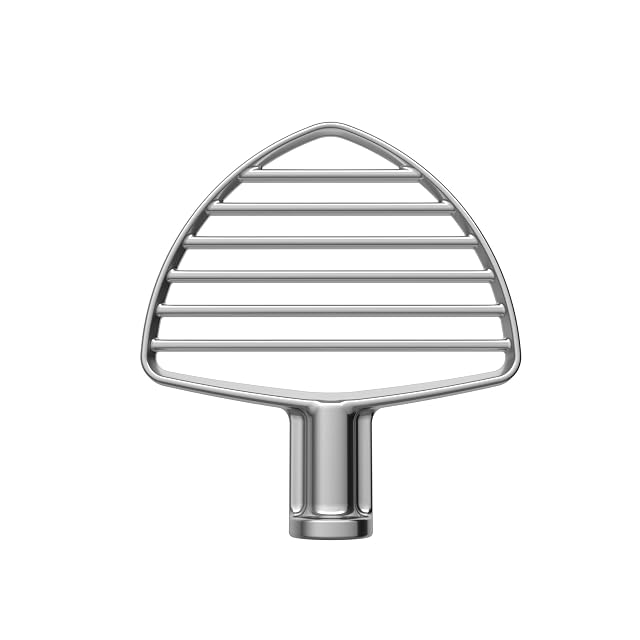
A pastry beater for eighteen named bowl-lift KitchenAid mixers with stainless bowls, cutting cold butter into flour, supplied with a scraper and dishwasher safe.
Best for: Pastry in a bowl-lift KitchenAid, if the weight is the thing you want
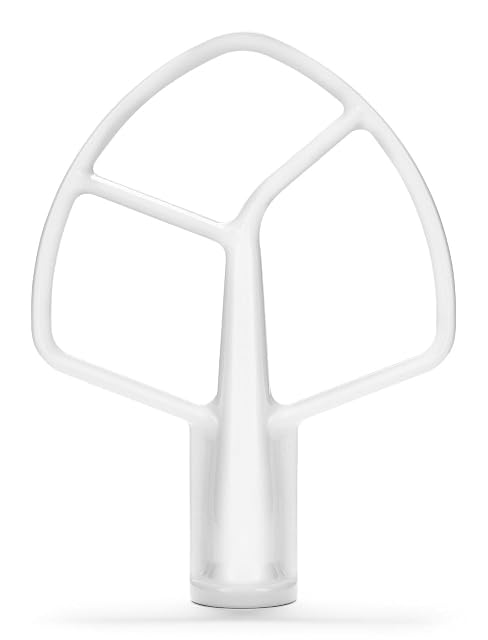
A coated flat beater for 5 quart bowl-lift KitchenAid mixers in white, fitting K4, K5, KP50, KSM5, KSM50, KSM500PS and KSM450.
Best for: An older 5 quart bowl-lift KitchenAid — a K4, K5, KP50 or KSM50
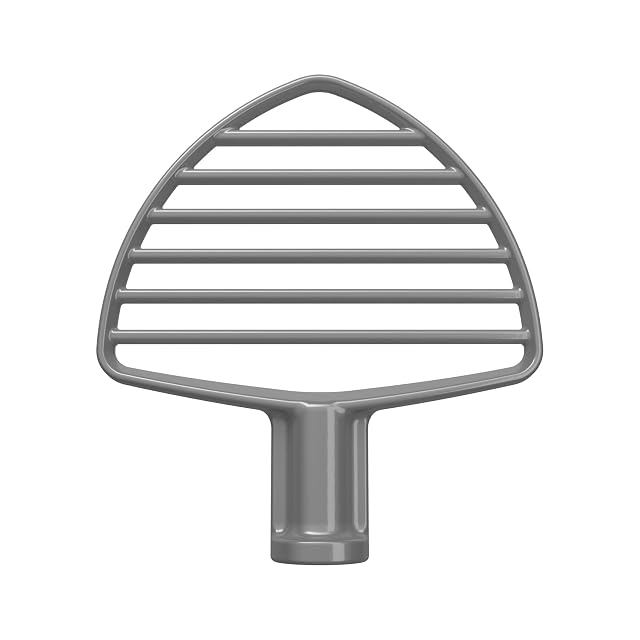
A pastry beater for eighteen named bowl-lift KitchenAid mixers with stainless bowls, cutting cold butter into flour, supplied with a scraper and dishwasher safe.
Best for: Pastry, biscuits and scones — cutting cold butter into flour in the bowl
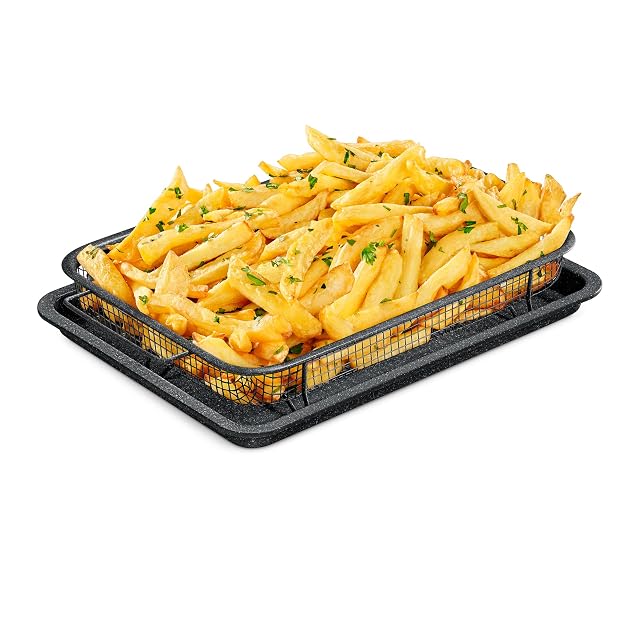
A two-piece crisper set — a carbon steel baking tray and a removable basket — in a grey stone non-stick coating, dishwasher safe and PTFE free.
Best for: Chips, bacon and anything you want crisp on both sides
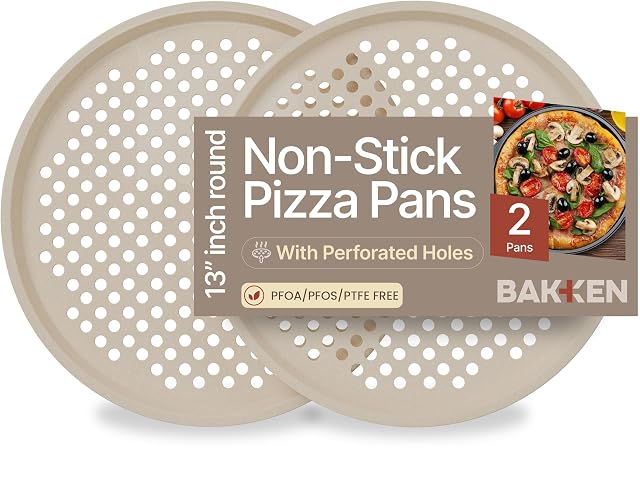
Two perforated carbon steel pizza trays of 13 × 13 × 0.78 inches with a white marble non-stick coating, dishwasher safe, rated to 450 °F and free of PFOA, PFOS and PTFE.
Best for: Two thirteen-inch pizzas at a time, at the lowest price per pan here
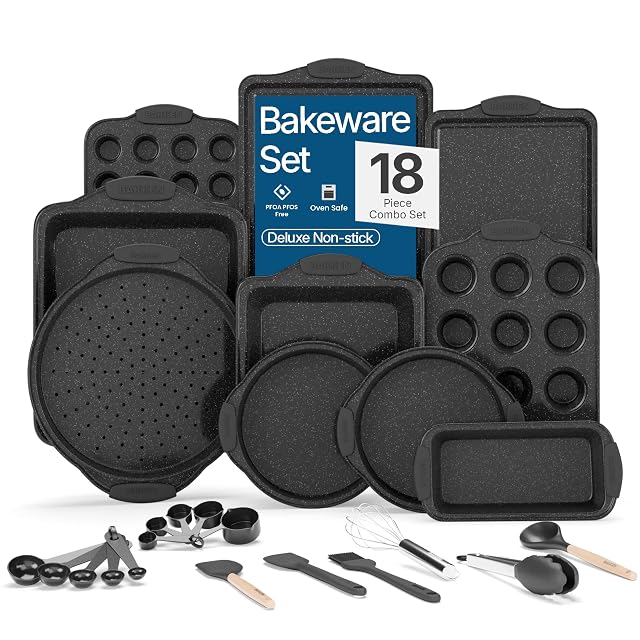
An eighteen-piece carbon steel baking set with a gray marble non-stick coating inside and out, silicone handles, dishwasher safe and rated for oven, fridge and freezer.
Best for: Furnishing a kitchen from nothing, if you can see the photograph