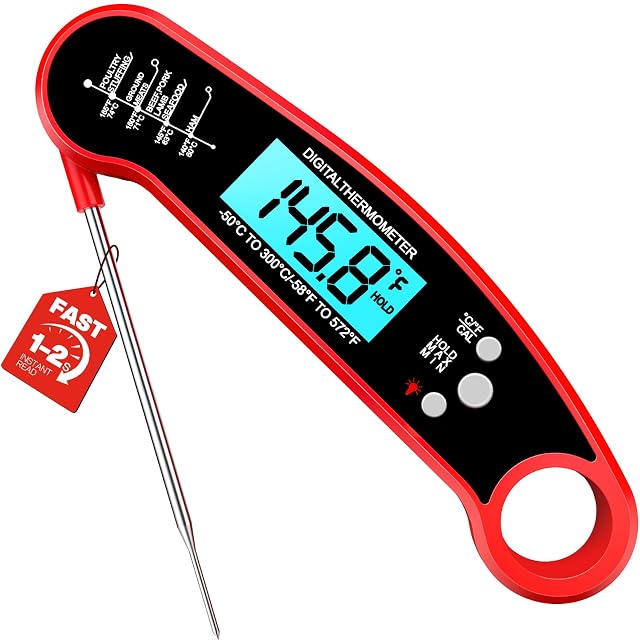
Best for: A grill and kitchen thermometer that lives on the hood and gets rinsed
≈ $10
Check price on Amazon The cheapest IP67 on this shelf
A one-to-two second instant-read thermometer accurate to ±1 °F, fully sealed to IP67, with calibration, a backlit LCD, a magnet and 4,000+ hours of battery.
Best for: A grill and kitchen thermometer that lives on the hood and gets rinsed
IP67 means dust-tight and thirty minutes under a meter of water. Only three items sold on Amazon.com have it, four with the European ThermoMaven: this, its own twin at $9.99, and the Alpha Grillers at $14.97.
The five answers on this shelf:
IP67 — this, the ONFIKY twin, the Alpha Grillers IP65 — the ANDAXIN at $9.99: dust-tight, low-pressure jets only — a rinse, not a soak IPX6 — the TempPro TP03H at $9.98 and the LONICERA at $12.99: high-pressure jets, dust not rated at all, which is what the X means A claim with no code — the ThermoMonster at $16.99 (“100% waterproof”), the Taylor Compact at $18.99 (“splashes & quick rinses”) Nothing — the TempPro TP-02S and TP03A, the KitchenAid, both leave-in units, the Etekcity
Why sealing matters on a thermometer more than on most tools. The probe goes into raw chicken. The part that needs washing is not the probe — smooth stainless wipes clean — but the seam where probe meets body, where juices collect in a crevice you cannot reach with a cloth.
IP67 means that seam is sealed, so a rinse gets into it and water does not get behind it.
And the failure it prevents is the quiet one. A damp circuit board reads wrong for weeks before it stops reading at all, which on a thermometer is worse than a clean failure.
“Auto-sleep and motion-activated wake mean no constant battery changes - just grab and go for marathon cookouts.”
It is the only battery figure on this shelf.
Four thousand hours is 166 days of continuous running, which no instant-read ever does. The working cycle is insert, read, withdraw — actual on-time is seconds at a go.
So what the figure describes is the sleep current, and that is what actually flattens a kitchen thermometer: a tool used twice a week dies of standby, or of being left awake on a countertop.
The two mechanisms here:
A timed shutoff — the TempPro TP-02S at $9.99 and the Taylor Compact at $18.99, both 10 minutes Motion sensing — this, its twin, and the ThermoMonster at $16.99: “wake up instantly when you pick it up and auto-sleep after seconds”
Motion sensing is the better of the two, because a timed shutoff still burns ten minutes after every use and still has to be switched on again by hand.
Nine items on this shelf publish no power management at all.
And one page makes the more useful point instead. The TempPro TP03A at $9.99: “1 AAA battery instead of a button cell; this digital thermometer lasts twice as long and makes battery replacement easier.”
That is the figure this page does not give. No battery type is named here, so when the four thousand hours end you do not know what to buy. A CR2032 is shorter-lived and harder to find than a AAA, and on a ten-year tool that matters more than the hours.
The speed table on this shelf:
0.5 s — ThermoMonster $16.99, a thermocouple, ±0.5 °F, NIST cited 1 s — all three TempPro instant-reads, from $9.99, at ±0.9 °F on two of the three 1–2 s — this, its twin, the LONICERA at $12.99, the Alpha Grillers at $14.97 3 s — the ANDAXIN at $9.99 under 6 s — the KitchenAid at $11.99, a “Digital thermistor” under half a second — the Etekcity at $18.99, which measures surfaces and not interiors
So at $9.99 this is inside two seconds and within a degree, and the only item on the shelf that is clearly better on both counts costs twice as much.
What ±1 °F covers. Chicken is safe at 165 °F. Beef and lamb move through rare to well done in 5 °F bands. A custard splits within a few degrees of setting. One degree sits inside all of those.
What it does not cover is drift — and this page answers that, which is the point of the next section.
At least seven of the sixteen items on this shelf publish no accuracy figure at all, including the KitchenAid at $11.99, both Taylor units at $18.99 and $24.24, the Alpha Grillers (“advanced, highly accurate technology”) and the Etekcity (“Better Accuracy”). On an instrument whose only function is accuracy.
“Simple °C/°F switch and easy calibration.”
Five of the fourteen items sold on Amazon.com publish it: this, its twin, the ANDAXIN at $9.99, the TempPro TP03H at $9.98, and the Alpha Grillers at $14.97, which adds that it “comes pre-calibrated… and recalibrating feature if needed”.
The nine without include every item above $12.99.
±1 °F is a specification when new. A thermometer drifts with age, shock and a corroded or bent tip — and a drifted reading is worse than no reading, because you trust it.
The check costs nothing. Crushed ice, topped with water, stirred. A stirred ice bath holds 32 °F / 0 °C while ice remains. A thermometer reading 35 °F there is three degrees high everywhere.
With calibration you zero it out. Without it you write the error on a note.
The second check: boiling water is 212 °F at sea level, falling about 1 °F per 500 feet of altitude.
And one distinction the word “calibration” hides. A bent tip or a cracked seal is not drift, it is damage — the reading will wander rather than sit consistently wrong, and no offset fixes it. The ice test separates the two: a steady wrong number is drift; an unsteady one is a broken probe.
“grilling, BBQ, smoking, air frying, baking, candy making and liquids”
It is the longest use list on this shelf, and two entries justify the 572 °F top end.
Candy. Sugar work runs to 300 °F and beyond — hard crack is about 300 to 310 °F, caramel 340 to 350 °F — and no food reaches those temperatures except sugar and oil. Deep frying runs 325 to 375 °F.
Liquids. Milk for bread or yoghurt is scalded at about 180 °F and cultured near 110 °F, and sourdough is a dough-temperature craft — which is the whole argument of the LONICERA at $12.99, the only page here written for it: “Accurately measure dough temperature during fermentation and proofing.”
Air frying is the newer one and the page is right to name it. An air fryer is a small convection oven with a basket you cannot see into, and the food is in a single layer where the edges finish first — so it is a format that needs a thermometer more than a conventional oven does, and this is one of only two pages on the shelf to say so.
What the bottom of the range is for, and no page here explains: −58 °F is well below any domestic freezer, so the real job is confirming that a freezer holds 0 °F and a fridge stays below 40 °F. That is a food-safety use no other feature on this shelf performs.
This is FM152. The other is FM152-Black-new, a cent dearer at $9.98.
Both publish ±1 °F in 1–2 seconds, −58 to 572 °F, IP67, ABS housing, a large backlit LCD, a °C/°F switch, easy calibration, a built-in magnet and 4000+ hours with auto-sleep and motion wake. Six bullets each, differing only in phrasing.
Nothing published distinguishes them. Treat them as one product and buy whichever is in stock.
Where this shelf does differentiate within a brand, it shows. TempPro sells three instant-reads and each is genuinely a different tool: the TP-02S at $9.99 with a rigid 5.3 inch probe, a hang hole and no magnet; the TP03A at $9.99 with a folding probe, a magnet and the AAA battery; the TP03H at $9.98 adding IPX6 and calibration — and publishing only four bullets, with no accuracy figure and no range, which makes the most expensive of the three the least documented.
No probe length, on a thermometer whose own bullet sells “liquids”. Only four of the fourteen items sold on Amazon.com publish one — 6.5 in (TempTrack $19.99), 5.3 in (TempPro TP-02S $9.99), 5 in (LONICERA $12.99), 4 in (ThermoMonster $16.99). Reach is what keeps your hand out of a deep pot of oil.
No weight and no dimensions. At least seven of the sixteen items here have a catalog weight, from 23 g to 113 g.
No warranty. Three items on this shelf publish one: the LONICERA at $12.99 — 18 months plus a 60-day money-back guarantee, the longest term here — the ANDAXIN at $9.99 (one year, with CE and RoHS) and the Taylor at $24.24 (one year limited). Eleven publish none.
No hold or lock function, where five items publish one. A lock holds the reading so you withdraw the probe and read it standing up — which on a thermometer with no published probe length is the feature that keeps your hand out of the heat.
No display size. “Large bright LCD” is the shelf’s standard phrase and no item here gives a figure. Two go further in kind rather than in number: the KitchenAid’s display pivots, and the ThermoMonster’s auto-flips for left-handed users.
No sensor type. Only two pages on this shelf name theirs, and they are the two extremes of speed: the KitchenAid’s “Digital thermistor” at under six seconds and the ThermoMonster’s “thermocouple” at half a second.
No warning against leaving it in the food. Only the KitchenAid publishes it: “Digital thermometers are not meant to be left in food during cooking. The plastic and electronic components could be damaged with excessive heat.” It applies to this thermometer exactly as much, and it is the line that separates the eleven instant-reads on this shelf from the two leave-in units.
No country of manufacture, which no item on this shelf publishes.
Read on the day this page was built: $10 at the American Amazon shop.
Read from Keepa on the day this page was last revised; stock and price both move without notice.
Prices quoted in this text were read on 2026-10-17. The live price is at the top of the page.
Submerge it, and only two other items on this shelf allow that. The code, since no page here explains it. The first digit is solids, the second water. 6 for solids is dust-tight — no ingress at all, not merely protected. 7 for water is thirty minutes submerged under a meter. So this goes into the washing-up bowl and comes out working. The five answers on this shelf: IP67 — this, its own twin at $9.99 and the Alpha Grillers at $14.97. IP65 — the ANDAXIN at $9.99: dust-tight, and low-pressure jets only, so a rinse and not a soak. IPX6 — the TempPro TP03H at $9.98 and the LONICERA at $12.99: high-pressure jets, with dust not rated at all, which is what the X means. A claim with no code — the ThermoMonster at $16.99 ("100% waterproof") and the Taylor Compact at $18.99 ("withstands splashes & quick rinses"). Nothing — the TempPro TP-02S at $9.99 and TP03A at $9.99, the KitchenAid at $11.99, both leave-in units and the Etekcity. Why it matters on a thermometer specifically. The probe goes into raw chicken. A thermometer you cannot wash properly is a cross-contamination risk, and the part that needs washing is not the probe — which is smooth stainless — but the join between probe and body, where juices collect in a seam you cannot wipe. IP67 means that seam is sealed, so a rinse reaches it and water does not get behind it. And the failure it prevents is the quiet one: a damp circuit board reads wrong for weeks before it stops reading at all.
It is, and it is the only battery figure on this shelf — though the hours are not the useful part. The bullet: "Auto-sleep and motion-activated wake mean no constant battery changes - just grab and go for marathon cookouts." Four thousand hours is 166 days of continuous running, which no instant-read ever does: the working cycle is insert, read, withdraw, so actual on-time is seconds at a go. What the figure really describes is the sleep current, and that is the thing that flattens a kitchen thermometer. A tool used twice a week does not die of use. It dies of standby — or of being left awake on a countertop. The two mechanisms on this shelf: a timed shutoff — the TempPro TP-02S at $9.99 and the Taylor Compact at $18.99, both 10 minutes · motion sensing — this, its twin, and the ThermoMonster at $16.99: "the thermometer will wake up instantly when you pick it up and auto-sleep after seconds". Motion sensing is the better of the two, because a timed shutoff still runs for ten minutes after every use and still has to be switched on again. Nine items on this shelf publish no power management at all. And one page makes the more practical point instead. The TempPro TP03A at $9.99 publishes "1 AAA battery instead of a button cell; this digital thermometer lasts twice as long and makes battery replacement easier." That is the figure to want and this page does not give it: no battery type is named here, so when the four thousand hours end you do not know what to buy.
Two references a cent apart, and all but identical bullets — and it is worth saying plainly so you do not buy both. This is FM152. The other is FM152-Black-new, a cent dearer at $9.98. Both publish ±1 °F in 1–2 seconds, −58 to 572 °F, IP67, ABS housing, a large backlit LCD, a °C/°F switch, easy calibration, a built-in magnet and 4000+ hours with auto-sleep and motion wake. Six bullets each, differing only in phrasing. This one says "Fully sealed with an IP67 rating, so you can rinse it under running water without worry"; the other says "Complete IP67 sealed construction enables easy water rinsing after use." Same specification, different sentence. So treat them as one product. Nothing published distinguishes them — not accuracy, not speed, not range, not sealing, not battery, not storage. Where the shelf does differentiate within a brand, it is visible. TempPro sells three instant-reads and each is genuinely different: the TP-02S at $9.99 has a rigid 5.3 inch probe, a hang hole and no magnet; the TP03A at $9.99 has a folding probe, a magnet and a AAA battery; the TP03H at $9.98 adds IPX6 and calibration — and publishes only four bullets, with no accuracy figure and no range. The honest reading of the ONFIKY pair: buy whichever is in stock, and judge it against the ANDAXIN at $9.99 (a penny less, calibration, a lock, a year of warranty, but IP65 and 3 seconds) and the Alpha Grillers at $14.97 (IP67 too, pre-calibrated, a box, and no accuracy figure).
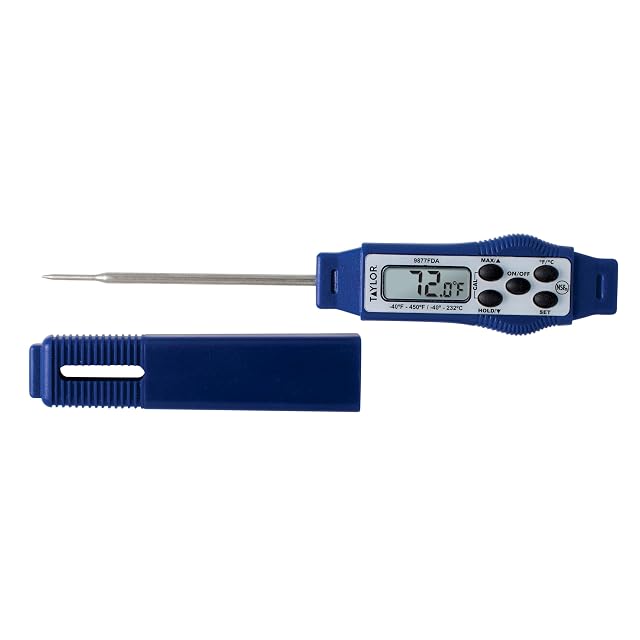
A waterproof pen-style thermometer reading −40 to 450 °F, with a large LCD, a HOLD function, a ten-minute auto shutoff and a probe cover that becomes a handle.
Best for: An apron pocket, where the cover-handle and the hold button do the work
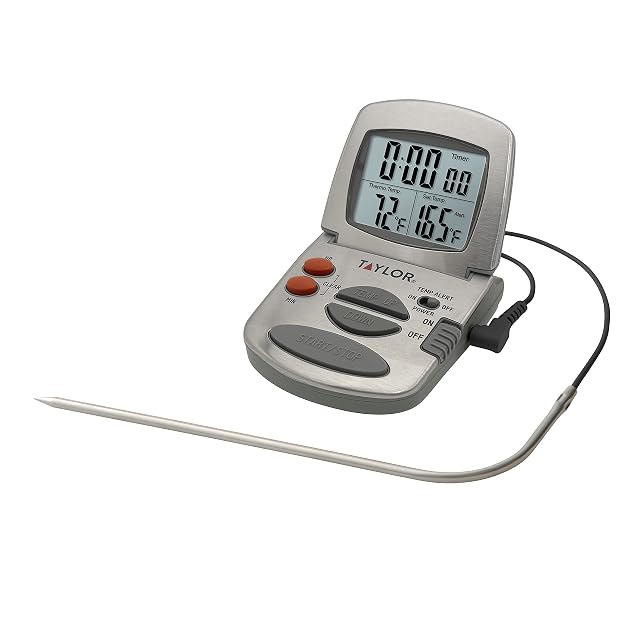
A leave-in probe thermometer with a 4-foot silicone cord, a programmable temperature alarm, a 24-hour timer, a magnetized back and a one-year warranty.
Best for: Oven roasting where the door stays shut and the display sits on it
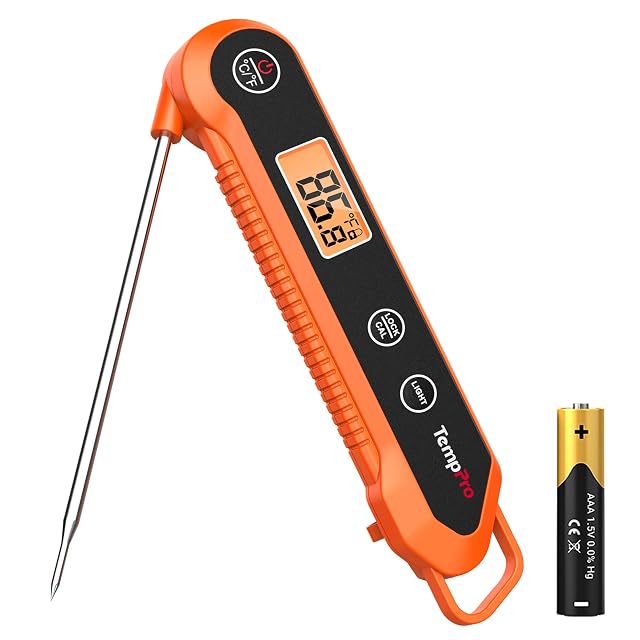
A one-second folding-probe thermometer rated IPX6 waterproof, with a calibration function, a bright backlit display, a magnetic back and a hook.
Best for: A folding thermometer that gets rinsed and can be checked against ice water
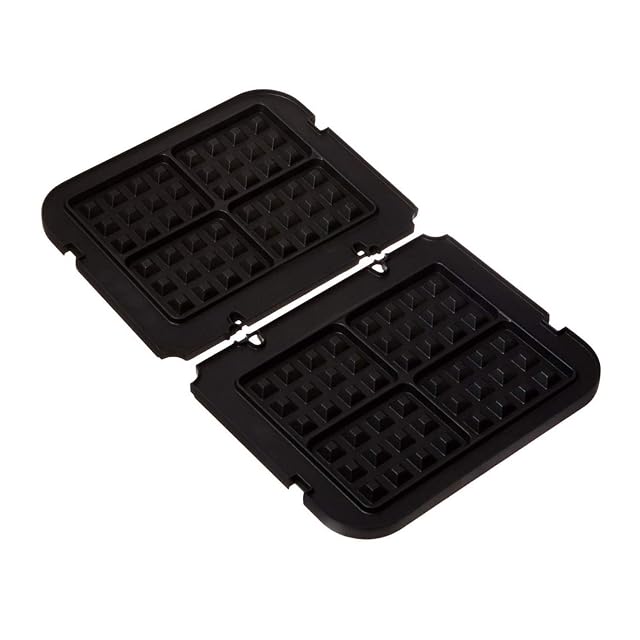
A two-plate waffle set for the Cuisinart Griddler GR-4N, GR-4 and GR-5B, baking four deep-pocketed ¾-inch Belgian waffles, dishwasher safe, with a recipe book.
Best for: A Cuisinart Griddler GR-4, GR-4N or GR-5B, from the maker
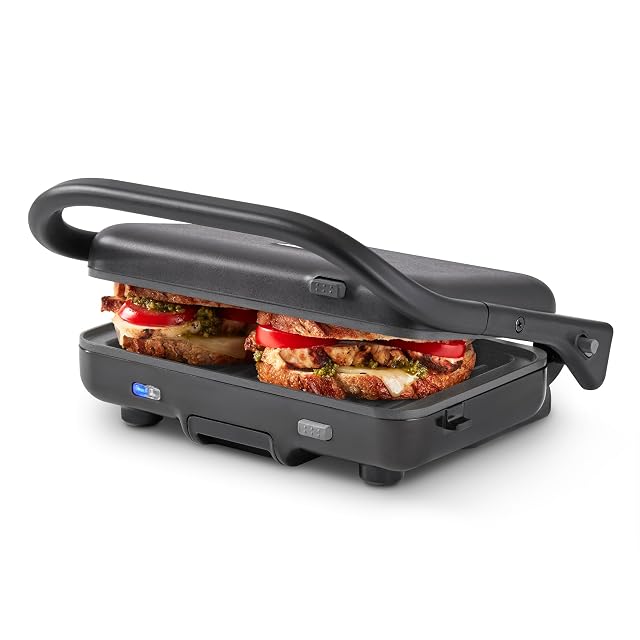
A 180-degree hinged press with removable grill and griddle plates, an 8 × 5 inch surface, a drip tray and no on/off switch, with waffle plates sold separately.
Best for: Paninis and a flat griddle for pancakes and eggs, with waffles added later
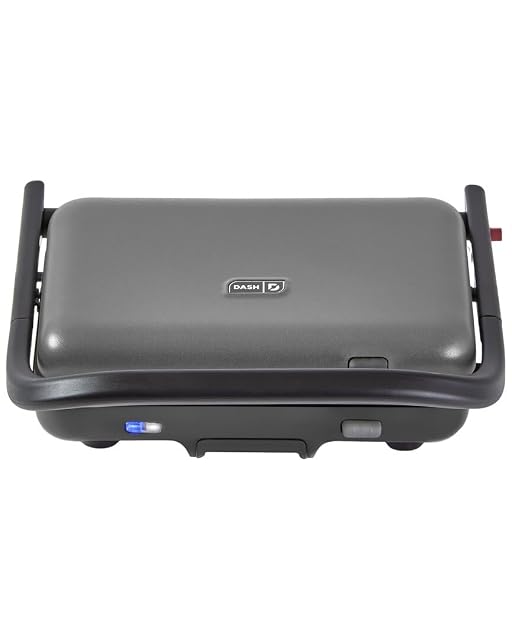
A 180-degree hinged press with removable grill and waffle plates, flat-top grilling, dishwasher-safe plates and a compact countertop footprint.
Best for: Waffles and paninis from one machine, with no further purchases