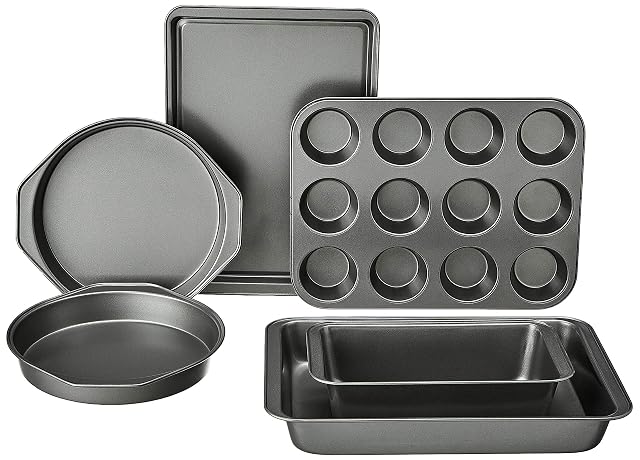
Best for: Furnishing a kitchen from nothing, at the lowest price per pan here
≈ $32
Check price on Amazon $5.33 a pan, and an oven limit in writing
Six nonstick carbon steel pans — a 9 × 5 loaf, two 9-inch rounds, a 12-cup muffin, a 13 × 9 roast pan and a 13 × 9 sheet — oven safe to 428 °F.
Best for: Furnishing a kitchen from nothing, at the lowest price per pan here
$31.99 for six is $5.33 a piece. The cheapest single pan on this shelf is $5.99.
Three of the six pieces have direct equivalents sold separately here:
9 × 5 loaf pan — the GoodCook at $5.99 13 × 9 roast pan — the GoodCook bake & roast at $9.99 12-cup muffin pan — the KitchenAid at $21.99
$37.97 for three. $31.99 for six.
And the other three pieces are not filler. Two 9-inch round cake pans — which is what a box mix’s alternative instructions call for, and nothing else on this shelf sells a round cake pan at all — plus a 13 × 9 baking sheet, the shape that bakes cookies, a jelly roll and a sheet cake. Three things that no other item here can do.
The whole shelf, per piece:
Waytiffer foil pie tins — 20 cents · Waytiffer foil loaf pans — 40 cents this — $5.33 · GoodCook 9 × 5 — $5.99 · GoodCook 8 × 4 set — $6.00 · Elbee eight-piece — $7.50 GoodCook 13 × 9 — $9.99 · MegaGrip 8 × 8 — $10.09 · Sur La Table 9 × 5 — $11.70 · KitchenAid 9 × 5 — $14.99 · KitchenAid 12-cup muffin — $21.99
The honest caveat: a set is a saving only if you want the pans in it. One loaf pan costs $5.99. Three or more pans, and this is the cheapest route on the shelf by a clear margin.
The back of an American cake or brownie packet gives two sets of instructions: one for a 13 × 9 pan, one for two 9-inch rounds.
This set contains both.
The shelf, in box-mix terms:
this — a 13 × 9 roast pan and two 9-inch rounds: both sets of instructions covered GoodCook 13 × 9, $9.99 — one full box, and the page says so: “the ideal size for a full box of cake, brownie, or other dessert mixes” MegaGrip 8 × 8, $10.09 — the half-batch pan, and a full box baked in it comes out roughly twice as deep the four loaf pans — neither, which is why box mixes never give loaf instructions Elbee eight-piece, $59.99 — two 8-inch rounds and one square tin, so the layer-cake instructions need 8-inch rounds rather than 9: 50 square inches against 63.6, a fifth smaller, which means thicker layers or batter left over
And the two 13 × 9 pieces here are different things, which the bullet distinguishes properly: a roast pan (deep sides, for a lasagne or a chicken) and a baking sheet (shallow rim, for cookies and a jelly roll). The GoodCook 13 × 9 is the roast type — 330 × 229 × 51 mm, two inches deep — and nothing else on this shelf sells a flat sheet.
“Oven-safe to 428 degrees F”
428 °F is exactly 220 °C. It is a metric rating converted — nobody writes a limit of 428 in Fahrenheit from scratch — which tells you the pan was specified in Celsius.
Only one other item on this shelf publishes a limit: the Elbee eight-piece at $59.99, “oven safe in a conventional one up to 420 degrees Fahrenheit”, plus “Safe to use in a convection oven”.
Eleven of thirteen items publish nothing.
And 428 °F is below what some baking asks for. Many bread recipes call for 450 °F. Roasting is commonly 425 to 450 °F — and the GoodCook 13 × 9 at $9.99, sold explicitly for “roasting chicken and vegetables”, publishes no limit at all.
The limit is the coating, not the steel. Steel is untroubled at these temperatures; non-stick films degrade above their rated range, which is the whole reason the figure exists.
How to read the eleven silent pages: they are not necessarily better. An unstated limit is simply unstated, and most domestic non-stick bakeware sits in the same 220 to 230 °C region. The two KitchenAid pans say “stands up to high heat” with no number; the Waytiffer foil loaf pan says “extremely high temperatures” with no number.
The practical rule for this shelf: above 450 °F, use something with no coating to lose — and the only such items here are the two Waytiffer foil packs, which have nothing on them to degrade.
The catalog reads 413 × 298 × 159 mm — 16.26 × 11.73 × 6.26 inches — which matches the product name’s 16.25 × 11.75 × 6.25 exactly.
1814 grams for six is 302 grams a piece.
Against the single pans here: KitchenAid 12-cup muffin 794 g · MegaGrip 8 × 8 at 310 g · GoodCook 9 × 5 at 268 g · GoodCook 8 × 4 at 204 g each.
So the set’s average piece is about the weight of a MegaGrip — heavier than the cheapest loaf pan, well under half the KitchenAid muffin pan. Which is the fair reading of a $5.33 pan: middling steel, not thin steel.
On storage, the set is beaten on its own ground. Its stack is 16.26 × 11.73 × 6.26 inches — about 1,193 cubic inches for six pieces, 199 cubic inches a piece. The Elbee eight-piece at $59.99 publishes a stack of 17.63 × 13.11 × 3.58 inches, confirmed by its catalog figure of 448 × 333 × 91 mm — 827 cubic inches for eight, 103 a piece.
The Elbee stores a pan in about half the space. That is the one claim on this shelf that the catalog data verifies by the number, and it is the argument for paying $7.50 a piece instead of $5.33.
Note also what this stack’s footprint equals. 16.26 × 11.73 inches is almost exactly the plan of the single KitchenAid 12-cup muffin pan — 16.6 × 11.4 inches. One muffin pan occupies the shelf space of this entire set in its box.
“Heavy-weight steel construction for thorough, even heating” · from the name, “Nonstick Carbon Steel”
Gauge is a number and no item on this shelf publishes one. The shelf’s vocabulary: “heavy-duty gauge steel” (GoodCook, three pans) · “heavy-gauge steel” (MegaGrip) · “heavy-weight steel construction” (this) · “heavy-duty aluminized steel” (KitchenAid, two pans) · “carbon steel” plain (Sur La Table) · “rust resistant”, no material at all (Elbee).
Four phrases, zero numbers.
And no individual pan is measured. Six pieces, six nominal sizes, and not one depth. The 13 × 9 roast pan and the 13 × 9 baking sheet are distinguished by their depth and neither depth is given; the 9 × 5 loaf pan has no depth, where the two single 9 × 5 pans on this shelf catalog at 65 mm and 77 mm — nearly half an inch apart; and the muffin pan has no cup diameter, depth or volume, exactly like the $21.99 KitchenAid.
One material point the page does not make. This is plain carbon steel, not aluminized, which is the one real material distinction on the shelf: the two KitchenAid pans are carbon steel hot-dipped in aluminum alloy, a layer that conducts about three times better than steel and does not rust where the coating breaks.
On a six-piece set the rim is where that bites, because six pans get stacked — and a stack is what chips a coating at the edge.
In full: “Product Description / Amazon Basics 6-Piece Nonstick Oven Bakeware Baking Set / From the Manufacturer / Amazon Basics”.
There is no description. The headings were published and the text under them was not, and this is the emptiest product page on the shelf by a wide margin.
For comparison at a fifth of the price, the GoodCook 9 × 5 at $5.99 publishes a description that adds metal-spatula safety — a claim that appears nowhere in its bullets, and the single most useful thing on the page.
And bullet six is not information either: “Part of the Amazon Basics nonstick bakeware collection”. So of six bullets, five carry content, and one of those is the washing instruction.
What the five do cover is the right ground, in order of usefulness: the contents list, which is complete and checkable; the oven limit, which only one other item here publishes; the material; the coating; and the washing.
It is a thin page that happens to publish the two hardest facts on this shelf — what is in the box, and how hot it may go.
No depth for any of the six pans, as above, and no distinction in depth between the roast pan and the baking sheet.
No cup size on the muffin pan — no diameter, no depth, no volume. Nothing on this shelf publishes one, including the $21.99 single muffin pan.
No gauge or thickness, as above.
No metal-utensil claim. GoodCook claims it on three of its four pans; nobody else here does. Six pans, one of them a muffin tray with twelve internal corners, and no statement on what you may scrape them with.
No coating composition. “Nonstick” is the whole of it. Only the Sur La Table at $11.70 says what its coating is free of — “PFOA, PFAS, PTFE Free” — and only by negation.
No color. A dark pan absorbs more radiant heat and browns faster than a light one, and that is a real baking variable; nothing on this page names a finish.
No handles or rims described, where three items here address getting a pan out of the oven: silicone grips (MegaGrip), extended handles (both KitchenAid pans) and wide rims (GoodCook 13 × 9).
No nesting or stacking claim, although the stack dimensions are in the product name. The Elbee set at $59.99 builds its whole page on that claim and backs it with figures.
No warranty and no country of manufacture, which no item on this shelf publishes.
Read on the day this page was built: $31 at the American Amazon shop.
Read from Keepa on the day this page was last revised; stock and price both move without notice.
Prices quoted in this text were read on 2026-10-17. The live price is at the top of the page.
Yes, and by more than the usual set discount — this shelf lets you check it against real prices. $31.99 for six is $5.33 a piece, which is less than the cheapest single pan here, the GoodCook 9 × 5 at $5.99. Three of the six pieces have direct equivalents sold separately on this shelf: a 9 × 5 loaf pan — the GoodCook at $5.99 · a 13 × 9 roast pan — the GoodCook bake & roast at $9.99 · a 12-cup muffin pan — the KitchenAid at $21.99. Those three come to $37.97. The set of six is $31.99. So three pans bought singly cost $5.98 more than all six. And the remaining three pieces are not filler: two 9-inch round cake pans and a 13 × 9 baking sheet. The two rounds are what a box mix’s alternative instructions call for — a layer cake — and nothing else on this shelf sells a round cake pan at all. The per-piece ranking across the whole shelf: Waytiffer foil pie tins 20 cents · Waytiffer foil loaf pans 40 cents · this $5.33 · GoodCook 9 × 5 $5.99 · GoodCook 8 × 4 set $6.00 · Elbee eight-piece $7.50 · GoodCook 13 × 9 $9.99 · MegaGrip $10.09 · Sur La Table $11.70 · KitchenAid loaf $14.99 · KitchenAid muffin $21.99. The honest caveat: a set is only a saving if you want the pans in it. If you need one loaf pan, $5.99 buys one. If you need three or more, this is the cheapest route on the shelf by a clear margin.
More than any other number on this shelf, and the odd figure gives away where it came from. 428 °F is exactly 220 °C. It is a metric specification converted, which means the pan was rated in Celsius and the listing translated it — nobody writes a limit of 428 in Fahrenheit from scratch. Only one other item on this shelf publishes a limit at all: the Elbee eight-piece at $59.99, "oven safe in a conventional one up to 420 degrees Fahrenheit", plus "Safe to use in a convection oven". Eleven of thirteen items publish nothing. And 428 °F is lower than some baking asks for. Many bread recipes call for 450 °F; a pizza or a crusty loaf wants more; roasting is commonly done at 425 to 450 °F — and the GoodCook 13 × 9 at $9.99 is sold explicitly for "roasting chicken and vegetables" with no limit published at all. The limit is almost certainly the coating, not the steel. Steel is unbothered at these temperatures; non-stick films degrade above their rated range, which is why the figure exists. How to read the eleven silent pages. They are not necessarily better — an unstated limit is an unstated limit, and most domestic non-stick bakeware sits in the same 220 to 230 °C (428 to 446 °F) region. The practical rule for any pan on this shelf: if a recipe calls for 450 °F or more, use a pan with no coating to lose — and the only such items here are the two Waytiffer foil packs, which publish no limit either but have nothing on them to degrade.
Because it is the more cautious claim, not the weaker product — and on this shelf it is the minority position. This set publishes "Hand wash for best results" and makes no dishwasher claim at all. The shelf splits four ways. GoodCook, on three pans: "dishwasher safe... hand washing is recommended for longer-lasting use", and on the 8 × 4 set it sharpens to "but hand-washing is recommended". KitchenAid, on both pans: "DISHWASHER SAFE: for easy cleanup", no caveat. Elbee: "Dishwasher safe and rust resistant" — the only mention of rust on the shelf. And two items say nothing either way: the GoodCook 13 × 9 and the Sur La Table. What a dishwasher actually does. The cycle is hot, alkaline and abrasive, and it attacks a non-stick film over years rather than days. More importantly, plain carbon steel rusts wherever that film is broken — and on bakeware it breaks at the rim first, from stacking. This set is "nonstick carbon steel" with no aluminized layer, so bare steel is what is underneath. The two KitchenAid pans are the ones with the best case for an unqualified claim, because aluminized steel has an aluminum-alloy layer that does not rust — and they are also the two most expensive single pans here. So the pattern is consistent rather than contradictory. The habit that matters more than any bullet: wash warm, dry immediately, and never nest six steel pans wet — trapped water between two nested pans is exactly where rust starts.
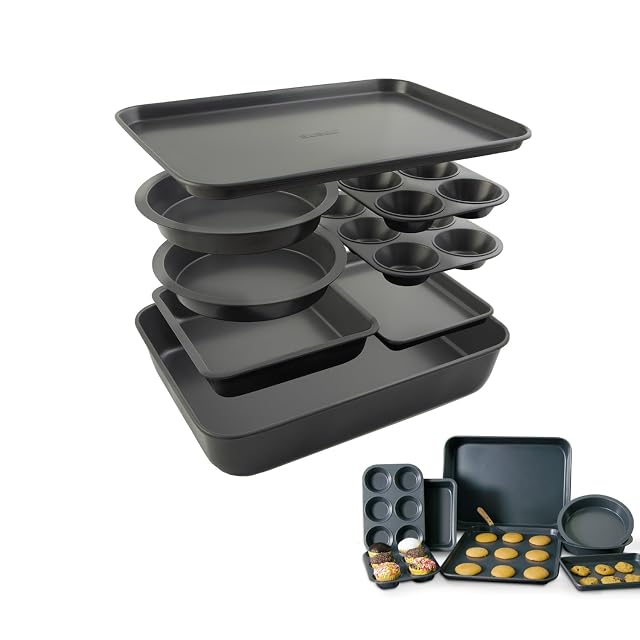
Eight nesting nonstick pans — a roaster, two oven trays, two 8-inch rounds, a square pan and muffin cups — stacking to 17.63 × 13.11 × 3.58 inches.
Best for: A small kitchen that needs eight pans and has one shelf for them
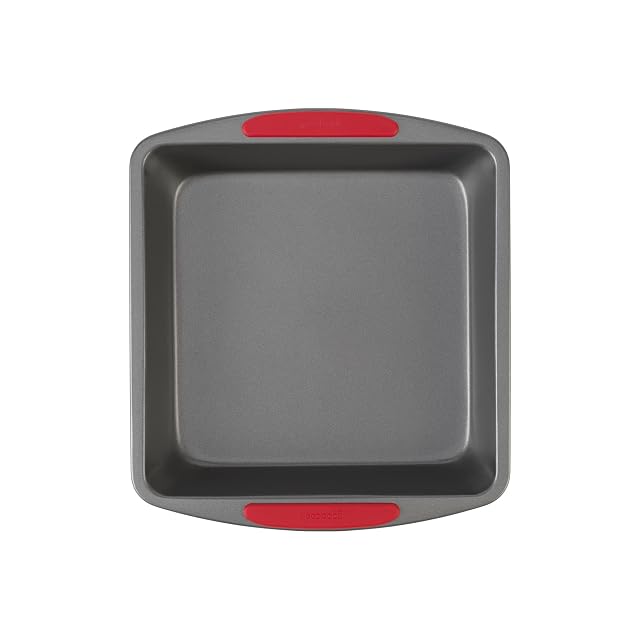
An 8 × 8 inch heavy-gauge steel square pan with ergonomic silicone grips on both handles, a scratch-resistant non-stick coating and a dishwasher-safe finish.
Best for: Brownies and half-batch cakes, lifted out of a hot oven without fumbling
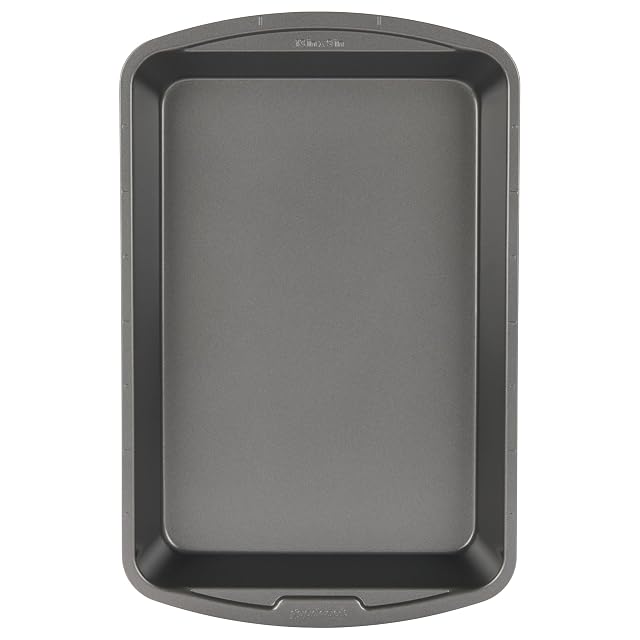
A 13 × 9 × 2 inch heavy-gauge steel bake and roast pan with a scratch-resistant metal-utensil safe non-stick coating and wide rims.
Best for: A box cake, a lasagne or a roast chicken, in one 13 × 9 pan
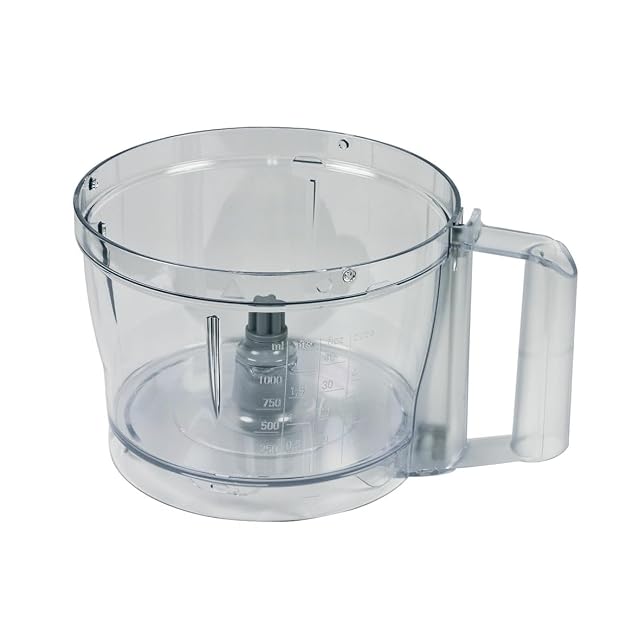
An original Bosch/Siemens spare coupling, part 12009553, listed for food processors including the MCM3110W/01. BSH publishes three statements about it: that it is an original spare part, that it is of high quality, and that it fits exactly.
Best for: Someone who already knows their part number and wants the original.
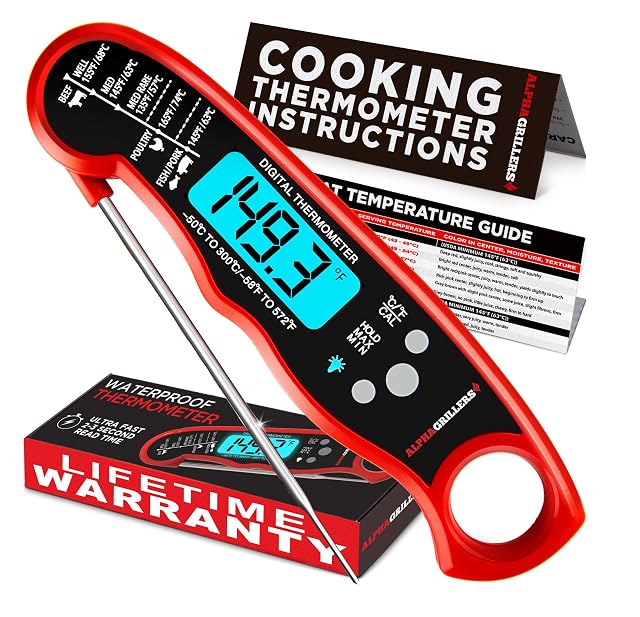
A one-to-two second instant-read thermometer, IP67 waterproof, supplied pre-calibrated with a recalibration function, a meat temperature chart and instructions in a gift box.
Best for: A first thermometer, or a gift, where the chart and the calibration matter most
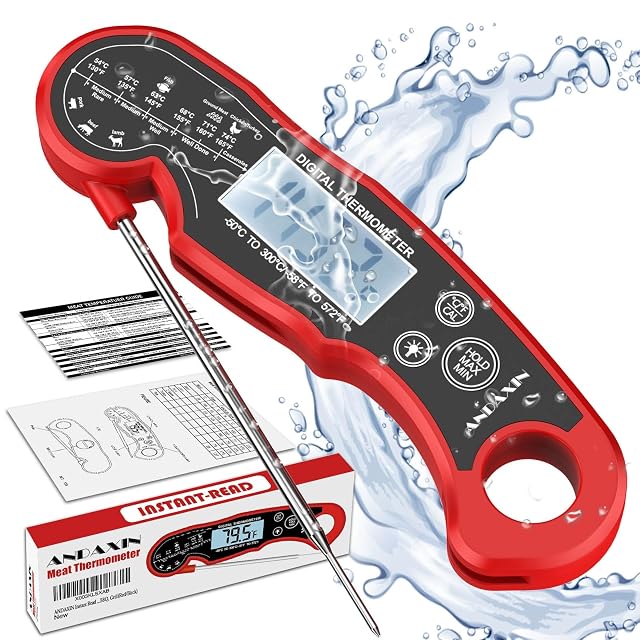
A three-second instant-read thermometer accurate within 1 °F, IP65 waterproof, with calibration, a temperature lock, a backlit LCD and a one-year warranty.
Best for: A nine-dollar thermometer you can check, correct and claim against