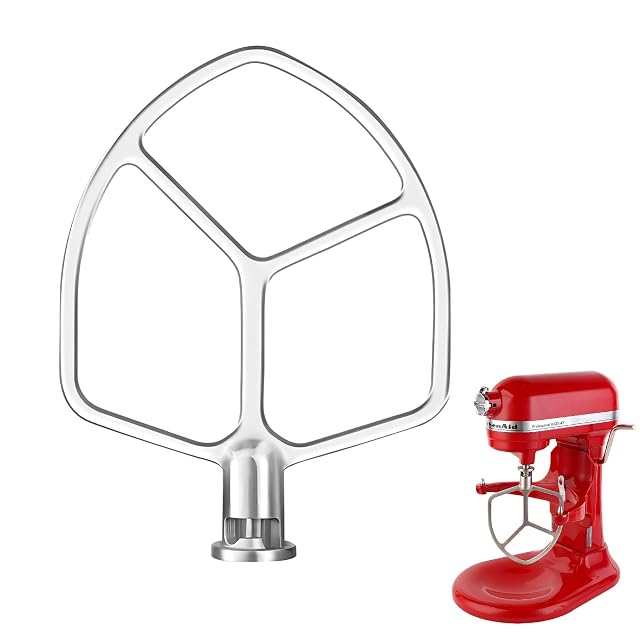
Best for: A 5 to 6 quart bowl-lift KitchenAid where a coating chipping is the concern
≈ $25
Check price on Amazon 304 stainless, and nine series named
A 304 stainless steel flat beater for nine named KitchenAid bowl-lift series from 5 to 6 quart, rust-resistant with no coating to peel, dishwasher safe.
Best for: A 5 to 6 quart bowl-lift KitchenAid where a coating chipping is the concern
Bullet one names ten models across nine series and pairs every one with its quart figure.
5 qt Pro 5 Plus — KP25M, KV25G 5 qt Pro 500 — KSM500, KSM500PS 5 qt Professional HD — KG25 5.5 qt — KSM55 6 qt Professional 600 — KP26M 6 qt Professional — KL26M 6 qt Professional 6500 — KSM6521 6 qt Epicurean — KT2651X
No other page here does that. The KITCHPOWER at $20.99 lists thirteen codes with the series lumped at the front; the Reikame at $14.99 lists seven; KitchenAid’s own KN256CBT at $24.95 lists none at all, only “Bowl-Lift Professional 5Qt and 6Qt Stand Mixers Only”.
And the 5.5 quart KSM55 appears on only three pages on this shelf: here, and on KitchenAid’s own two Pastry Beaters and KDF7B at $44.95.
Where the shelf disagrees. The Professional 5 Plus is the flashpoint.
this — includes it KITCHPOWER, $20.99 — includes it: “Professional 5-Plus: KV25GOX, KV25G8X” Wiselet, $25.79 — includes it: “Professional 5 Plus” New Metro Design, $28.99 — excludes it outright: “does NOT work with… the Professional 5-Plus mixer (5-Plus BeaterBlade is coming in Fall 2022)”
Four pages, three yeses and one no.
And the model codes vary between pages for the same machines. KV25G here · KV25M on the Reikame · KV25GOX and KV25G8X on the KITCHPOWER · KV25 on the Wiselet · KV25G0, KV25ME and KV25MC on the KitchenAid Pastry Beaters.
So measure the bowl, which two pages make possible. The Reikame at $14.99: “Fit mixing bowl’s size: 9.75” diameter, 6.75” deep.” The New Metro Design at $28.99: “if your stand mixer bowl measures between 8 and 8.5-inches diameter, across the top of the bowl.”
Measure across the top, inside rim to inside rim, then the depth.
And one point in a solid paddle’s favor that no page on this shelf states: the fit tolerance is looser than for a flex edge. A plain paddle is not trying to touch the wall, so a paddle that is slightly small still works — where a flex edge that is slightly small does nothing at all, since the silicone strip no longer reaches.
Which makes a steel paddle the safer purchase when the model lists disagree, and this is the page with the clearest list.
“high quality food grade 304 stainless steel… rust and corrosion resistant, no need to worry about cracking and peeling paint on coated whisks, ensuring a healthier mixture”
What 304 is. An austenitic stainless with roughly 18 percent chromium and 8 percent nickel — the standard food-contact grade, and the one that does not pit or stain from acid.
The chromium forms a passive oxide layer that reforms whenever it is scratched, which is why a scratch in steel is cosmetic and a scratch in a coating is not.
The other steel beater here is the Wiselet at $25.79, eighty cents more, which names “food-grade, solid stainless steel” without the grade and makes the same argument: “never chip, flake, or peel into your dough… unlike traditional coated aluminum paddles.”
And four items on this shelf are the construction being argued against:
Vaxaape, $9.99 — “Die-Cast Aluminum With White Ford Teflon Coating And Silicone Flex Edge” Reikame, $14.99 — “non-stick coated metal construction and flexible silicone edges” KITCHPOWER, $20.99 — “Food grade coated aluminum frame and silicone flex edges” KitchenAid K5AB, $24.95 — “Coated flat beater”, with the substrate not named at all
Plus four KitchenAid parts that publish no material whatsoever: the KN256CBT at $24.95, the KFE5T at $29.95, the KDF7B at $44.95, and both Pastry Beaters.
So of the twelve items sold on Amazon.com, two name steel, three name a coating, one says “coated”, one says plastic, and five say nothing.
Is the argument sound? Yes, as far as it goes. A coating on a beater is in food contact under abrasion hundreds of times, and the edge is where it is thinnest. A chip is not a cosmetic fault on a part that lives in batter.
What steel gives up is release. Butter and stiff batter cling to bare metal — which is the whole of the KITCHPOWER’s “virtually gets rid of hand-scraping and batter build-up on the blade” — and a fist of mixture packed into the middle of a paddle is mass that is not being mixed, just carried round.
And the dishwasher claim here is backed by the material rather than merely asserted. “easy to clean (dishwasher safe)”
At least eight of the fourteen items on this shelf claim dishwasher safety, and only the KitchenAid KDF7B at $44.95 qualifies it — “top-rack”. On a coated beater the hot alkaline cycle is exactly what attacks the coating; on 304 steel there is nothing to attack. The Wiselet at $25.79 adds the detail this page leaves out: no “gray aluminum residue”, which is what dishwasher detergent does to bare aluminum under a chip.
“It can mix and knead bread dough, pizza dough, etc.” · “effectively shorten the kneading time”
The counter-statement comes from the cheapest item here. The Vaxaape at $9.99: “Perfect For Thin Cookies Dough, Compound Butters, Pie Pastry, Creamed Frostings, Mashed Potatoes And More, But Not For Hard Dough.”
It is the only page on this shelf to say it, and it is right.
What the distinction is. A flat beater creams, aerates and combines — butter and sugar, batters, frostings, mashed potato.
A dough hook kneads, by folding a stiff mass against the bowl wall. It is shaped and geared for that load: a hook presents a narrow leading edge that cuts into dough and turns it, where a flat paddle presents a broad face that dough climbs.
What goes wrong. A bread dough on a flat beater wraps the paddle, climbs the shaft and stalls — and the motor bogs because the attachment is wrong, not because it is weak.
Solid steel helps with none of that, because the failure is geometric rather than structural.
What is fair in the claim: “mix” is correct. Bringing flour, water, salt and yeast together into a shaggy mass is flat-beater work, and plenty of bread methods do exactly that before switching to a hook. “Knead” is not.
And one page on this shelf is purpose-built for the hardest flat-beater job there is. The KitchenAid Pastry Beater at $49.95 and $69.95, designed to “break cold butter into small pieces, creating a consistent texture and even distribution, minimizing the risk of overmixing” and to “cut butter into flour” for biscuits, scones, tarts and empanadas — with no silicone on it at all, because a soft edge flexes away from a stiff mixture instead of working it.
The other page making a dough claim is the Wiselet at $25.79, and it is more careful: “folding fluffy chocolate chip cookie dough… without bogging down your mixer’s motor.” Cookie dough is a flat-beater mixture. Bread dough is not.
The practical rule: use this for anything you would otherwise scrape a bowl for, and a hook for anything you would knead by hand.
The word does not appear on this page, and at least six of the fourteen items on this shelf do have one.
Vaxaape, $9.99 — silicone flex edges, tilt-head Reikame, $14.99 — silicone edges, 6 qt bowl-lift KITCHPOWER, $20.99 — silicone flex edges, 6 qt bowl-lift New Metro Design, $28.99 — a plastic BeaterBlade that “scrapes bowl all the way to the dimple” KitchenAid KFE5T, $29.95 — single flex edge, tilt-head KitchenAid KDF7B, $44.95 — double flex edge: “Scrapes the bowl twice as often, compared to KitchenAid Single Flex Edge Beater, model KFEW6L”
What a flex edge does. It holds a soft strip against the bowl wall and sweeps it as it turns, which removes the stop-and-scrape cycle. Three pages on this shelf put the saving at 50 percent: the Vaxaape, the KITCHPOWER and the New Metro Design.
A plain paddle does not touch the wall. It moves mixture around, and the film left behind still needs a spatula.
This page’s answer is a coverage claim: “Our mixer attachment can cover more area in the bowl.”
Which is a real thing and a smaller thing than scraping. A well-shaped paddle sweeps more of the bowl’s cross-section than a narrow one — and it still leaves the wall filmed.
And there is one case where the solid paddle wins outright, which no page here states. In a dense cold mixture a silicone strip flexes away from the wall instead of scraping it, so the flex edge stops being a flex edge at exactly the consistency where you most want help — cream cheese frosting, cold butter, stiff cookie dough. A rigid paddle does not care how stiff the mixture is.
Two warnings on this shelf apply to flex edges and not to this. The Vaxaape at $9.99 and the New Metro Design at $28.99 both say never to run the blade in a dry or empty bowl — because the silicone drags on steel at speed and the friction heats the thinnest part of the attachment, and silicone abrades and takes a set. Solid steel has no soft part to lose.
What it does have is the opposite risk, which nobody on this shelf states. A rigid steel paddle in a steel bowl has nothing soft between them. Run it empty and listen before the first batch, particularly if the mixer head has ever been adjusted.
“easy to install at home, you can easily replace the flat beater”
It is the only page on this shelf to frame itself as a replacement job rather than an addition, and that is probably the real use case for a steel paddle: the original has chipped, and this is what goes in instead.
On a KitchenAid the fitting is a pin-and-slot: the beater slides up the shaft, engages the pin, and turns to lock. There is nothing to adjust and no tool needed — which is why “easy to install” is accurate and also true of every item here.
What can need adjusting is the clearance, and no page on this shelf mentions it. A KitchenAid’s beater-to-bowl gap is set by a screw in the base — the standard check is a dime laid in the bowl, which the paddle should just move — and a new paddle of a different thickness can want a quarter-turn.
Which matters most for the flex-edge beaters, whose whole function depends on touching the wall, and least for a solid paddle like this one.
At 140 × 30 × 178 mm in the catalog — about 5.5 × 1.2 × 7 inches — this is in the same envelope as the rest. The KITCHPOWER at $20.99 publishes its own at 6.7 × 7.1 × 1.4 inches, the only beater on this shelf to do so; KitchenAid’s K5AB at $24.95 catalogs at 127 × 38 × 188 mm and its 5–6 quart KN256CBT at $24.95 at 36 × 163 × 180 mm.
No weight is published, which is the one figure that would support “high durability” on a solid steel part — and both steel beaters on this shelf omit it. For reference the maker’s own KN256CBT is 272 g, the KDF7B 260 g, the Pastry Beater KSMPB7SS 590 g, and the two lightest items here are 113 g.
No weight, as above — and on a page whose argument is solid steel, it is the omission that costs most.
No grade for the counter-claim. The page names 304 for itself and calls the rivals “coated whisks” with “peeling paint” — and paint is not what a non-stick coating is. The Vaxaape at $9.99 names Teflon; the KITCHPOWER at $20.99 and the Reikame at $14.99 say “food grade coated” and “non-stick coated”.
No flexible edge or statement that there is none, as above, which a buyer coming from a flex-edge beater would want.
No time figure. Three items publish 50 percent. “Effectively shorten the kneading time” is this page’s version, with no number — and it is attached to a claim about kneading that a flat beater should not be making.
No dry-bowl warning, which two items here publish. On solid steel the risk is marking the bowl rather than wearing the beater, and it is still a reason not to.
No hard-dough warning, as above — and this page claims the opposite.
No glass-bowl statement. Four items on this shelf address it: the Reikame at $14.99 and the New Metro Design at $28.99 exclude glass bowls by name; both Pastry Beaters and the KDF7B at $44.95 require “stainless steel bowls only”. A glass bowl has thicker walls and a different curve than a steel one of the same capacity — and a rigid steel paddle against glass is the worst pairing on this shelf.
No reference or model number, which only this and the Reikame at $14.99 omit.
No beater-to-bowl clearance note, as above.
No warranty. “Reliable after-sales service” is a sentence, not a term — and no item on this shelf publishes a warranty at all. The nearest things are the Vaxaape’s “Refund Or Replacement Within 24 Hours” and the Wiselet’s “backed by Wiselet care”.
No country of manufacture. One item on this shelf publishes one: the New Metro Design at $28.99 — “Always made in the USA from high impact plastic”.
Read on the day this page was built: $25 at the American Amazon shop.
Read from Keepa on the day this page was last revised; stock and price both move without notice.
Prices quoted in this text were read on 2026-10-17. The live price is at the top of the page.
It will try, and no flat beater on this shelf should be asked to. Bullet three: "It can mix and knead bread dough, pizza dough, etc. It is also suitable for a variety of mixing applications, such as compound butter and pie pastries." One page on this shelf says the opposite, and it is the cheapest. The Vaxaape at $9.99: "Perfect For Thin Cookies Dough, Compound Butters, Pie Pastry, Creamed Frostings, Mashed Potatoes And More, But Not For Hard Dough." What the distinction is. A flat beater creams, aerates and combines — butter and sugar, batters, frostings, mashed potato. A dough hook kneads, by folding a stiff mass against the bowl wall, and it is shaped and geared for that load: a hook presents a narrow leading edge that cuts into dough and turns it, where a flat paddle presents a broad face that dough climbs. What goes wrong in practice. A bread dough on a flat beater wraps the paddle, climbs the shaft, and stalls — and the motor bogs because the attachment is wrong, not because it is weak. Solid steel helps with none of that, because the failure is geometric. What is fair in the claim. "Mix" is correct. Bringing flour, water, salt and yeast together into a shaggy mass is flat-beater work, and plenty of bread methods do exactly that before switching to a hook. "Knead" is not. And one page on this shelf is purpose-built for the hardest flat-beater job there is: the KitchenAid Pastry Beater at $49.95 and $69.95, designed to "break cold butter into small pieces" and "cut butter into flour" for biscuits and scones — which is the stiff-mixture case, and it is a different shape entirely. The practical rule: use this for anything you would otherwise scrape a bowl for, and a hook for anything you would knead by hand.
A food-contact alloy with nothing on it to come off, and this is one of only two steel beaters on the shelf. Bullet two: "Made of high quality food grade 304 stainless steel... high durability, and rust and corrosion resistant, no need to worry about cracking and peeling paint on coated whisks, ensuring a healthier mixture." What 304 is. An austenitic stainless with roughly 18 percent chromium and 8 percent nickel — the standard food-contact grade, and the one that does not pit or stain from acid. The chromium forms a passive oxide layer that reforms whenever it is scratched, which is why a scratch in steel is cosmetic and a scratch in a coating is not. The other steel beater here is the Wiselet at $25.79, eighty cents more, which names "food-grade, solid stainless steel" without the grade and makes the same argument: "never chip, flake, or peel into your dough... unlike traditional coated aluminum paddles." And three items on this shelf are the construction being argued against. Vaxaape, $9.99 — "Die-Cast Aluminum With White Ford Teflon Coating". Reikame, $14.99 — "non-stick coated metal". KITCHPOWER, $20.99 — "Food grade coated aluminum frame". Plus KitchenAid’s own K5AB at $24.95, which says only "Coated" and does not name the substrate at all. Is the argument sound? Yes, as far as it goes. A coating on a beater is in food contact under abrasion hundreds of times, and the edge is where it is thinnest. What steel gives up is release. Butter and stiff batter cling to bare metal — which is the whole of the KITCHPOWER’s "virtually gets rid of batter build-up on the blade" — and a fist of mixture packed into the middle of a paddle is mass that is not being mixed.
Nine series, each named with its capacity — which is the clearest list on this shelf and still not a measurement. Bullet one: "5 Quart Pro 5 Plus Series: KP25M, KV25G; 5 Quart Pro 500 Series: KSM500, KSM500PS; 5 Quart Professional HD Series: KG25; 5.5 Quart Series: KSM55; 6 Quart Professional 600 Series: KP26M; 6 Quart Professional Series: KL26M; 6 Quart Professional 6500 Series: KSM6521; 6 Quart Epicurean Series: KT2651X." Pairing each model with its series and capacity is what no other page here does — the KITCHPOWER at $20.99 lists thirteen codes with the series lumped at the front, and the Reikame at $14.99 lists seven. And the 5.5 quart KSM55 appears on only two pages on this shelf: here, and on KitchenAid’s own Pastry Beaters and KDF7B. Where the shelf disagrees. The Professional 5 Plus is the flashpoint. This includes it. The KITCHPOWER at $20.99 includes it ("Professional 5-Plus: KV25GOX, KV25G8X"). The Wiselet at $25.79 includes it. And the New Metro Design at $28.99 excludes it outright: "does NOT work with... the Professional 5-Plus mixer (5-Plus BeaterBlade is coming in Fall 2022)." Four pages, three yeses and one no. So measure the bowl, which two pages make possible. The Reikame at $14.99: "Fit mixing bowl’s size: 9.75" diameter, 6.75" deep." The New Metro Design at $28.99: "between 8 and 8.5-inches diameter, across the top of the bowl." And one point in a solid paddle’s favor that no page states: the fit tolerance is looser than for a flex edge, because a plain paddle is not trying to touch the wall.
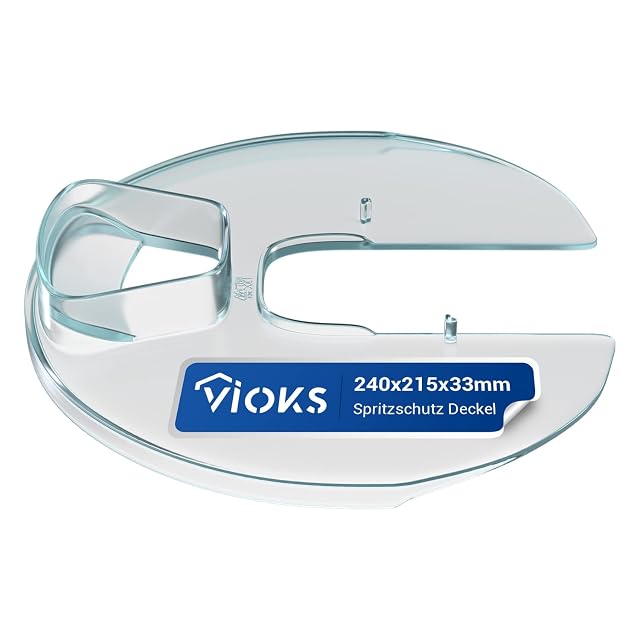
A replacement splash guard equivalent to Bosch/Siemens part 00482103, for the MUM4 range and the Profimixx 44, 46 and 47. VIOKS publishes the dimensions — 9.4 by 8.5 by 1.3 inches — and eleven model numbers. Sold on the European Amazon stores, not on Amazon.com.
Best for: An owner of a Bosch MUM4 or Profimixx whose mixer works fine and whose splash guard vanished.
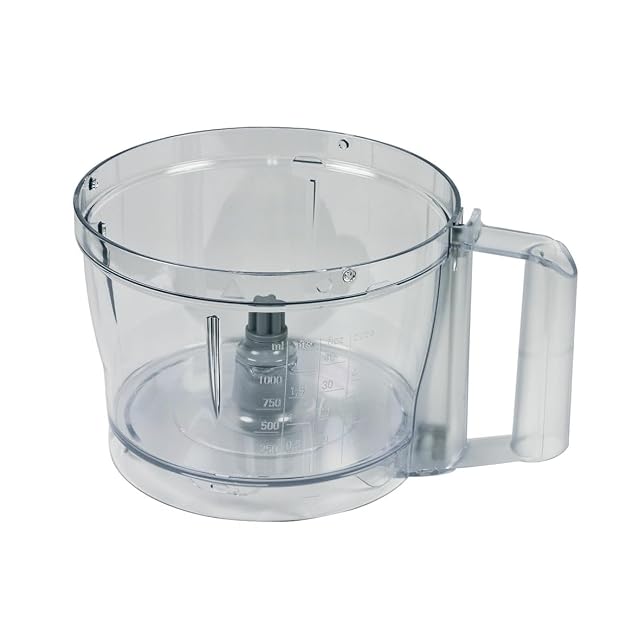
An original Bosch/Siemens spare coupling, part 12009553, listed for food processors including the MCM3110W/01. BSH publishes three statements about it: that it is an original spare part, that it is of high quality, and that it fits exactly.
Best for: Someone who already knows their part number and wants the original.
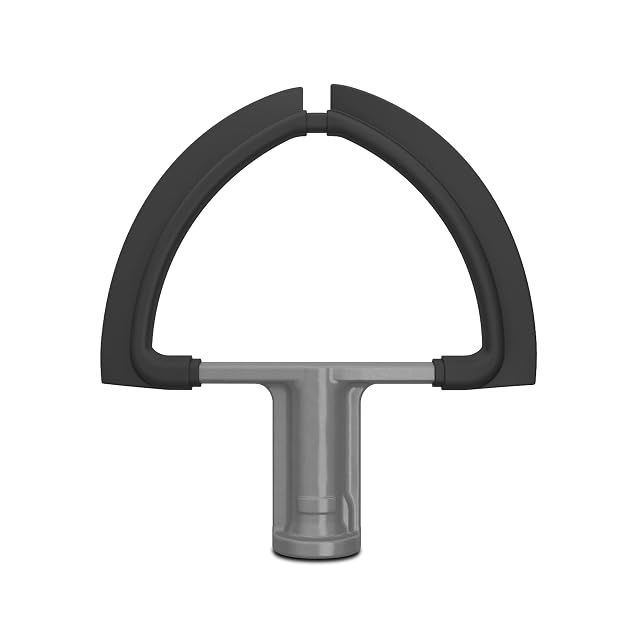
A double flex edge beater for KitchenAid bowl-lift mixers with stainless bowls in the KSM75, KSM55, KSM60 and KSM70 families, scraping twice as often, top-rack dishwasher safe.
Best for: A KSM75, KSM55, KSM60 or KSM70 bowl-lift with a stainless bowl
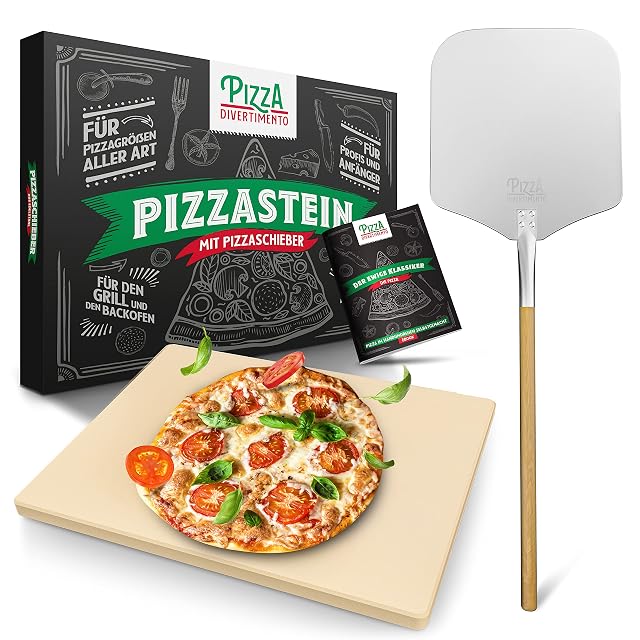
A rectangular cordierite pizza stone, 15 × 12 × 0.6 inches, sold with a 32.5-inch pizza peel whose aluminum blade is 12 × 12 inches. Stated for ovens and covered gas or charcoal grills, on indirect heat.
Best for: A first stone, bought with the peel instead of six weeks later.
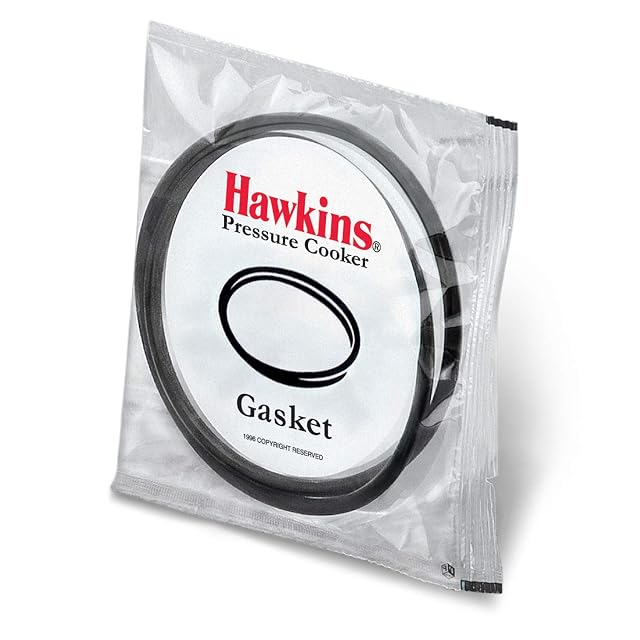
A genuine Hawkins gasket for Classic Aluminum 2, 3 and 4 liter tall cookers, made in India, ten grams.
Best for: A Hawkins Classic Aluminum of 2, 3 or 4 liters, and nothing else
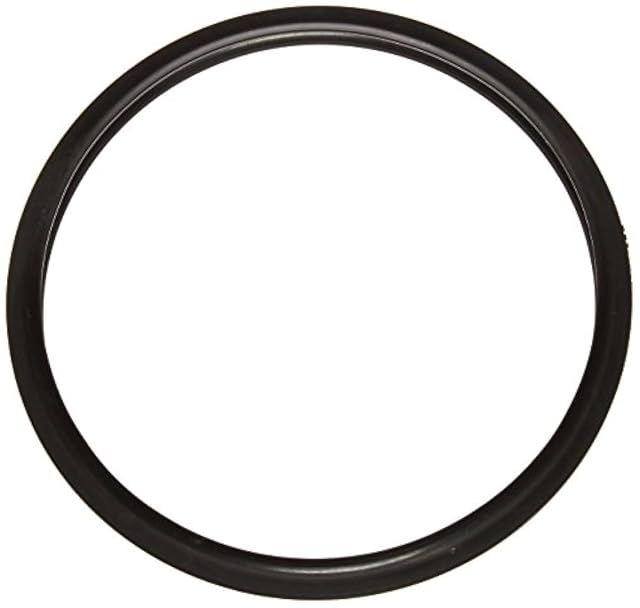
A genuine Prestige rubber gasket for Popular and Popular Plus aluminum cookers of 4, 5 and 6 liters, made in India.
Best for: A Prestige Popular or Popular Plus of 4, 5 or 6 liters, and the page says nothing else