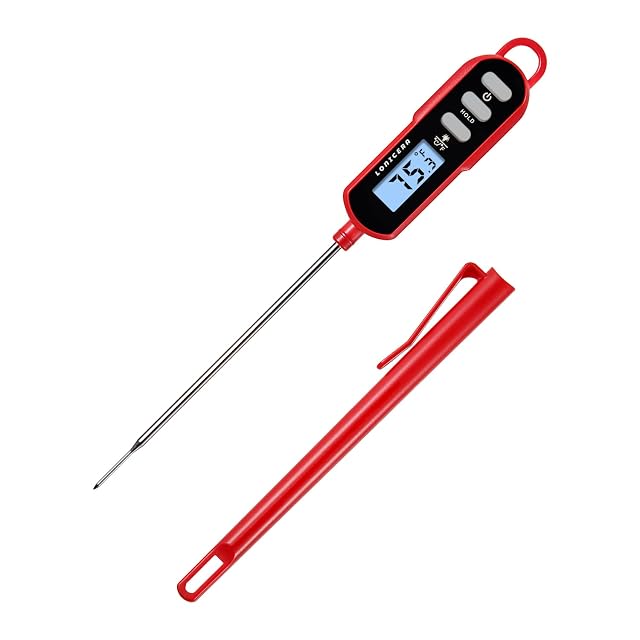
Best for: Bread and dough, where probe reach and a long warranty matter more than half a second
≈ $13
Check price on Amazon Eighteen months of warranty, and written for dough
A one-to-two second thermometer accurate to ±1 °F with a 5-inch probe, IPX6 waterproof, a hold button, a magnet, and an 18-month warranty.
Best for: Bread and dough, where probe reach and a long warranty matter more than half a second
“60-day money-back guarantee and 18-month warranty”
Three of the fourteen items sold on Amazon.com publish a term:
this — 18 months, plus 60 days to return it ANDAXIN, $9.99 — one year, with CE and RoHS certification Taylor, $24.24 — one year limited
Eleven publish none, including the ThermoMonster at $16.99, the Etekcity at $18.99, the Taylor Compact at $18.99, the KitchenAid at $11.99, all three TempPro models and both ONFIKY units.
So the longest cover on the shelf is on the eighth cheapest of the fourteen items sold on Amazon.com.
What actually fails on a kitchen thermometer, which is why a term matters:
The probe tip goes blunt or bent, and the reading goes out of true The seam between probe and body lets water in — and a damp board reads wrong for weeks before it dies, which is precisely the fault you cannot prove on day 400 The display clouds or drops segments
None of those shows up on arrival, which is the argument for cover beyond a return window.
And note what the longest warranty here is paired with: no calibration function. Four items on this shelf publish one — the ANDAXIN at $9.99, both ONFIKY units at $9.97 and $9.98 and the TempPro TP03H at $9.98 — and none of those publishes a warranty longer than a year.
So the shelf offers you the means to correct drift, or the right to send it back. Not both.
“Accurately measure dough temperature during fermentation and proofing. Perfect for sourdough, artisan bread, and baking enthusiasts who want better rise, texture, and consistent results.”
Fermentation runs on temperature, and dough temperature is the variable most recipes assume and nobody measures.
Yeast and lactic bacteria roughly double their activity for every 15 to 20 °F rise across the range a kitchen sits in. A dough at 78 °F ferments far faster than the same dough at 68 °F — so a recipe timed for one is simply wrong for the other.
Which is why bread made in July behaves differently from bread made in January, in the same kitchen with the same flour.
Measuring it turns a guess into arithmetic. Bakers aim at a desired dough temperature — commonly 75 to 78 °F for a sourdough — and hit it by adjusting the water, because water is the only ingredient you control: flour, room and starter are whatever they are.
The second use is the bake. Bread is done by internal temperature, not color or time: a lean loaf finishes around 205 to 210 °F, an enriched dough nearer 190 to 195 °F. A 5 inch probe reaches the middle of a large loaf, which is why the length is on the page.
Three other items here touch bread. The TempPro TP-02S at $9.99 calls itself a “bread thermometer sourdough” in its own bullets and publishes a 5.3 inch probe — longer than this, for three dollars less. Both ONFIKY units at $9.97 and $9.98 list baking among six uses.
None of them explains why.
The four:
6.5 inches — the TempPro TempTrack at $19.99, a leave-in unit, with a “stepdown tip” 5.3 inches — the TempPro TP-02S at $9.99, rigid 5 inches — this 4 inches — the ThermoMonster at $16.99
Ten items publish nothing, including both Taylor units, the KitchenAid, the Alpha Grillers and both ONFIKY units.
What reach is for, and bullet one says it correctly: “keeps your hands safely away from hot liquid and heat.”
A stock pot or a deep fryer puts six inches of hot liquid between your hand and the measurement. A large loaf reads in the middle of the crumb. A rib roast wants the tip at the center, three inches in.
The catalog shape tells you something no bullet does: 239 × 25 × 5 mm. Five millimeters thick — about a fifth of an inch — which is a flat pen body rather than a folding one. At 239 mm overall with a 5 inch (127 mm) probe, the body is roughly 112 mm, and 40 grams total.
Compare the shelf: the folding TempPro TP03A is 48 g at 155 mm folded, the TP03H 51 g at 157 mm, the Alpha Grillers 68 g at 160 × 50 × 40 mm, the Taylor Compact 31 g at 210 mm, the rigid TempPro TP-02S 23 g at 218 mm.
So this is a thin, light, fixed-probe instrument. It does not fold, which is why it has a magnet rather than a probe cover — and a flat 5 mm body is what makes a magnet sit properly against a hood.
“Hold button locks the temperature reading.”
The five: this, the ANDAXIN at $9.99, the Taylor Compact at $18.99, the ThermoMonster at $16.99, and both leave-in units by their nature.
Why it matters more than its price. Without a lock you read the display while the probe is in the food — which means leaning over an open oven or a lit grill to squint at a number.
With one you insert, wait, press, withdraw and read standing up. The only time your hand is near the heat is the reading time.
It is also the cheap answer to the problem the most expensive displays on this shelf solve expensively. The KitchenAid at $11.99 has an “Oversized, pivoting backlit display” readable “from any angle”; the ThermoMonster at $16.99 has an “auto flip large LCD… perfect for both left and right hand users” — the only mention of handedness on this shelf. A hold button makes the angle irrelevant, because you read it wherever you like.
Nine items offer a backlight and no lock, and nine of the fourteen items sold on Amazon.com mention a backlight — which tells you what the shelf thinks the problem is: darkness rather than geometry.
This page has both, and bullet three is honest about what a backlight is for: “clear readings in low light or nighttime cooking.”
Accuracy:
±0.5 °F — ThermoMonster $16.99, the only thermocouple here, with NIST cited ±0.9 °F — TempPro TP-02S $9.99, TP03A $9.99 ±1 °F — this, the ANDAXIN $9.99, both ONFIKY units at $9.97 and $9.98 ±1.8 °F — TempPro TempTrack $19.99
Seven of the fourteen items sold on Amazon.com publish none: the KitchenAid, both Taylor units, the Alpha Grillers, the Etekcity, the TempPro TP03H.
Speed:
0.5 s — ThermoMonster · 1 s — three TempPro models · 1–2 s — this, both ONFIKY units, the Alpha Grillers · 3 s — the ANDAXIN · under 6 s — the KitchenAid at $11.99, a “Digital thermistor”
What ±1 °F covers. Chicken is safe at 165 °F. Beef and lamb run through rare to well done in 5 °F bands. Pork is safe at 145 °F with a rest. A custard splits within a few degrees. And for this thermometer’s own use, a desired dough temperature is hit within a degree or two — so ±1 °F is exactly the tolerance the bread case needs.
What it does not cover is drift, and that is this page’s gap: no calibration function, where four items on this shelf publish one.
The free check still works. Crushed ice topped with water, stirred, holds 32 °F / 0 °C while ice remains; boiling water is 212 °F at sea level, falling about 1 °F per 500 feet of altitude. Without a calibration function, an error can be noted and not corrected — which is where the 18-month warranty becomes the answer instead.
The range is the shelf’s most common: −58 to 572 °F, shared with six other items. The top end is for oil and sugar — deep frying 325 to 375 °F, hard crack 300 to 310 °F, caramel 340 to 350 °F — since food does not exceed 212 °F in moist cooking. The bottom end checks that a freezer holds 0 °F and a fridge stays below 40 °F.
No calibration function, as above, where four items on this shelf have one and the Alpha Grillers at $14.97 adds that it “comes pre-calibrated”.
No battery type and no power management. Only the TempPro TP03A at $9.99 makes the cell an argument — “1 AAA battery instead of a button cell… lasts twice as long”, and a CR2032 holds about 220 milliamp hours against roughly 1000 for a AAA. Two items publish a 10-minute auto shutoff; three use motion-sensing sleep and wake, with both ONFIKY units claiming 4000+ hours. This page publishes none of it, and “Power on and measure instantly” implies a manual switch.
No dust rating, which is what the X in IPX6 means — and on a thermometer sold for bread making, a flour-covered countertop is the dustiest surface in the house.
No display size, which no item on this shelf publishes.
No sensor type, which only two pages among the items sold on Amazon.com name — the European ThermoMaven is a third — the KitchenAid’s thermistor at under six seconds and the ThermoMonster’s thermocouple at half a second. One word explains a twelvefold difference.
No warning against leaving it in the food, which only the KitchenAid publishes: “Digital thermometers are not meant to be left in food during cooking. The plastic and electronic components could be damaged with excessive heat.” It applies here in full — and on a bread thermometer the temptation is to leave it in the loaf, which a 5 mm plastic body in a 450 °F oven would not survive.
No country of manufacture, which no item on this shelf publishes.
Read on the day this page was built: $13 at the American Amazon shop.
Read from Keepa on the day this page was last revised; stock and price both move without notice.
Prices quoted in this text were read on 2026-10-17. The live price is at the top of the page.
Because fermentation runs on temperature, and dough temperature is the one variable most recipes assume and nobody measures. This is the only page on the shelf written for it. Bullet five: "Accurately measure dough temperature during fermentation and proofing. Perfect for sourdough, artisan bread, and baking enthusiasts who want better rise, texture, and consistent results." What temperature does to dough. Yeast and lactic bacteria roughly double their activity for every 15 to 20 °F rise in the range a kitchen sits in — so a dough at 78 °F ferments far faster than the same dough at 68 °F, and a recipe timed for one is wrong for the other. That is why bread made in July behaves differently from bread made in January in the same kitchen with the same flour. Measuring it turns a timing guess into arithmetic. Bakers aim for a desired dough temperature — commonly 75 to 78 °F for a sourdough — and reach it by adjusting the water temperature, because water is the only ingredient you control: flour, room and starter are whatever they are. The second use is the bake itself. Bread is done by internal temperature, not by color or by time: a lean loaf finishes around 205 to 210 °F, an enriched dough nearer 190 to 195 °F — and a 5 inch probe reaches the middle of a large loaf, which is the whole point of the length. Three other pages here mention bread: the TempPro TP-02S at $9.99 calls itself a "bread thermometer sourdough" and publishes a 5.3 inch probe, and both ONFIKY units list baking among six uses.
On this shelf it is the only real cover there is, and it costs three dollars over the cheapest thermometer here. Bullet six: "60-day money-back guarantee and 18-month warranty." Three of the fourteen items sold on Amazon.com publish a term: this — 18 months, plus 60 days to return it, the longest here · the ANDAXIN at $9.99 — one year, with CE and RoHS certification · the Taylor at $24.24 — one year limited. Eleven publish none, including the ThermoMonster at $16.99, the Etekcity at $18.99, both Taylor Compact and KitchenAid, all three TempPro models and both ONFIKY units. What actually fails on a kitchen thermometer is worth knowing before you value the cover. The probe tip goes blunt or bent, which puts the reading out of true. The seam between probe and body lets water in, and a damp board reads wrong for weeks before it dies — which is the failure a warranty is for, because you cannot prove it on day 400. And the display clouds or loses segments. None of those is a fault you notice on arrival, which is exactly why a term beyond the usual return window is worth something. The 60-day money-back half covers the other case: a thermometer you dislike using. And note what the longest warranty on this shelf is paired with: no calibration function. Four items here publish one and none of them publishes a warranty longer than a year — so the shelf offers you the means to correct drift, or the right to send it back, and not both.
It matters if the thermometer goes in the sink, and at ten dollars this shelf sells the better rating. The code, since no page here explains it. First digit solids, second water. IPX6 declares water resistance to high-pressure jets and leaves solids unrated — that is what the X means. IP67 declares dust-tight and thirty minutes submerged under a meter. IP65 declares dust-tight and low-pressure jets only. So against a rinse under the tap, IPX6 is strong — jets at pressure are a harder test than IP65’s gentle spray, and bullet one is accurate about exactly that: "lets you rinse it directly under running water". Against immersion it says nothing, and against flour, sugar and kitchen dust it says nothing either — which on a thermometer sold for bread making is the odd gap, because a baker’s countertop is the dustiest in the house. The shelf: IP67 — both ONFIKY units at $9.97 and $9.98 and the Alpha Grillers at $14.97. IP65 — the ANDAXIN at $9.99. IPX6 — this and the TempPro TP03H at $9.98. Unrated claims — the ThermoMonster at $16.99 and the Taylor Compact at $18.99. Nothing at all — six items. The practical rule here: rinse it, do not soak it, and dry the back before it goes on the magnet, because water sits in the gap between a magnet and the metal it clings to. And wipe flour off the seam rather than blowing it off, since dust is the one thing this rating does not cover.
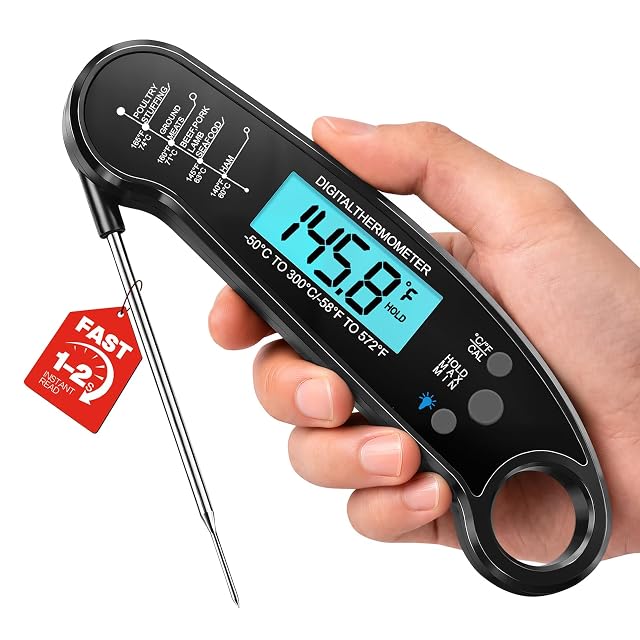
A one-to-two second instant-read thermometer accurate to ±1 °F, fully IP67 sealed, with calibration, a backlit LCD, a magnet and 4,000+ hours of battery.
Best for: The same job as its twin — a sealed, checkable thermometer on a magnet
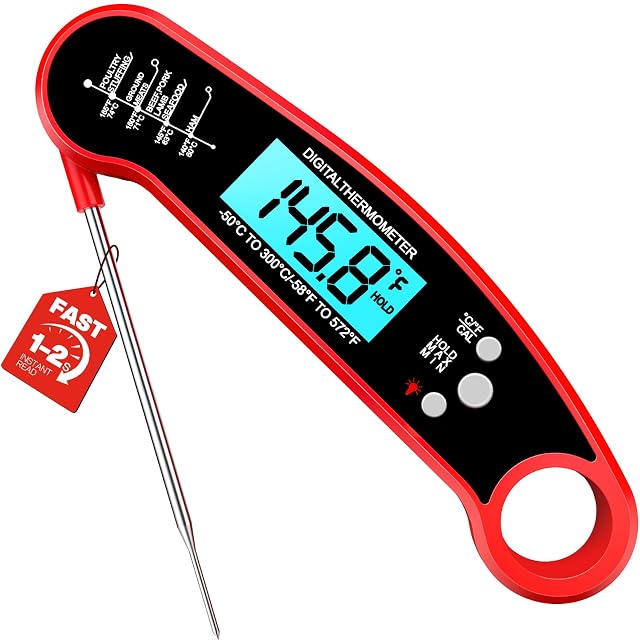
A one-to-two second instant-read thermometer accurate to ±1 °F, fully sealed to IP67, with calibration, a backlit LCD, a magnet and 4,000+ hours of battery.
Best for: A grill and kitchen thermometer that lives on the hood and gets rinsed
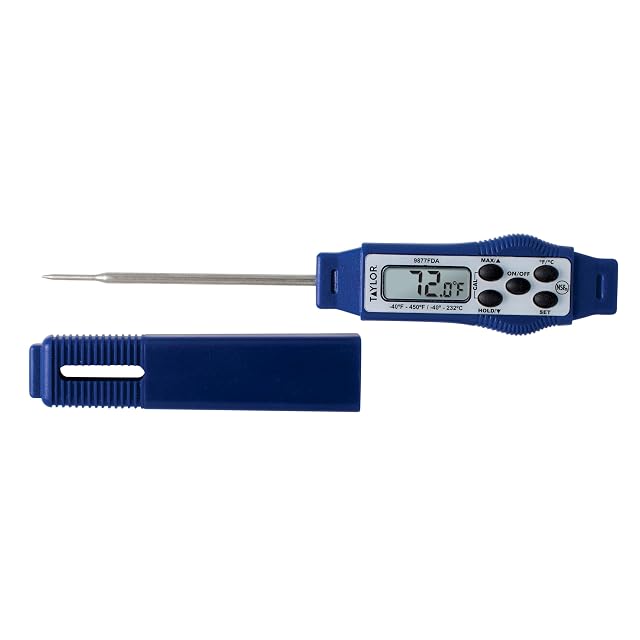
A waterproof pen-style thermometer reading −40 to 450 °F, with a large LCD, a HOLD function, a ten-minute auto shutoff and a probe cover that becomes a handle.
Best for: An apron pocket, where the cover-handle and the hold button do the work
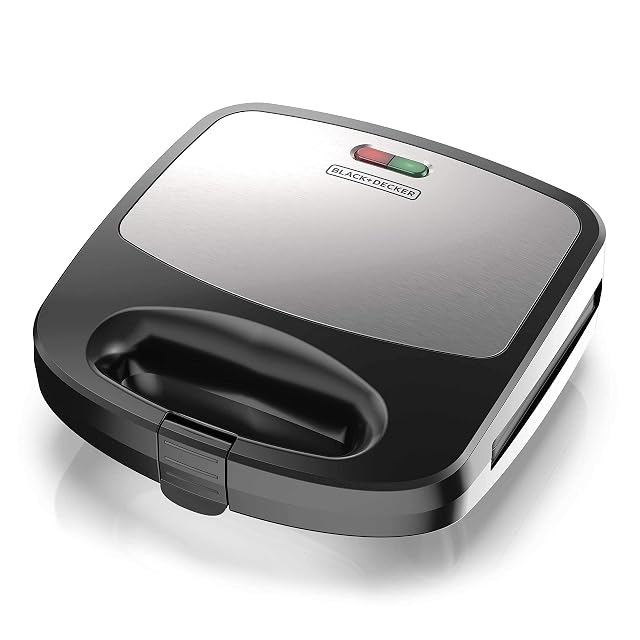
A three-in-one waffle, grill and sandwich press in stainless steel with snap-in non-stick plates, a thermostatted green ready light and a heat-resistant handle.
Best for: A buyer who wants the coating to last, and will read the instructions
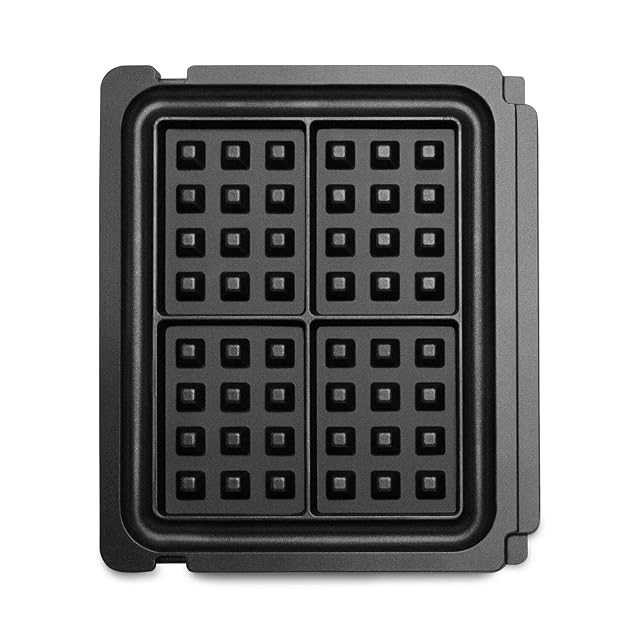
Quick-release non-stick waffle plates for the Breville Smart Grill BGR820XL and Sear & Press BGR700, with a no-mess moat and dishwasher-safe cleaning.
Best for: A Breville Smart Grill or Sear & Press, where a moat is worth paying for
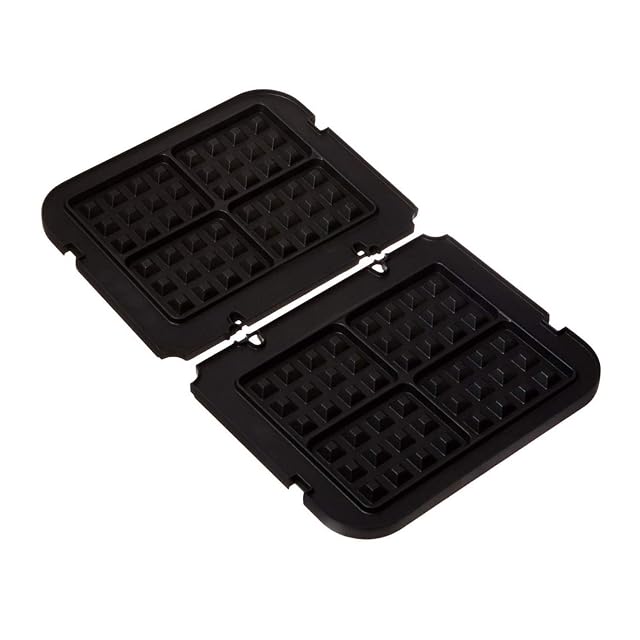
A two-plate waffle set for the Cuisinart Griddler GR-4N, GR-4 and GR-5B, baking four deep-pocketed ¾-inch Belgian waffles, dishwasher safe, with a recipe book.
Best for: A Cuisinart Griddler GR-4, GR-4N or GR-5B, from the maker