Where it is
Under the sealing ring, in the lid. On a pressure cooker it is the channel the rubber or silicone ring sits in; on a vacuum sealer it is the gasket strip the bag lies against.
What collects there
Starch, fat and small solids, in a thin layer that stops the ring seating flat. The machine then leaks steam or air, and the diagnosis almost everyone reaches is “the seal has gone”.
A ring that smells of last week’s curry is the same problem one step on. Food oils soak into the ring and the groove behind it; cleaning the ring alone leaves the source in the lid.
The order to check
- Take the ring out and clean the groove. Warm soapy water and a soft brush or a cotton swab along the channel. Costs nothing.
- Look at the ring itself. Flattened, split, hardened or stretched so it no longer stays in the groove means replace.
- Check the valve and the float. Makers publish their own cleaning instructions for them, and a blocked valve stops pressure as surely as a bad seal.
- Then, and only then, suspect the appliance.
The interval, where it is published
Two rings on this site publish a replacement interval, and both say every two to three years: the Fissler original and a generic Fissler-fit ring sold in Europe. That is a wear interval, not a fault, and knowing it converts “the cooker is broken” into a part that costs between about $7 and $24 on the pressure cooker seals page.
Before you order a ring
Read the number molded inside the one you have, or the model number on the plate under the cooker. Fissler prints its article number in the ring, and it is more reliable than measuring a pot rim — which is exactly how a generic ring ends up quoting two different diameters in one listing. A gasket fits a lid, not a capacity: a 6-quart and an 8-quart cooker from the same maker can share a ring, and two 6-quart cookers from different makers never do.
Prices quoted in this text were read on 2026-10-17. The live price is at the top of the page.
What readers want to know
How do I know if it is the groove or the ring?
Clean the groove first, because it costs nothing. If the cooker still will not come up to pressure, the ring is the next candidate. Only two rings on this site publish a replacement interval, and they give the same one: every two to three years — the Fissler original at $19.95 on Amazon.com, and a generic Fissler-fit ring sold in Europe. The rings for Hawkins, Prestige, Presto and T-fal cookers publish none.
Which parts of a pressure cooker lid come apart?
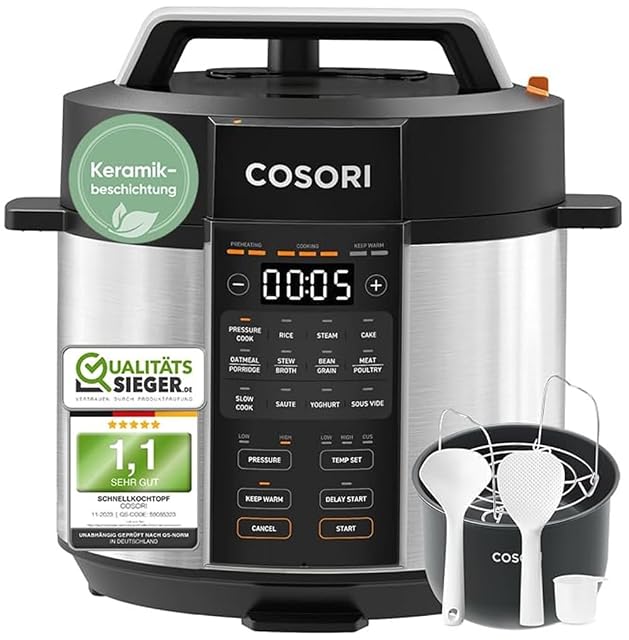
That depends on the model, and the manual publishes it. Fissler states simple, quick removal of the lid for changing the ring; Cosori states the rim, lid and inner pot of its multi-cooker are all easy to clean. On Presto cookers, check the overpressure plug too: on the 6-quart models it sits in the sealing ring itself.
Can the ring go in the dishwasher?
Only if the maker says so, and most do not. The Presto ring is the only one on this site that answers the question, and its answer is no. Heat, detergent and a long wet cycle are what age an elastomer fastest. Wash the ring and the groove by hand, in warm soapy water, and dry both before refitting.
Last reviewed 17 October 2026